




April 2024
Foot Care Tips for Preventing Cracked Heels
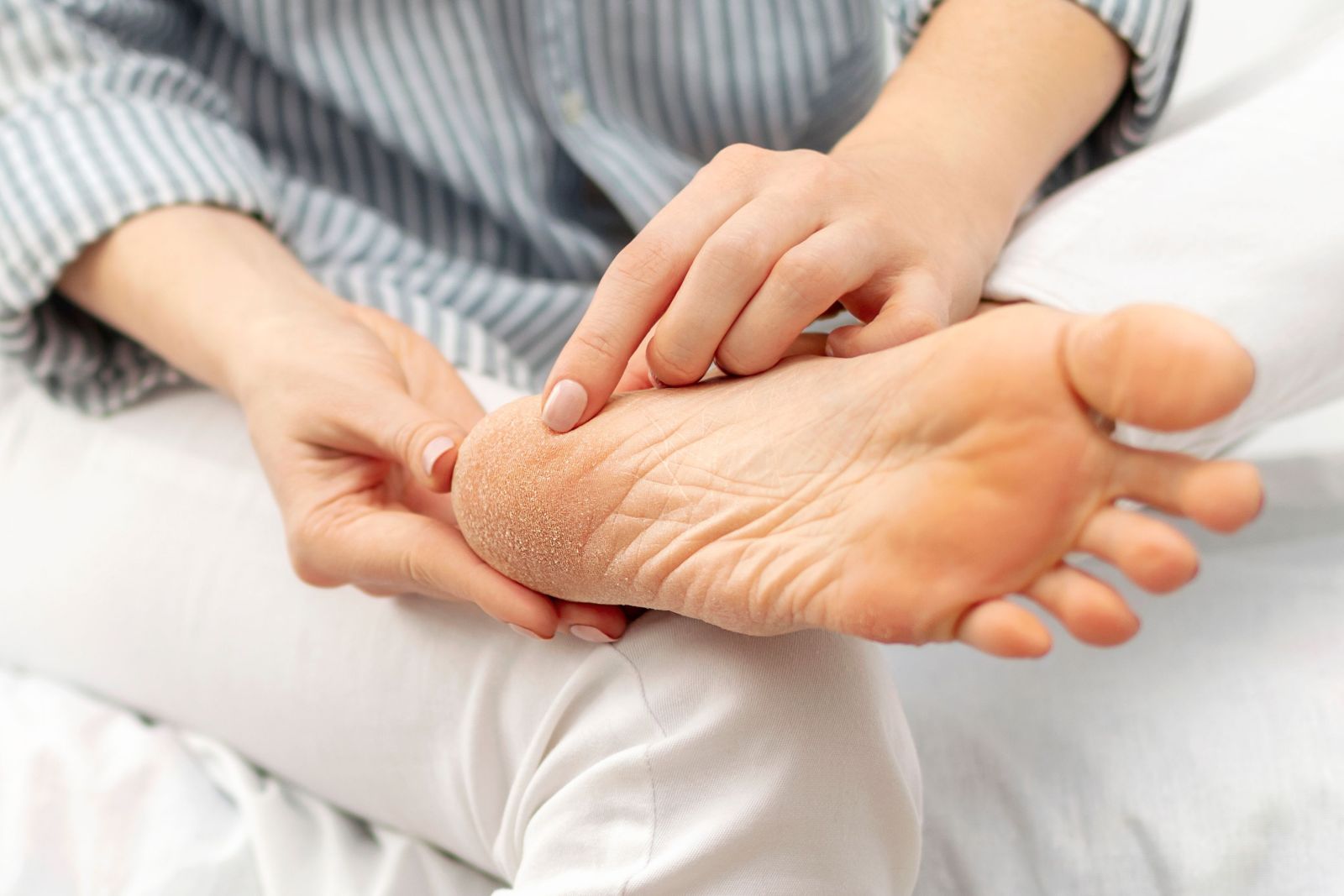
Cracked heels can be both painful and unsightly, but with proper foot care they are largely preventable. Begin by keeping your feet clean and moisturized. Regularly washing your feet with mild soap and drying them thoroughly helps prevent bacterial and fungal infections that can worsen heel cracks. Moisturize your feet daily, focusing on the heels, with a rich foot cream or moisturizer containing ingredients like urea or glycerin to hydrate and soften the skin. Exfoliating your heels weekly with a pumice stone or foot scrub helps remove dead skin cells and prevents the buildup of thick, dry patches. Wear properly fitting shoes with adequate support to reduce friction and pressure on the heels, and avoid walking barefoot, especially on hard surfaces. Finally, stay hydrated and maintain a balanced diet rich in vitamins and minerals to promote overall skin health. Cracked heels can be an uncomfortable foot condition, and if you have developed this ailment, it is suggested that you seek the help of a podiatrist. This type of doctor can effectively treat cracked heels and offer additional prevention techniques.
If the skin on your feet starts to crack, you may want to see a podiatrist to find treatment. If you have any concerns, contact the podiatrists from Issaquah Foot & Ankle Specialists. Our doctors can provide the care you need to keep you pain-free and on your feet.
Cracked Heels
It is important to moisturize your cracked heels in order to prevent pain, bleeding, and infection. The reason cracked heels form is because the skin on the foot is too dry to support the immense pressure placed on them. When the foot expands, the dry skin on the foot begins to split.
Ways to Help Heal Them
- Invest in a good foot cream
- Try Using Petroleum Jelly
- Ease up on Soaps
- Drink Plenty of Water
Ways to Prevent Cracked Heels
- Moisturize After Showering
- Skip a Shower
- Keep Shower Water Lukewarm
- Don’t Scrub Your Feet
If you are unsure how to proceed in treating cracked heels, seek guidance from a podiatrist. Your doctor will help you with any questions or information you may need.
If you have any questions, please feel free to contact one of our offices located in Issaquah, WA . We offer the newest diagnostic and treatment technologies for all your foot care needs.
Solutions for Cracked Heels
Cracked heels may make you want to think twice about showing off your feet in warmer weather. However, cracked heels may be harmful to more than just the appearance of your feet. If deep fissures and cracks develop in your heels, they may make walking and standing painful for you. Additionally, these openings make way for germs to enter through your skin and cause infection.
There are several different causes of cracked heels. One of the most common reasons for this ailment is dry skin. This problem may make your keeps feel rough tight and itchy. Dry skin may be caused by cold air, extremely hot water, harsh soaps, and aging. Skin disorders such as eczema and psoriasis may eventually lead to dry skin. In some cases, complications may arise from cracked heels. Some of these complications are a loss of feeling in the heel, cellulitis, or a diabetic foot ulcer.
There are ways you can try to prevent getting cracked heels. One of the best ways to do so is to avoid wearing flip flops and sandals because these shoes increase your risk of drying out your feet. You should also avoid wearing shoes with a tall skinny heel, because these shoes cause your heel to expand sideways. At night, you should slather on a thick moisturizing cream on your feet and then cover them in socks to keep your feet moisturized overnight. Drinking water to stay hydrated is also a good way to ensure that your skin doesn’t become dry.
If you suffer from a severe case of cracked feet, you should make an appointment with your podiatrist to see what treatment methods are best for you.
Dr. Brandon Nelson, A Double Board Certified Foot Physician & Surgeon, Issaquah’s Top Podiatrist, Discusses Your Bunion
Bunions are often looked at as just a cosmetic concern however this is not true. They can cause pain and discomfort and lead to more foot problems in the future. Today I will discuss bunions, what they are, their cause, symptoms and what we can do to treat them.
What is a bunion?
A bunion is a bony protrusion of the 1st metatarsal. It occurs as the 1st metatarsal shifts out of place and the big toe begins to drift towards the second. This begins as a small misalignment of the joint and grows larger and more malaligned as time and mileage increase.
Causes of bunions:
There are many causes of bunions and from long term research we know the following are the most common.
-Genetics plays a large role in the development of a bunion. You inherit your foot structure and this can predispose you to a bunion.
-Another source cited is footwear. Anything that puts more forefoot pressure like a high heeled shoe can accelerate bunion formation.
-Systemic causes can be attributed to bunions. Conditions like Rheumatoid arthritis or other arthropathies that attack joints.
Symptoms:
These are what usually bring patients into the office. These are things like having a hard time fitting shoes, rubbing the big toe on the 2nd toe. Another common symptom is pain or swelling and redness of the big toe joint.
Treatment:
I usually break the treatment up to conservative and surgical. The conservative measures include, no bare feet and wearing a wider shoe. Save your money no splints or stretching devices of the big toe work. Remember this is a bony malalignment and you can not move bones from the outside of your foot. Surgery is the only long term fix. The surgical correction depends on the size, age and overall foot structure.
If you have a bunion and would like a consultation I can help. Please call 425-391-8666 or make an appointment online, and ask for an appointment with Dr Nelson.
Sincerely,
Double Board Certified Physician & Surgeon
Issaquah’s Top Podiatrist & Foot/Ankle Surgeon
Exercise for Your Feet
Whether your feet are over-worked or under-worked, chances are they could benefit from some special attention. Even those who exercise regularly probably do not spend any time strengthening their feet. This can be just as rewarding as strengthening the rest of the body, since the health of your feet affects the health of the rest of the body as well, especially the ankles, legs, and spine.
For those who might not have any idea on how a foot-specific exercise might be conducted, there are several workouts that are fairly easy to perform in the comfort of ones’ home. One of the easiest is the toe rise, also known as the tip-toe. This exercise involves standing on the tip-toes for a count of 15 then resting the feet on the ground. This process should be repeated a minimum of three times a day in order to strengthen the feet.
Toe pick-ups strengthen the feet by working them in a very different way. In this exercise, small items are picked up using the toes in order to strengthen the muscles on the upper part of the feet. Once again three sets should be performed, with the item in question being held for 15 seconds then dropped. Items that may be picked up using the feet include marbles and even stationery, which works wonders for the toes and the surrounding muscles.
Yet another simple workout is the ankle pump. This can be done either upwards or downwards, but for the workout to be most effective both can be incorporated into the routine. As the term suggests, this involves lifting the foot off the floor and flexing the toes either towards the shin or towards the ground. This movement puts the feet and ankles through a large range of motion which works the muscles.
Last but not least, feet should be stretched so that the muscles can relax and recuperate. This can be done by placing both feet off of the floor and bracing oneself against the wall at a 45 degree angle. This ensures that the feet and ankles are adequately stretched once the workout is complete.
In short, giving the feet a good workout every now and then is important in order to avoid problems such as plantar fasciitis. It’s also important to warm-up or cool-down after running or vigorous walking. Foot exercises may be followed by a good foot massage. This encourages circulation in the feet as well as muscle relaxation.
Exercises for Healthy and Strong Feet
 Strengthening your feet is important for overall well-being, reducing the risk of injury, and maintaining foot health over time. A few simple exercises can go a long way to achieving this. Toe scrunches involve placing a small towel on the floor and gripping it with your toes, then releasing it. This exercise strengthens the muscles in your feet. Another helpful exercise is toe raises, where you lift your toes while keeping your heels on the ground, and then lower them back down. This helps improve flexibility and stability. Additionally, calf raises are beneficial for foot and ankle strength. Stand with your feet hip-width apart, then rise onto the balls of your feet and lower back down. These exercises can be done regularly at home. Along with proper foot care and checkups from a podiatrist, these regular foot exercises can contribute to improved foot health and reduced risk of injury. If you want to learn about more foot exercises to incorporate, or you have questions about your foot health, make an appointment with a podiatrist today.
Exercising your feet regularly with the proper foot wear is a great way to prevent injuries and build strength. If you have any concerns about your feet, contact the podiatrists from Issaquah Foot & Ankle Specialists. Our doctors can provide the care you need to keep you pain-free and on your feet.
Exercise for Your Feet
Exercise for your feet can help you gain strength, mobility and flexibility in your feet. They say that strengthening your feet can be just as rewarding as strengthening another part of the body. Your feet are very important, and we often forget about them in our daily tasks. But it is because of our feet that are we able to get going and do what we need to. For those of us fortunate enough to not have any foot problems, it is an important gesture to take care of them to ensure good health in the long run.
Some foot health exercises can include ankle pumps, tip-toeing, toe rises, lifting off the floor doing reps and sets, and flexing the toes. It is best to speak with Our doctors to determine an appropriate regimen for your needs. Everyone’s needs and bodies are different, and the activities required to maintain strength in the feet vary from individual to individual.
Once you get into a routine of doing regular exercise, you may notice a difference in your feet and how strong they may become.
If you have any questions, please feel free to contact one of our offices located in Issaquah, WA . We offer the newest diagnostic and treatment technologies for all your foot care needs.
Custom Orthotics For Foot and Heel Pain

Step into relief and reclaim your mobility! Foot and heel pain can be a thing of the past with the right Custom Orthotics. Customized to your unique foot structure, they provide the support and alignment needed to alleviate discomfort. Whether you're walking, running, or simply standing, Custom Orthotics ensure every step is cushioned and pain-free. Don't let foot ailments dictate your day. With Custom Orthotics, embrace a world of comfort and freedom. Call today to schedule an appointment.
Dr Brandon Nelson, A Double Board-Certified Physician & Surgeon, Discusses Painful Hammertoes
Hammertoes are a common pathology I see in my office. Most patients with curled toes have pain with activities and a hard time fitting shoes. They describe a progression of the toes where other forefoot pathologies can be present.
The most common cause appears to be foot structure and genetics. We see patients that have flatter feet require increased pressure from the tendons in their toes to stabilize. This repetitive pressure can cause pain and discomfort. Some people will inherit a foot structure that can predispose them to hammer toes. These foot structures are ones that often develop bunions as well.
Symptoms:
The symptoms can vary from patient to patient. The most common symptoms include swelling and pain. Some patients relate a significant stiffness or bending to the toes that pushes in their shoes. All can be painful, especially with physical activities.
Treatment:
We have many options available for hammer toes. But it should be noted it is based on the degree of the hammer toe. How significant is the bending and contracture of the digit. It is important to have a good clinical evaluation and an x-ray. If you would like a consultation for your hammer toe pain I can help. Call to make an appointment with me at 425-391-8666 or make an online appointment.
Sincerely,
American College of Foot & Ankle Surgeons
Issaquah’s Top Podiatrist
Dr. Timothy Young discusses the Adductoplasty Procedure for Midfoot Arthritis: A Comprehensive Guide
What is Adductoplasty? Adductoplasty is a surgical procedure designed to treat midfoot arthritis by realigning the bones in the midfoot region. It specifically targets the midfoot joints, such as the 2nd and 3rd metatarsal cuneiform joints (also known as the tarsometatarsal joints or TMT joints), which are commonly affected by arthritis. The goal of the adductoplasty procedure is to correct deformities, alleviate pain, and improve joint function and address arthritis joint pain.
Who Can Benefit from Adductoplasty? Adductoplasty is typically recommended for individuals with moderate to severe midfoot arthritis that hasn't responded adequately to conservative treatments. Common symptoms that may indicate the need for adductoplasty include persistent pain, stiffness, swelling, and difficulty walking or bearing weight on the affected foot.
The Procedure:
- Preoperative Assessment: Before undergoing adductoplasty, patients undergo a thorough preoperative assessment, including imaging studies like X-rays or MRI scans to evaluate the extent of arthritis and deformity.
- Anesthesia: Adductoplasty is performed under general anesthesia or IV sedation type anesthesia, depending on the patient's health and surgical preferences.
- Incision and Access: The surgeon makes an incision on the affected foot to access the midfoot joints. Minimally invasive techniques may be used to minimize tissue damage and promote faster recovery.
- Bone Realignment: Using specialized instruments, the surgeon realigns the bones in the midfoot to correct deformities and restore proper joint alignment. This will involve removing damaged cartilage or bone spurs.
- Stabilization: Additional procedures like joint fusion are necessary to stabilize the joint and promote healing.
- Closure and Recovery: Once the procedure is completed, the incision is closed, and the foot is bandaged. Patients are monitored in the recovery room before being transferred to a hospital room or discharged home, depending on the surgical plan.
Recovery and Rehabilitation: The recovery timeline for adductoplasty varies depending on the individual and the extent of the procedure. However, here are general guidelines:
- Postoperative Care: Patients are advised to keep the foot elevated and apply ice to reduce swelling and discomfort.
- Weight-Bearing: The surgeon will provide instructions on when and how much weight can be placed on the foot. Crutches or a walking boot may be recommended initially.
- Physical Therapy: Rehabilitation typically involves physical therapy to improve strength, flexibility, and mobility. Patients learn exercises to restore function and prevent stiffness.
- Follow-Up Visits: Regular follow-up visits with the surgeon are essential to monitor healing, address any concerns, and adjust the rehabilitation plan as needed.
Benefits of Adductoplasty:
- Pain Relief: Adductoplasty can significantly reduce pain and discomfort associated with midfoot arthritis, allowing patients to engage in daily activities more comfortably.
- Improved Function: By correcting deformities and realigning the bones, adductoplasty improves joint function, enhancing overall quality of life.
- Long-Term Results: Many patients experience long-lasting benefits from adductoplasty, especially when combined with postoperative rehabilitation and lifestyle modifications.
Conclusion: Adductoplasty is a valuable surgical option for individuals suffering from midfoot arthritis, offering pain relief, improved joint function, and enhanced quality of life. If you're considering adductoplasty or exploring treatment options for midfoot arthritis, consult with a qualified orthopedic surgeon to determine the best course of action based on your specific needs and goals. With proper care, rehabilitation, and follow-up, adductoplasty can pave the way for a more active and pain-free lifestyle.
If you have any questions or would like a consultation please call 425-391-8666 and make an appointment online.
Dr. Timothy Young
Foot & Ankle Surgeon
Issaquah's Top Podiatrist
Toenail Fungus
Toenail fungus is a frustrating problem that affects many people. It can be persistent and hard to get rid of. As many different types of fungi are present throughout the environment, it is very easy to contract toenail fungus.
The feet are especially susceptible to toenail fungus because shoes and socks create the ideal dark and moist environment that fungal infections thrive in. While fungal infections of the nail plate are quite common, if left untreated they can spread beyond the toenail and into the skin and other parts of the body.
Signs of toenail fungus include a thickened nail that has become yellow or brown in color, a foul smell, and debris beneath the nail. The toe may become painful due to the pressure of a thicker nail or the buildup of debris.
Treatment for toenail fungus is most effective during the early stages of an infection. If there is an accumulation of debris beneath the nail plate, an ingrown nail or a more serious infection can occur. While each treatment varies between patients, your podiatrist may prescribe you oral medications, topical liquids and creams, or laser therapy. To determine the best treatment process for you, be sure to visit your podiatrist at the first signs of toenail fungus.
Causes and Implications of Toenail Fungus
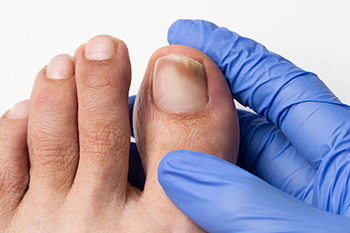
Onychomycosis, commonly known as toenail fungus, is a fungal infection that affects the toenails, leading to discoloration, thickening, and brittleness. This condition occurs when dermatophyte fungi invade the nail bed, typically thriving in warm, moist environments such as sweaty shoes or communal showers. Additionally, yeast and mold can also contribute to the development of onychomycosis. Several factors increase the risk of contracting this infection, including aging, poor circulation, and a weakened immune system. Other factors include trauma to the nail and pre-existing conditions like diabetes or athlete's foot. Furthermore, habits such as walking barefoot in public areas or sharing nail grooming tools can facilitate fungal transmission. Onychomycosis not only affects the aesthetic appearance of the nails but can also cause discomfort, pain, and difficulty in walking if left untreated. If you have developed toenail fungus, it is strongly suggested that you visit a podiatrist who can offer you treatment options which often include prescribed medication for complete healing.
For more information about treatment, contact the podiatrists of Issaquah Foot & Ankle Specialists. Our doctors can provide the care you need to keep you pain-free and on your feet.
Toenail Fungus Treatment
Toenail fungus is a condition that affects many people and can be especially hard to get rid of. Fortunately, there are several methods to go about treating and avoiding it.
Antifungals & Deterrence
Oral antifungal medicine has been shown to be effective in many cases. It is important to consult with a podiatrist to determine the proper regiment for you, or potentially explore other options.
Applying foot powder on the feet and shoes helps keep the feet free of moisture and sweat.
Sandals or open toed shoes – Wearing these will allow air movement and help keep feet dry. They also expose your feet to light, which fungus cannot tolerate. Socks with moisture wicking material also help as well.
If you have any questions please contact one of our offices located in Issaquah, WA . We offer the newest diagnostic and treatment technologies for all your foot and ankle needs.
