April 2011

Wednesday, 27 April 2011 12:31

Spring Is Here, So Are Shin Splints

Shin splints are painful and often many people believe that they must simply deal with the pain. However, this is simply not correct.Shin splints are slow healing and painful, so if you suffer from shin splints preventing this pain is the best course of action.

Shin splints are most commonly caused by running, or participating in sports that require frequent hard stops and starts such as tennis or basketball. Running on slanted surfaces can also cause shin splints. 

People who suffer from shin splints will often notice tenderness, soreness, or pain in the lower part of the leg. Mild swelling may occur and there may be noticeable pain when pointing your toes downward.

Often this condition can be avoided by using proper footwear or if necessary custom prescription orthotics. There may be biomechanical problems that may have helped cause this type of injury. A biomechanical gait analysis will identify if your gait (your particular movement) is the cause of your pain and if prescription orthotics will help.

Treatment

Rest to allow the injury to heal and apply ice early on, when experiencing the pain. Stretching the lower leg muscles can also help to ease the discomfort.

Custom orthotics are used to treat many foot and ankle disorders. If you experience heel painplantar fasciitis, arch pain or shin splints you may consider custom orthotics to give your feet the relief they need and avoid future injuries.

Plantar fasciitis is one of the most common forms of heel pain that we see at the Issaquah Foot and Ankle Specialists.

Plantar fasciitis is usually caused or aggravated by biomechanical factors such as the impact of running, walking or even standing. Hard surfaces certainly factor into the cause or onset of plantar fasciitis and also can perpetuate it. It is important to address both mechanical and inflammatory causes of plantar fasciitis. What you wear on your feet plays a big part of this. Some shoes offer better support, while other shoes have better cushioning. Ideally, you want a combination of the two. But some of the newer shoes and sandals go a step further and physically shift pressure away from the heel and also change the dynamics of the gait pattern itself.

Many of us work on hard concrete surfaces. This is obvious when working or shopping in a warehouse like Costco or Sam's Club where the concrete is clearly visible beneath our feet. But often times in an office environment the floors are actually concrete and had a thin layer of carpet over them so really one is still walking and working on a concrete surface. Just standing on your feet in one place will put intense mechanical pressure on the plantar fascia. Having the anti-fatigue mats or foam mats under your feet (such as for a cashier at the grocery store) can offer some relief.

At home it can actually be worse because even though you may not see concrete floors under your feet, it is often hardwood flooring or ceramic tile over concrete. In this situation many of us try to keep our houses clean, so we go barefoot or wear slippers. But in this case the best possible scenario is to wear a supportive sandal as your "house shoe". Examples of this would be brand such as Halflinger or some of the European walking sandals such as Clark or Ecco. Some of the other much lighter sandals such as Crocs also can be effective. In severe situations its best to actually wearing your supportive shoes that may also have additional support such as an over-the-counter insert or a prescription orthotic. The very best possible house shoe or sandal would be the combination of prescription orthotics with MBT sandals or a possibly sketcher shape up (rocker) sandals.

One can even go step further with this. For severe cases you should wear your supportive sandals - right out of bed. And some individuals will even need to wear plastic sandals in the shower.

So for some individuals that means they may want to buy a pair of these "house shoes" and bring them with them when they go to a friend's house. A real estate agent may also want to have a pair of the special sandals or use a shoe cover instead of going barefoot when they're showing houses.

Here is a summary of these recommendations for plantar fasciitis:

  • Never go barefoot at home, even if you are a "barefoot person"
  • Immediately out of bed in the morning - put on a sandal
  • For severe cases you should still wear sandals even in a shower
  • The best "house shoe" is either supportive shoe or a very supportive sandal
  • For severe cases MBT sandals or Sketcher sandals are very helpful

This is part 2 of common conditions in our pediatric population:

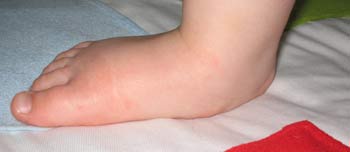
childrens flat feetThe pediatric foot is a complex instrument that must be carefully evaluated.  Issaquah Foot & Ankle Specialists treat a variety of pediatric foot and ankle problems in patients from Issaquah, Sammamish, Bellevue and the greater Seattle area.  We have both the experience and knowledge to intervene when appropriate.  Your child will not always "outgrow" their foot or ankle problems.


What is it?

flatfoot

flatfoot is a complex disorder that can manifest early in the ambulatory phase of life.  It displays collapse of the arch of the foot and often a tight Achilles tendon.  Most children begin walking with a flatfoot but quickly develop into a propulsive gait. There are varying degrees of flatfeet and a strong genetic predisposition to the development of.  Parents with a history of flatfeet must have there children carefully evaluated by a foot and ankle specialist early in life. 

Symptoms

Children with flatfeet often have difficulty running or participating in sports.  They may develop foot and ankle pain, pain at the end of the day or a feeling of fatigue in the lower extremity.  In addition children can develop low back pain, hip or knee pain as well. 

Diagnosis

Diagnosis usually involve a physical exam of the foot.  This will often include testing of muscle strength and observation of gait.  X-rays will be ordered to evaluate the extent of the flatfoot and which of the cardinal planes is dominate. 

Treatment

Treatment depends on the presenting symptoms, some flatfeet require no treatment.  Progressive or painful flatfeet may require, activity modification, immobilization, physical therapy, prescription orthotics or even surgical correction. 

Plantar fasciitis typically causes pain in the bottom of the heel. People who have plantar fasciitis know how it classically hurts first thing in the morning and it hurts when they gets up from sitting, this is called post-static dyskinesia. Post-static dyskinesia can simply be referred to as pain after rest. 

Many of the other causes of heel pain that are part of the differential diagnosis for plantar fasciitis, do not have this poststatic dyskinesia or first thing in the morning heel pain. With plantar fasciitis, limping in the morning is classic. At our clinic, we have seen patient's over the years that had these classic plantar fasciitis-like symptoms. However on further examination, they have a very thin plantar fat pad and with diagnostic imaging such as diagnostic ultrasound imaging the plantar fascia shows no inflammation or edema.

 Some of these individuals also have a very high arch foot structure so that the contact points of the heel and the forefoot are more intense and focal than someone with a flatfoot or even a normal arch.  With this problem, people are virtually walking on the heel bone.  Some people are structurally born and develop this way.  Other people have a normal healthy fat pad cushion, but over time the fat pad breaks down causing this problem.  It is more common as one gets older.  This is also called atrophy of the plantar fat pad or atrophic plantar fat pad. 

How is this diagnosis made?

  • A thin fat pad seen during physical exam or direct measurement.
  • The exclusion of plantar fasciitis
  • Often there is a higher arch foot structure

Usually there is immediate relief by wearing good shoes or a cushioning device. One can measure the thickness of the plantar fat pad with diagnostic ultrasound imaging, CT scan or an MRI.

Treatment for this is usually mechanical in nature. This includes not going barefoot and using specific shoes that have excellent cushioning such as some better running shoes. But also, some of the rocker shoes such as the MBT or Sketcher shape up shoes are very effective at shifting pressure off the heel. In addition to this, a gel heel cushion, or a heel cup can be helpful.

The most effective long-term treatment is an custom prescription orthotic with a very deep heel cup that actually has a hole in the bottom of the heel but is filled with 1/8 inch neoprene it is covered with a special cushioning material called poron and has a cushioned top cover on the entire orthotic including the deep heel cup area. This way, one is using the natural contour of the heel and the existing fat pad to help cushion the bottom weight-bearing portion of the heel bone. In chronic cases that do not fully respond to mechanical treatment including the special orthotics, and we will occasionally do a low dose ultrasound-guided cortisone injection. In this case the cortisone is injected directly at the layer between the plantar fascia and the fat pad. The goal is to avoid injecting into the fat pad. Repeated cortisone injections directly into the fat pad are thought to promote atrophy and further thinning of the fat pad.

If you experience this type of pain you can read more information about heel pain at our heel pain center on our website. 

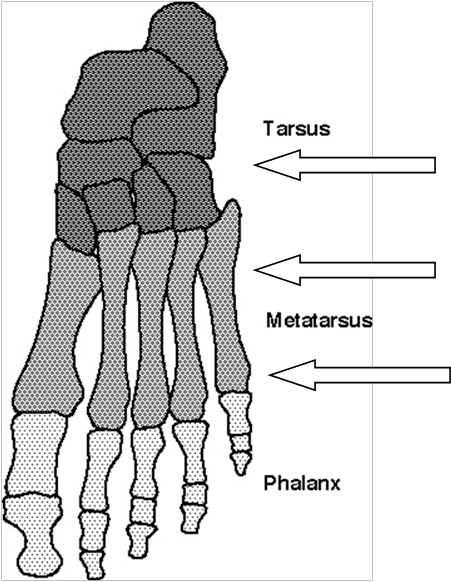
Lateral overload pain, which may or may not include cuboid syndrome, and peroneal tendinitis is very common. I see this in my practice with new cases several times each month. Typically this involves a patient who presents with pain affecting the outside of the foot. This could be behind the fifth toe extending up midfoot even including the outside ankle bone. This part of the foot is called the lateral column. Sometimes this is isolated to just the fifth metatarsal area.Lateral Column with arrows resized 600

History: This may or may not a chronic problem. But often this could be related to an increase in activity or even a pair of shoes. Typically the activity and/or shoes will cause a change in the weight bearing pattern of the foot and cause the onset of symptoms. A shoe that has a lot of wear on the outside may make one prone to these problems. Starting a walking or running program, increased activity and weight bearing pressure can also make one prone to this. Oftentimes there won't be any swelling on the foot or any history of a one-time specific injury.

Lateral Column with arrows 2

Clinical findings: I typically will see this when a patient's tendon have a higher arch foot structure and already bear a lot of weight on the outside of their foot. Usually the patient is aware that they tend to bear weight on the outside of the foot and they may have a lateral or outside wear pattern on their shoes. But also some individuals will have knees where the leg bone curves inward a bit more than usual. This is called genu varum and is also sometimes called bowlegged. Down at the ankle and where the leg meets the ground we call this tibial varum and this also means that compared to perpendicular the leg is curved inward toward the center midline of the body. Therefore this can be caused by structural problems in the knee leg/tibia or ankle. But also it can because by people that have a high arch foot and therefore within the foot itself. In addition, some shoes, with more arch support and people that have a high arch need. So some shoes will throw the foot even further out so that they are walking on the outside of the foot more than they should. For example, I really like the over-the-counter Superfeet inserts but for some individuals these will make the symptoms worse.

Special tests: Special tests such as x-rays often reveal the high arch foot structure but do not show any other problem. Because there usually is not a stress fracture involving the fifth metatarsal. The fifth metatarsal is not locked and the foot like the second third and fourth metatarsals are and therefore the second third and fourth metatarsals are more rigid and more prone to a stress fracture. The first and fifth metatarsals have a more flexible range of motion and rarely does once a stress fracture involving these bones. But one does see on the fifth metatarsal because it is not as large and is not designed to bear the weight in other parts the foot such as the first metatarsal are, the fifth metatarsal does not respond well to the increased stress and instead of getting a stress fracture develops this lateral overload pain.

Treatment: This involves changing any shoes that might be contributing to excessive lateral weight bearing position of the foot. Also, any inserts that have excessive arch support or have a lack of lateral arch support should be changed. For example, when orthotics are used we have to specifically build up the lateral column of the foot. This doesn't mean there is an arch support it just means it's not as essentially as it typically might be. Additionally, the lateral column of the foot is built up to help keep the foot from rolling out excessively. This also tends to help individuals who have weak ankles and tend to roll them to the outside a lot. Many of the same principles tend to help treat peroneal tendinitis. Peroneal tendinitis is by far more common in individuals with a very high arch foot that have this lateral weight bearing pattern of gait.

If you are experiencing this type of pain in your feet visit our website for more information at BestFootDoc.com.

Common foot conditions in our pediatric patients part 1:

I am going to start a blog that will detail common causes of pain in children.  This will be a 5 part blog series, the series will include the the following topics;

  • Calcaleal Apophysitis (Sever's Disease)
  • Flatfeet (Pes Planovalgus
  • Bunions (Metatarsus Primus Varus)
  • Ingrown Nails
  • Warts

Calcaneal Apophysitis (Sever's Disease)

Apophysitis is a common condition that afflicts children usually between the ages of 8 to 14 years old.  Often this is confused with plantar fasciitis which is rare in children.  This is a condition of inflammation of the heel's growth plates. 


CalcanealApophysitis


Pain usually occurs in the heel from repetitive stress on the growth plate resulting in inflammation.  Exercise, especially cleated activities like soccer and lacrosse can precipitate this pain. 


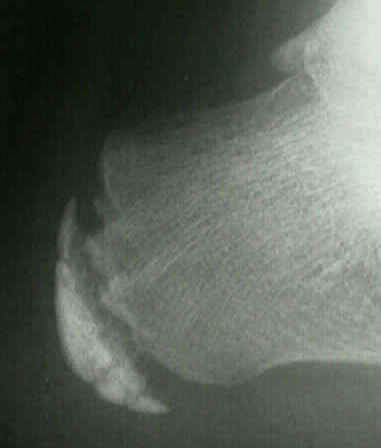
Apophysitis


  • The above x-ray show fragmentation and sclerosis of the heel often seen with apophysitis.

We treat children with foot and ankle deformities and have established protocols to deal with heel pain.  Most children respond well to stretching exercises and prescription orthotics, Orthotic Rx Center

5 out of 5 stars
Total Reviews : 268