


November 2017

Friday, 17 November 2017 17:34

Surgical Treatment of Hallux Limitus

The most basic and simple procedure to do from a surgical perspective is a cheilectomy. This is basically a joint cleaner procedure that it also involves aggressive removal of bone from the top of the first metatarsal. During this procedure, we also release soft tissue contracture of the capsule, especially on the bottom of the joint near the sesamoid bones. If there are big defects in the cartilage then any loose flaps of cartilage are removed and the exposed bone is drilled. The goal is to develop a fibrocartilage patch over the damage bone.  If it's a larger section of damage bone and then a osteochondral or bone and cartilage graft can be taken from other joints and placed in the defect surgically. Another newer procedure is a joint implant called Cartiva.  My partner, Dr. Nelson has discussed Cartiva joint implant procedures on our website.  Another approach to this whole problem is to improve the mechanical function of the great toe and the first metatarsal. 


This would involve realigning the entire first metatarsal to more functional position and essentially tilting it downward or dropping it. It is difficult to gain significant improvement in the alignment by doing a procedure at the head of the first metatarsal. However the first metatarsal cuneiform joint that often has hypermobility and elevation of the entire metatarsal is a great joint to utilize to improve function of the entire foot and the first metatarsal phalangeal joint. This is a midfoot fusion also known as a Lapidus procedure. 


The first metatarsal is plantar flexed and the fusion was done at the joint and augmented with bone graft material and hardware or screws or plates are used to maintain the alignment until the bone fusion is complete. Another fusion would be for severe cases arthritis in the great toe joint where the entire joint itself is fused. This is another very effective procedure and totally eliminates any joint pain here. The downside is that there is no motion whatsoever at the big toe joint. It is surprising how well people function after this is done. If you have questions about some of these treatment options please let us know.  Both Dr. Nelson and myself–Dr. Young,  have extensive experience treating these problems.


If you are experiencing any foot or heel pain, do not hesitate to call us at 425-391-8666 or contact us online.

 

The poor Seahawks and Richard Sherman. This Achilles tendon rupture is a difficult injury to heal from. It is not uncommon for a weak or symptomatic Achilles tendon to be vulnerable to injury or even rupture. Certainly with a pro athlete with the extreme forces and performance that his professional football job requires.


Treatment for this would normally be surgical repair of the ruptured tendon. Additional treatments that may enhances healing could include bathing the surgical site with PRP (or platelet rich plasma) . Taking supplemental collagen can help with tendon healing postoperatively. It's always a good idea to take supplemental zinc and vitamin C also for wound healing.


Once initial healing is done, in addition to physical therapy there are special braces for achilles tendon problems and injuries. In addition shockwave therapy can be very beneficial for Achilles tendon injuries and postprocedure healing.


Richard Sherman has a long road ahead of him, but it's very likely that we'll utilize some of these cutting edge treatments to help speed up the healing process for him. 


At Issaquah foot and ankle specialists (Dr. Brandon Nelson, and Dr. Timothy Young), we see and treat Achilles tendon ruptures at our own clinic.  If you have Achilles tendon issues please contact us, we will treat you like a pro athlete.

Friday, 10 November 2017 17:28

Structural Hallux Limitus


For those individuals that have structural hallux limitus with bone spurs or osteophytes, this can be a difficult problem.  At the early stages they can be quite difficult to see from an x-ray.  But surprisingly they can be seen quite clearly with diagnostic ultrasound imaging.  It's also helpful to try to bend the great toe upward and do a live manipulation of this joint under ultrasound guidance and visualization.  You can then see the definitive block to the upward range of motion. 


Over time the small bone spurs become larger and larger and more painful.  In addition the joint itself can become more inflamed and the inner joint lining becomes thicker–synovitis.  For some patients eventually the cartilage becomes thinner also and eventually the joint can become bone-on-bone and extremely painful.


If you are experiencing heel pain, do not hesitate to call us at 425-391-8666 or contact us online.
Friday, 10 November 2017 17:20

Functional Hallux Limitus


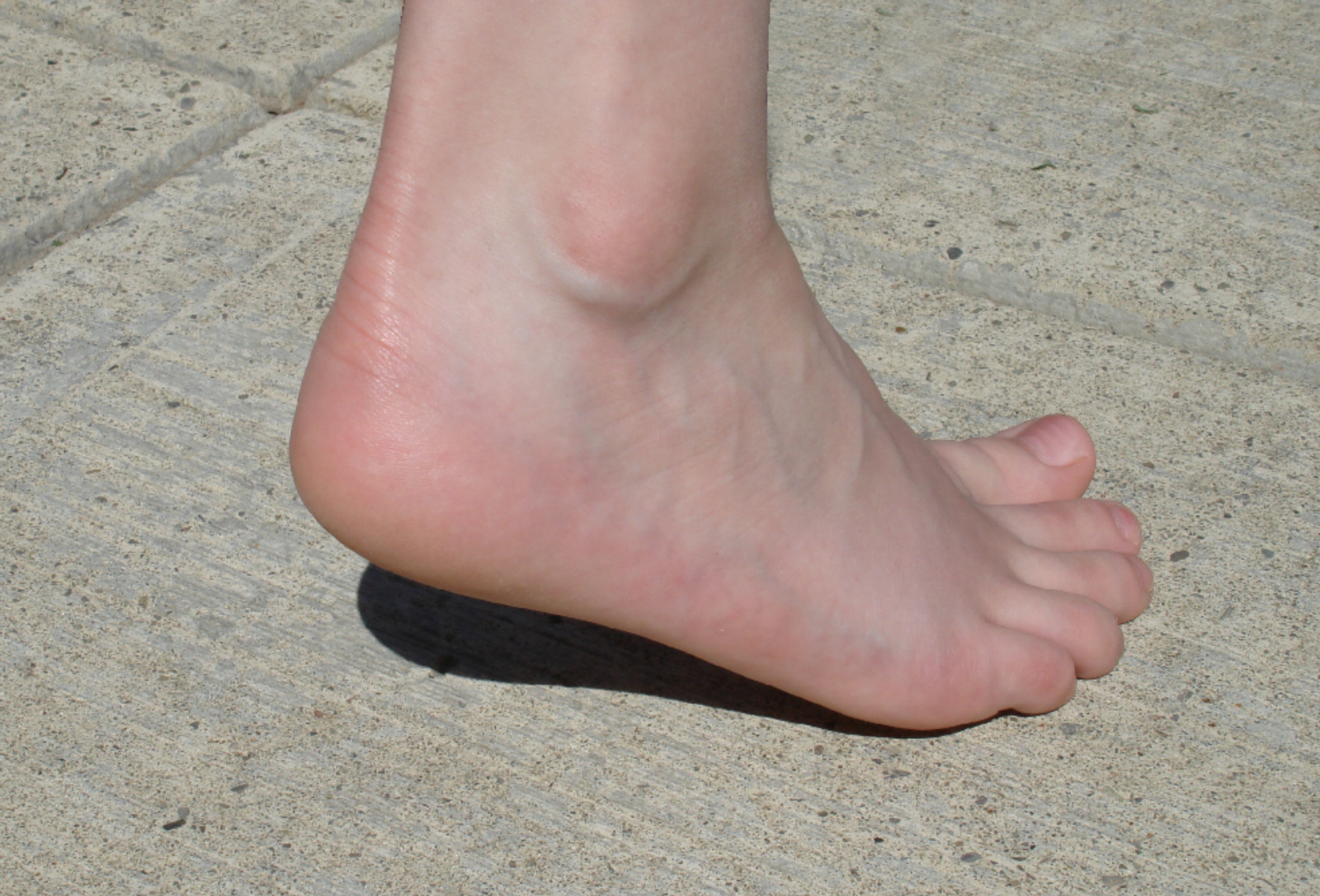
Function of the great toe joint is one of the subtle critical components of gait.  Normally as the heel starts to rise off the ground and the first metatarsal is plantar flexed with good full weightbearing purchase and grip on the ground to great toe starts to glide upward or effectively the metatarsal rises as the great toe is planted on the ground.  From a nonweightbearing perspective we just see the big toe move upward or dorsiflexion.  During a full weightbearing scenario the great toe remains planted on the ground and the metatarsal tilts upward.  However, there are some individuals where mechanical jamming at this joint occurs.  It's actually quite common.  Sometimes this starts from an old injury in the joint just doesn't glide like it should. 

When this happens there is a lack of smooth gliding upward of the great toe or tilting of the metatarsal.  Something has to give, there is then compression on the top of the joint line itself of the first MTP joint (metatarsal phalangeal joint).  Over time with inflammation and damage to the bone on the top of the joint line bone spurs–osteophytes develop.  These can then backfire and actually cause even more of a rigid block to smooth gliding of this joint.  Eventually the joint can be's quite stiff even when it's not on the ground.  So functional hallux limitus occurs from mechanical jamming of the joint without a definitive block and also occurs primarily when the joint jams from the entire joint being elevated rather than down bearing weight on the ground.  Structural hallux limitus occurs when even in a nonweightbearing position the great toe joint is not able to bend upward to the normal range of motion–this usually occurs with adaptive changes around the joint often including bone spurs.

If you are experiencing any foot pain, do not hesitate to call our office at 425-391-8666 or contact us online.

Friday, 03 November 2017 17:17

Resistant Achilles Tendinitis.


Achilles tendinitis is a very common problem. It is one of the problems that I really like to see at our clinic. This is for a number of reasons. The biggest reason is that we have developed some protocols that are extremely effective. Surprisingly, most clinics have great difficulty treating this and are not aware of all the treatment options. Achilles tendinitis is due to a number of different problems. From a biomechanical standpoint, the Achilles tendon is subject to tremendous force as you're walking or running and your heel comes up off the ground. In addition there are additional forces from side to side. It is the side to side forces that seem to cause additional mechanical shearing and stress to the Achilles tendon. It is important to address both the inflammatory component of the problem and the mechanical component. 

From a mechanical standpoint it's important to have prescription orthotics that help address the side to side stress that occurs during weightbearing phase of gait. This includes controlling both excessive pronation and supination. In addition there are special braces made just for Achilles tendinitis. Again it is surprising how he clinics have never heard of these braces and are not aware of how effective they can help complement our treatments. From a mechanical standpoint, eccentric loading of the Achilles tendon and calf muscle is extremely effective. 

Eccentric Achilles strengthening exercises are part of our treatment protocol. General calf stretching is always helpful and a night splint can help complement this. The icing on the cake especially for resistant cases is shockwave therapy. This is available at our clinic and is extremely effective. There is no down time with this and no injection is required or anesthetic. 

Finally for the most resistant cases sometime surgery is necessary. This may involve procedures with Achilles tendon and it may also involve procedures for the gastroc tendon such a gastrocnemius recession especially for those individuals with extremely tight limited ankle joint range of motion. It is extremely rare to have a case have to go onto surgery at our clinic. If you have Achilles tendinitis or Achilles symptoms please let us know and we will be happy to help. Both Dr. Nelson and Dr. Young utilize these treatment protocols. 

Friday, 03 November 2017 05:29

Sudden Onset Of Heel Pain

5 out of 5 stars
Total Reviews : 268