January 2012

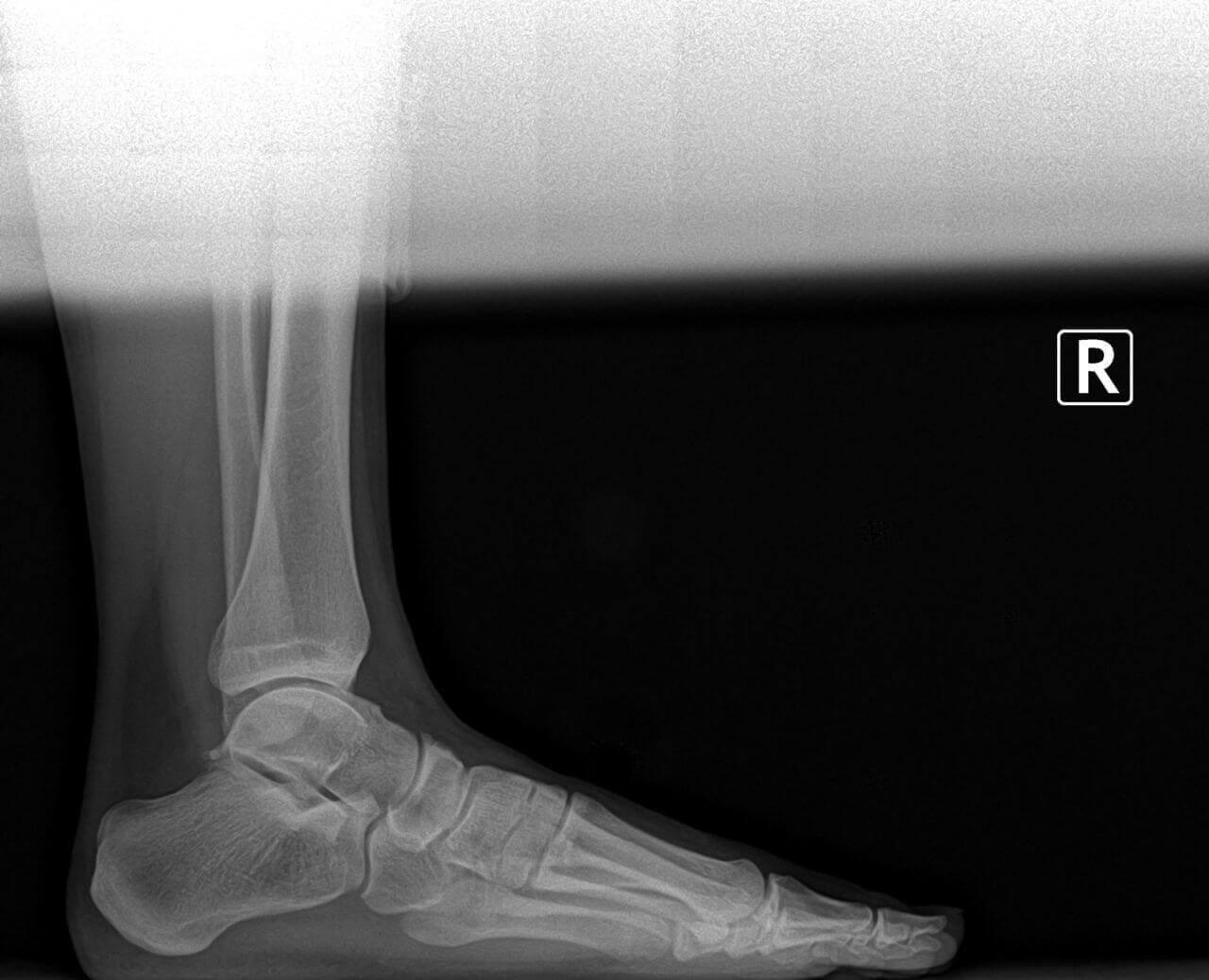
I recently evaluated and treated a patient who suffered from achilles tendonitis for multiple years.  He had seen numerous other physicians and attempted conservative therapy consisting of physical therapy, NSAIDS, immobilization and bracing.   His preoperative xrays are below;  
pre op tw resized 600
On the xray one can appreciate the large prominent posterior process of the calcaneaus or heel bone.  This is a source of constant mechanical irritation of the achilles tendon as it inserts.  Below one can see how the bone was removed and now the achilles tendon will not be irritated in the normal  ambulatory cycle.  The achilles tendon required partial detachment then was reattached with bone anchors.
We see quite a few patients with achilles tendonitis, most do not require surgery.  Or treatment protocols for tendonitis have been well established and time tested.  If our patients do require surgery we are often able to preform it in our surgery center saving a costly and timely trip to the hospital.

Some Symptoms of Achilles Tendonitis:
  • Pain behind the heel
  • Pain after a period of inactivity
  • Stiffness, soreness or tenderness in the tendon (directly above the heel to just below the calf muscle)
  • The area above the heel is tender to the touch
  • Enlarged tendon

Effectively Treating Plantar Fasciitis...

Sometimes it's about commitment.

I run into some of our clinic patients who have had plantar fasciitis for some time. I treat them to address both the inflammatory and mechanical aspects of their plantar fasciitis. This often includes prescription orthotics, home stretching, and special braces for day and night depending upon the circumstances. In addition we have them do stretching, wearing supportive shoes at home instead of being barefoot. Also, if their plantar fasciitis is quite pronounced we sometimes will do an ultrasound guided cortisone injection or PRP injection. It is very rare that our patients do not show remarkable improvement when we do the right combination of treatments for their case of plantar fasciitis. However it is surprising when some patient's come into the office and they are surprised that they are not improving. After I review the recommendations that have been made since the last visit I find that very often they have not followed up with my recommendations. For example if I recommended a certain shoe or activity or referral to physical therapy sometimes it's like "oh I haven't gotten around to that yet". Or they have been in severe pain and have seen multiple doctors and finally come in to see us. We make certain that the orthotics are perfect and that all the mechanical aspects of treatment are in place.

If additional treatments are recommended we discuss and recommend a PRP (growth factor) ultrasound guided injection and often patients for whatever reason do not schedule this treatment. After additional follow-up their surprised if their plantar fasciitis is still not getting better. So sometimes it is simple aspects of treatment that have to be part of the patient's commitment themselves to address. We do our best to make recommendations on the best possible course of treatment for our patients. We tailor specific treatment plans to each patient with plantar fasciitis and there are often many elements involved in the effective treatment of plantar fasciitis. Consistent use of prescription orthotics, stretching, splints and office procedures are used in conjunction for many patients and are used to successfully treat plantar fasciitis.

But again it is surprising when some patient's are still not getting better but also have not done their part. One of the most surprising home treatments that some patients don't do is to get a good supportive sandal to wear as a "house shoe". Patients are surprised when walking barefoot or standing barefoot all day long on ceramic tile or hardwood floors and their heel pain is not getting better!

The road to recovery from plantar fasciitis and the prevention of future bouts with this condition will require some modifications to footwear or a patient’s lifestyle. However, with our successful plantar fasciitis treatment protocols patients experience quick relief and successful prevention if the treatment plans are followed.


Your car's tires can tell you if your car is out of alignment, if there is an imbalance and much more. Decoding the common wear patterns on your car's tires is fairly simple. Evaluating your cars tires will tell you if an adjustment is needed to prevent mechanical breakdown, avoid repairs, improve fuel economy and more


The shoes on your feet are also a good indicator of if you need your shoes rotated or an alignment. 

The wear patterns on your shoes can indicate wether you may be a supinator or a pronator.  Pronation refers to the inward roll of the foot. A moderate amount of pronation is required for the foot to function properly. However potential damage and and an increased risk of injury can occur with excessive pronation. 

Supination is the inverse of pronation and is the outward roll of the foot. However, excessive supination will place increased strain on the muscles and tendons of the ankle. The increased strain can lead ankle sprains or total ligament rupture.

Excessive pronation and supination can lead to:
  • Arch pain
  • Heel pain
  • Flat feet
  • Corns and calluses
  • Ankle sprains
  • Shin Splints
  • Achilles tendonitis
  • Knee pain
  • Hip pain
  • Back pain
  • and more
There are many other things your shoes can tell you. If you believe you have an abnormal gait that causes pain, weak ankles or there have been changes to the wear patterns of your shoes you should have your gait evaluated. Attached is a link to the full article about what your car's tires are telling you. The article contains a cheat sheet with information about how to read your tires.
 
If your car's tires need an alignment it is best to take your car to the mechanic. However, if your feet are out of alignment it would be best to take your feet to us. We provide a full biomechanical gait analysis that identifies your unique walking pattern. The best way to align your feet (which also can help align the rest of your body) is with prescription orthotics. We use the latest technology to produce 3-D images of your feet and custom tailor orthotic inserts for your shoes that will address your unique alignment or support needs.
 
Check your tires, check your shoes, you never knew how much they were telling you. You will enjoy more miles out both if you make certain they are in alignment!
5 out of 5 stars
Total Reviews : 268