




January 2023
How to Treat Heel Spurs
Heel spurs are calcium deposits that cause bone protrusions on the heel bone. Heel spurs are usually associated with plantar fasciitis, which occurs when the plantar fasciitis in the foot becomes inflamed. Typically, heel spurs don’t cause any symptoms. However, they can produce chronic or intermittent heel pain. Those who have had the condition often describe the irritation as a stabbing pain.
There are risk factors that may make you more likely to develop heel spurs. People who have abnormal walking gaits, run and jog on hard surfaces, are obese, or wear poorly fitting shoes are more likely to develop heel spurs.
Fortunately, there are precautions you can take to avoid developing heel spurs. One of the best ways to do this is by wearing well-fitting shoes with shock-absorbent soles. Another preventative technique is to choose running shoes if you plan on running, and walking shoes if you plan on walking. Shoes are made for different activities and it is important to research a shoe before you purchase a pair.
The pain associated with heel spurs often decreases the more you walk. However, a recurrence of pain after an extended period of rest or walking is likely to occur with this condition. Those with severe heel spur pain may opt to go the surgical route for treatment. However, more than 90% of those with the condition get better without surgical treatment. If you have a heel spur and want to know if surgery is right for you, you should go to your podiatrist and he or she will be able to conduct a pre-surgical test or exam to determine if you are an optimal candidate for surgery.
Painful Heel Spurs
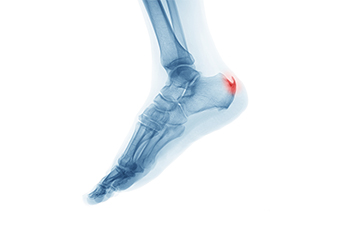
The pain from having a heel spur can be extremely uncomfortable. Heel spurs occur because of a detached ligament that connects the plantar fascia to the heel bone. A heel spur can develop from standing on hard surfaces for much of the day and many patients can physically feel a small bone growth surrounding the heel. Additional symptoms can include a red and swollen heel, and ankle pain may develop from an altered gait or walking style. Relief may be found when the affected foot is frequently elevated, which may help to reduce some of the swelling. Some patients find it beneficial to wear shoes that have additional cushioning in the heel area and taking over-the-counter pain relievers may temporarily ease the pain and discomfort. If you have heel pain, please consult with a podiatrist who can accurately diagnose heel spurs, and offer treatment options that are correct for you.
Heel spurs can be incredibly painful and sometimes may make you unable to participate in physical activities. To get medical care for your heel spurs, contact the podiatrists from Issaquah Foot & Ankle Specialists. Our doctors will do everything possible to treat your condition.
Heels Spurs
Heel spurs are formed by calcium deposits on the back of the foot where the heel is. This can also be caused by small fragments of bone breaking off one section of the foot, attaching onto the back of the foot. Heel spurs can also be bone growth on the back of the foot and may grow in the direction of the arch of the foot.
Older individuals usually suffer from heel spurs and pain sometimes intensifies with age. One of the main condition's spurs are related to is plantar fasciitis.
Pain
The pain associated with spurs is often because of weight placed on the feet. When someone is walking, their entire weight is concentrated on the feet. Bone spurs then have the tendency to affect other bones and tissues around the foot. As the pain continues, the feet will become tender and sensitive over time.
Treatments
There are many ways to treat heel spurs. If one is suffering from heel spurs in conjunction with pain, there are several methods for healing. Medication, surgery, and herbal care are some options.
If you have any questions, please feel free to contact one of our offices located in Issaquah, WA . We offer the newest diagnostic and treatment technologies for all your foot care needs.
Ingrown Toenail Care
An ingrown toenail is a nail that has curved downward and grows into the skin. This typically occurs at the nail borders, or the sides of the nail. As a result, pain, redness, swelling, and warmth may occur in the toe. If a break in the skin forms due to the ingrown nail, bacteria may enter and cause an infection in the area; this is typically characterized by a foul odor and drainage.
Ingrown toenails have multiple reasons for developing. In many instances, the condition is a result of genetics and is inherited. The most common cause, however, is improper trimming; cutting the toenails too short forces the skin beside the nail to fold over. An ingrown toenail can also develop due to trauma, such as stubbing the toe, having an object fall on the toe, or participating in activities that involve repeated kicking or running. Wearing shoes that are too tight or too short can also cause ingrown toenails.
Treatment for an ingrown toenail varies between patients and the severity of the condition. Milder cases that don’t involve infection or other medical conditions can benefit from soaking the feet in room-temperature water and gently massaging the side of the nail. In most cases, however, it is best to see your podiatrist for thorough and proper treatment. After examining your toe, your podiatrist may prescribe oral antibiotics to clear the infection if one is present. Surgical removal of either a portion of the nail or the entire nail may also be considered. In some cases, complete removal or destruction of the nail root may be required. Most patients who undergo nail surgery experience minimal pain afterward and can return to normal activity the following day.
Ingrown toenails can be prevented with proper nail trimming and by avoiding improper-fitting shoes. When cutting the toenails, be sure that you are cutting in a straight line and avoid cutting them too short. Shoes should not be too short or tight in the toe box.
Ingrown Toenails and Runners
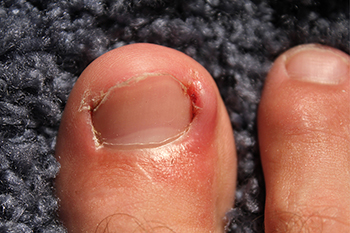
Ingrown toenails can develop in an individual when the side of their toenail grows into the skin. As a result, the point at which the nail and skin meet can become inflamed and irritated. An individual with ingrown toenails can experience some kind of discomfort or pain. Runners may be particularly susceptible to developing ingrown toenails. This is explained by the fact that running puts a particular amount of repetitive pressure on the nails in the shoe. This pressure can then ultimately press the side of the nail into the skin and put an individual at risk of developing an ingrown toenail. Although ingrown toenails are certainly not the most serious condition of the feet, they can cause discomfort. If you are a runner and are concerned about developing an ingrown toenail, contact a podiatrist today.
Ingrown toenails can become painful if they are not treated properly. For more information about ingrown toenails, contact the podiatrists of Issaquah Foot & Ankle Specialists. Our doctors can provide the care you need to keep you pain-free and on your feet.
Ingrown Toenails
Ingrown toenails occur when a toenail grows sideways into the bed of the nail, causing pain, swelling, and possibly infection.
Causes
- Bacterial infections
- Improper nail cutting such as cutting it too short or not straight across
- Trauma to the toe, such as stubbing, which causes the nail to grow back irregularly
- Ill-fitting shoes that bunch the toes too close together
- Genetic predisposition
Prevention
Wearing proper fitting shoes and using proper cutting techniques will also help decrease your risk of developing ingrown toenails.
Treatment
Ingrown toenails are a very treatable foot condition. In minor cases, soaking the affected area in salt or antibacterial soaps will not only help with the ingrown nail itself, but also help prevent any infections from occurring. In more severe cases, surgery is an option. In either case, speaking to your podiatrist about this condition will help you get a better understanding of specific treatment options that are right for you.
If you have any questions, please feel free to contact one of our offices located in Issaquah, WA . We offer the newest diagnostic and treatment technologies for all your foot care needs.
Dr. Brandon Nelson, A Board Certified Physician & Surgeon, Discusses the Lapiplasty
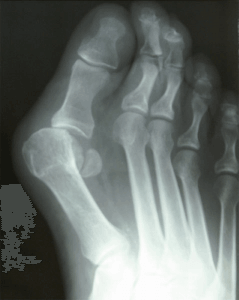
Bunion surgery for me is a very exciting procedure to perform. I really enjoy fixing a large bunion and seeing the satisfaction on a patient's face. Bunions can be debilitating and really interfere with life. They make activities painful and are frustrating when buying shoe gear. I have now been fixing bunions for 15 years and have truly begun to love the Lapiplasty.
The Lapiplasty is an exceptional procedure for patients that have large bunions. It really has helped to create better outcomes and improved techniques for bunion repair. The Lapiplasty is based on the Lapidus procedure first described by Dr. Paul Lapidus. The procedure was popularized by Dr. Sigvard Hansen who was a local physician in Seattle. Some of us had the pleasure of meeting Dr. Hansen and spending time with him. He was truly an amazing physician that helped all of us foot and ankle surgeons.
If you are contemplating bunion surgery I would love to discuss your options with you. It is important to get an x-ray and to see a surgeon that performs a lot of bunion procedures. It is also convenient that at my practice we have an on-site surgery center. Having our own surgery center is extremely valuable to patients as it is not affiliated with a hospital or an ASC and therefore saves each patient thousands of dollars in comparison to having it done at one of the above locations. If you have a bunion I can help get you back to normal shoe gear and activities. Give us a call at 425-391-8666 or make an appointment online today.
Sincerely,
Dr Brandon Nelson, A Board Certified Physician & Surgeon, Discuss the most Common Bunionectomy Surgery
Bunion surgery is one of the most common surgical procedures in the United States. It is usually performed in an outpatient setting and no overnight stay is required. The majority of bunion surgeries take less than 2 hours and have great long term outcomes. The most common bunion surgery is an Austin bunionectomy as it is called. It has been utilized for almost 100 years and is a powerful tool in bunion correction.
The Austin bunionectomy traditionally involved a cut in the 1st metatarsal head. It was cut from medial to lateral in a chevron type fashion. This allows for correction of the abnormally aligned joint and removal of the bunion. It usually involves some sort of fixation to hold the bone in place like a screw or a pin. Some surgeons require a period of non-weight bearing and typically 3 months before back to normal activities.`
I personally have performed this type of bunion surgery 1000’s of times. I like to make a longer arm with my but on the bottom of the bone as opposed to a chevron style cut. This allows for a more rigid fixation and faster recovery. The typical patient can return to activities at 6 weeks.
If you have a bunion that is causing pain and want to have minimal downtime give me a call and I can review all your options. Remember I have an onsite surgery center that saves thousands as compared to having your procedure at a hospital or ASC.
Sincerely,
Dr Brandon Nelson, A Board Certified Physician & Surgeon, Discuss Heel Pain and When to See A Physician
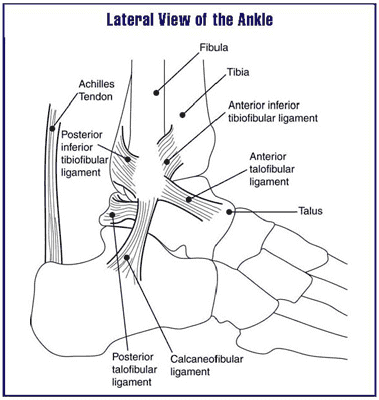
Heel pain is by far the most common pathology I see in the office. It is so common among adults it is estimated that 1 out of every 4 currently are experiencing heel pain. It is also postulated that 60% of all adults will have heel pain at some point in their lives. It is important to understand the causes of heel pain and when to seek professional help. The most common causes are plantar fasciitis, Achilles tendon issues and nerve entrapments or irritation.
Plantar fasciitis is by far the most common cause. It often is described as a dull ache or bruised sensation. This is usually on the bottom of the heel. Plantar fasciitis can be painful in the morning, first step pain, or after activities. One of the most common presenting symptoms is pain after any period of rest. Plantar fasciitis is an overuse injury and I recommend always seeking physician input on this one as you may develop tearing in the fascia with increased symptoms.
Achilles tendon issues can also present with pain in the heel or around the heel. The Achilles tendon is the thickest strongest tendon in the human body and it is constantly under load. It is therefore prone to developing issues especially in physically active individuals. The Achilles tendon type pathologies often have swelling or sharp shooting pains near the heel. Again this is one to seek help early as the average recovery of Achilles tendon issues can take 4-6 months.
Nerve entrapments of the heel or Baxter’s neuritis or tarsal tunnel syndrome often have burning or electrical type symptoms. There is a correlation with other nerve issues in the body like neuropathy or carpal tunnel or fibromyalgia. Nerve issues are an urgent matter and early intervention is key so do not wait on these ones. I recommend immediately making an appointment. The nerves usually require testing to identify and prevent long term damage.
If you are having heel pain I can help call and schedule an appointment today. Give us a call at 425-391-8666 or make an appointment online.
Sincerely,
Causes, Symptoms, and Treatment of Poor Blood Circulation in the Feet
Poor blood circulation in the feet and legs is often caused by peripheral artery disease (PAD), which is usually the result of a buildup of plaque in the arteries. Plaque buildup, or atherosclerosis, can be the result of excess calcium and cholesterol in the bloodstream. This restricts how much blood can flow through arteries. Reduced blood flow to a certain area of the body severely limits the amount of oxygen and nutrients that part of the body receives. This leads to degeneration in the muscles and other tissues. Sometimes, poor blood circulation in the feet and legs can be caused by other conditions, such as the damaging or inflammation of blood vessels, known as vasculitis.
The lack of oxygen and nutrients caused by poor blood circulation can restrict muscle growth and development, as well as cause muscle pain and cramps, weakness, and stiffness. Other common symptoms include numbness in the legs and feet, skin discoloration in the affected limbs, slower nail and hair growth, and erectile dysfunction in men. In more severe cases of PAD, pain can be present even when a person isn't exercising, and may range from mildly uncomfortable to completely debilitating.
Poor blood circulation in the feet and legs is more common in those who are overweight or obese, have diabetes, high blood pressure, high cholesterol, who smoke, or who have a family history of PAD or related conditions such as a heart attack, stroke, etc. Diabetes and smoking place a person at greatest risk for developing poor blood circulation, although advanced age, over 50, can also increase risk.
If you are experiencing poor blood circulation in the feet and legs caused by PAD, it is important to make changes to your lifestyle in order to reduce your risk of experiencing a heart attack or stroke caused by this condition. If you smoke, quit completely. This will increase the amount of oxygen in your bloodstream. Exercising and reducing the saturated fats in your diet. Saturated fats come from fatty meats, fried foods, whole milk, etc., can make a difference in improving blood circulation in feet. It is also important to avoid developing influenza and to carefully control your blood sugar if you have diabetes.
Your doctor may recommend combining lifestyle changes with a prescription medication regimen to improve blood circulation. The most commonly-used medications for PAD are called statins and work by blocking the amount of enzymes in your body that produce cholesterol. They are known by the brand names Zocor, Lipitor, Crestor, and others.
Poor Circulation and Health Issues
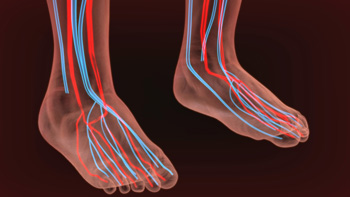
Poor circulation may be common among older people. It may lead to a lack of oxygen, that is intended to reach the extremities, and a numbing or tingling sensation may occur. Some people begin to have memory loss and may cause serious consequences. Common telltale signs you may have poor circulation consists of cold feet, cramps, and joint pain. In addition to becoming fatigued, someone with poor circulation may be concerned with digestive issues. Existing conditions and habits such as obesity, smoking, and drinking excess alcohol may contribute to having poor circulation, and a lifestyle change is often considered. People who are diabetic may be prone to poor circulation, possibly as a result of high glucose levels that may cause damaged blood vessels. If your feet are generally cold, please schedule an appointment with a podiatrist who can guide you toward treatment of poor circulation.
Poor circulation is a serious condition and needs immediate medical attention. If you have any concerns with poor circulation in your feet contact the podiatrists of Issaquah Foot & Ankle Specialists. Our doctors will treat your foot and ankle needs.
Poor Circulation in the Feet
Poor blood circulation in the feet and legs is can be caused by peripheral artery disease (PAD), which is the result of a buildup of plaque in the arteries.
Plaque buildup or atherosclerosis results from excess calcium and cholesterol in the bloodstream. This can restrict the amount of blood which can flow through the arteries. Poor blood circulation in the feet and legs are sometimes caused by inflammation in the blood vessels, known as vasculitis.
Causes
Lack of oxygen and oxygen from poor blood circulation restricts muscle growth and development. It can also cause:
- Muscle pain, stiffness, or weakness
- Numbness or cramping in the legs
- Skin discoloration
- Slower nail & hair growth
- Erectile dysfunction
Those who have diabetes or smoke are at greatest risk for poor circulation, as are those who are over 50. If you have poor circulation in the feet and legs it may be caused by PAD and is important to make changes to your lifestyle in order to reduce risk of getting a heart attack or stroke. Exercise and maintaining a healthy lifestyle will dramatically improve conditions.
As always, see a podiatrist as he or she will assist in finding a regimen that suits you. A podiatrist can also prescribe you any needed medication.
If you have any questions, please feel free to contact one of our offices located in Issaquah, WA . We offer the newest diagnostic and treatment technologies for all your foot care needs.
Every Day Foot Care
Our feet are important in our everyday lives. The problem is that we tend to neglect them. When this becomes a habit, it can cause significant trouble. Ignoring foot problems can mean pain, limited mobility, and expensive doctor's visits. On the other hand, if feet are cared for and looked after regularly, they will perform without pain or complication.
Routine hygiene is the most basic way to care for the feet. Wash and dry them thoroughly daily. Remember to get between the toes and keep the toenails trimmed and short. If the feet feel dry or there are signs of dryness or cracking, use a moisturizer designed for the feet.
When using moisturizer on the feet, try to avoid applying between the toes. If cream or lotion sits too long, they can cause fungal and bacterial growth. When moisturizer is used between the toes, it can also cause the skin to soften too much.
Shoes are also an important aspect of foot care. When one is picking out shoes, make sure they are the correct size. Shoes need to be snug, but not too tight. On the other hand, if shoes are too loose they can cause foot problems as well. It is highly recommended that shopping for new shoes be done later in the day. The reason for this is that the feet will have settled and swelled to their full size by then. To keep your feet at their most healthy, avoid wearing high heels or flip flops too often. Instead, choose shoes that are good for your feet. Good shoes pad the soles of your feet and support the arches and ankles.
Socks should also be worn daily with closed-toe shoes. They may feel hot during the summer months, but they absorb sweat and moisture off the feet. Without socks, the build-up of sweat in a closed-toe shoe can cause fungal problems and athlete's foot.
The best thing to remember in every day foot care is that shoes do make a difference. If you spend a lot of time on your feet, make sure that your shoes show no signs of wear. Shoes should offer ample support for the arches and the overall foot. Additionally, try to make foot cleaning and maintenance a daily habit. If you keep these things in mind, your feet will stay healthy and safe.
