




August 2023
Reasons for a Tight Achilles Tendon

If you are an active person who frequently uses your legs, your Achilles tendon may feel tight. Wearing shoes with elevated heels, where the heel is higher than the ball of the foot, can shorten the muscles in the back of the leg. This feeling can be replicated by pointing your toes down. While active, this happens naturally, but when it is from shoes, it is an artificial shortening position that can cause tightness. Toe springs in shoes elevate the toes, hold them there without natural engagement, and shorten the muscles from the top of the foot. When the muscle running along the outside of the shinbone is tight, the surrounding muscles tighten up and the Achilles tendon is less likely to stretch and contract fully. Walking barefoot can restore foot function, allow toes to spread out, and build stronger feet, but this has its disadvantages as well. Wearing minimalist or barefoot shoes are alternative options that can be considered. An effective way to prevent the sensation of tightness in the Achilles tendon area is to stretch the legs and feet each day. Rolling a massage ball from the top to the bottom just outside the shin bone is a myofascial release that can relieve tightness. Deep squatting, with or without a wall as support, can also help. If you have a tight Achilles tendon that persists, it is suggested that you visit a podiatrist who can help you with additional treatment options.
Achilles tendon injuries need immediate attention to avoid future complications. If you have any concerns, contact the podiatrists of Issaquah Foot & Ankle Specialists. Our doctors can provide the care you need to keep you pain-free and on your feet.
What Is the Achilles Tendon?
The Achilles tendon is a tendon that connects the lower leg muscles and calf to the heel of the foot. It is the strongest tendon in the human body and is essential for making movement possible. Because this tendon is such an integral part of the body, any injuries to it can create immense difficulties and should immediately be presented to a doctor.
What Are the Symptoms of an Achilles Tendon Injury?
There are various types of injuries that can affect the Achilles tendon. The two most common injuries are Achilles tendinitis and ruptures of the tendon.
Achilles Tendinitis Symptoms
- Inflammation
- Dull to severe pain
- Increased blood flow to the tendon
- Thickening of the tendon
Rupture Symptoms
- Extreme pain and swelling in the foot
- Total immobility
Treatment and Prevention
Achilles tendon injuries are diagnosed by a thorough physical evaluation, which can include an MRI. Treatment involves rest, physical therapy, and in some cases, surgery. However, various preventative measures can be taken to avoid these injuries, such as:
- Thorough stretching of the tendon before and after exercise
- Strengthening exercises like calf raises, squats, leg curls, leg extensions, leg raises, lunges, and leg presses
If you have any questions please feel free to contact one of our offices located in Issaquah, WA . We offer the newest diagnostic tools and technology to treat your foot and ankle needs.
Heel Pain in the Morning?

Heel pain can negatively affect your day-to-day life. Simple activities like walking can become incredibly uncomfortable or painful due to heel pain.
Don’t live with heel pain and get treated.
Dr Brandon Nelson, A Board-Certified Physician & Surgeon Discusses Bunion Pain and How to Fix It
.jpg)
Bunions are often a painful condition especially when trying to fit certain shoes or exercise. Let us first discuss what a bunion is then how we can relieve the pain.
A bunion results from a combination of familial inheritance and environmental factors. Meaning that if you do not have a genetic predisposition for a bunion, you will not create one by adding outside forces to your foot. Where this becomes important for example is high heel shoes. If you have a family history of bunions and you wear high heels you can accelerate the process of development of the bunion. Or if you are an avid exerciser like a runner this can speed up the development of a bunion.
So what is a bunion? Well, there is a common misconception that a bunion is growth. This is not true nothing grows with a bunion it is from a misaligned bone in the foot. The culprit is the 1st metatarsal. This bone begins to shift out of place and cause a bulge on the inside of the foot and continues to get worse until the big toe has rotated. The bunion will get bigger as time goes on and often can begin to force the other toes out of position. Bunions at this point become painful and hard to fit in shoes.
What can be done for bunion pain? There are a lot of different things I can provide to relieve bunion pain. It really requires an evaluation of the bunion. But generally, wider shoes can help and prevent going barefoot. There are other options that provide more relief, but it really depends on the stage of the bunion.
If you are experiencing bunion pain I can help call to make an appointment with me at 425-391-8666 or fill out a contact form online.
Sincerely,Dr Brandon Nelson
American College of Foot & Ankle Surgeons
Dr Brandon Nelson, A Board Certified Physician & Surgeon discusses Hammer Toes
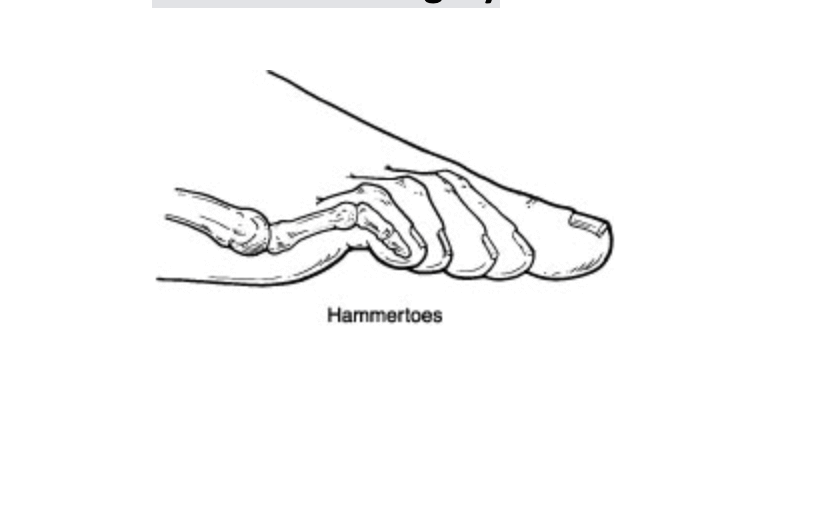
Hammer toes are a curling of the digits of the feet. Specifically the middle of the toes bend downwards and from the side looks similar to a hammer. There are other digital deformities as well like claw toes and mallet toes. But today we will just discuss hammer toes.
Most of the time it is an inherited foot structure that causes hammer toes. An example of this is a flatfoot. A person is born with a flat foot and over time the tendons that run to the toes have been working to create an arch for so long the toes permanently deform creating a hammer toe. There are other causes but the number one cause is the flexor tendons on the bottom of the toe overpowering the other tendons. Once the tendon imbalance occurs hammer toes are the results.
There are a few options for treatment of hammer toes. It is based upon the flexibility of the hammer toe. Is the hammer toe flexible or rigid? If the hammer toe is flexible you can release a tendon and the toe will lay flat. However if the hammer toe is rigid you must remove a small piece of bone in order to get correction. I also recommend looking at the foot structure that is influencing the hammer toe and correct that as well.
If you have hammer toes and would like to discuss how I can help make an appointment with me today. Give us a call at 425-391-8666 or make an appointment online today.
Sincerely, Dr. Brandon Nelson
Heel Pain
Heel pain can be difficult to deal with, especially if you do not know what the underlying cause is. If you ignore your heel pain, the pain can magnify and potentially develop into a chronic condition. Depending on the location of your heel pain, you have developed a specific condition.
One condition is plantar fasciitis. Plantar fasciitis is caused by the inflammation of the plantar fascia, or the band of tissue that connects the heel bone to the base of the toes. The pain from this condition is initially mild but can intensify as more steps are taken when you wake up in the morning. To treat this condition, medication will likely be necessary. Plantar fasciitis is often associated with heel spurs; both require rest and special stretching exercises.
There are various options your podiatrist may suggest for heel pain. Treatment options for heel pain typically include non-steroidal anti-inflammatory drugs (NSAIDS), which may reduce swelling and pain. Other options are physical therapy, athletic taping, and orthotics. In severe cases of heel pain, surgery may be required.
Preventing heel pain is possible. If you are looking to prevent heel pain from developing in the future, be sure to wear shoes that fit you properly and do not have worn down heels or soles. Be sure to warm up properly before participating in strenuous activities or sports that place a lot of a stress on the heels. If you are experiencing any form of heel pain, speak with your podiatrist to determine the underlying cause and receive the treatment you need.
Various Reasons for Heel Pain
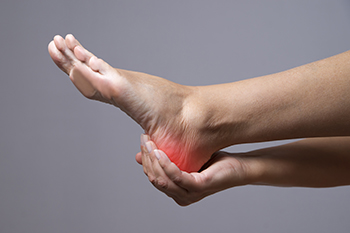
Heel pain is a common condition that affects people worldwide. There are various foot conditions that can cause heel pain, including plantar fasciitis, heel spurs, and Achilles tendonitis. It can be difficult to walk, and medical attention is often sought for relief. There are certain stretches that can be performed that may reduce heel pain. The standing calf stretch is done by standing on a step and lowering one heel at a time until a gentle stretch is felt. This can be repeated several times per day to gradually strengthen the heel. Another effective stretch is done by sitting on the floor while stretching the feet out in front of you. After rolling up a towel lengthwise, it can be put around the ball of the feet, while pulling it towards you. After holding for several seconds, this stretch can be repeated during the day. If you have heel pain, it is strongly suggested that you confer with a podiatrist who can determine the cause and provide effective treatment solutions.
Many people suffer from bouts of heel pain. For more information, contact the podiatrists of Issaquah Foot & Ankle Specialists. Our doctors can provide the care you need to keep you pain-free and on your feet.
Causes of Heel Pain
Heel pain is often associated with plantar fasciitis. The plantar fascia is a band of tissues that extends along the bottom of the foot. A rip or tear in this ligament can cause inflammation of the tissue.
Achilles tendonitis is another cause of heel pain. Inflammation of the Achilles tendon will cause pain from fractures and muscle tearing. Lack of flexibility is also another symptom.
Heel spurs are another cause of pain. When the tissues of the plantar fascia undergo a great deal of stress, it can lead to ligament separation from the heel bone, causing heel spurs.
Why Might Heel Pain Occur?
- Wearing ill-fitting shoes
- Wearing non-supportive shoes
- Weight change
- Excessive running
Treatments
Heel pain should be treated as soon as possible for immediate results. Keeping your feet in a stress-free environment will help. If you suffer from Achilles tendonitis or plantar fasciitis, applying ice will reduce the swelling. Stretching before an exercise like running will help the muscles. Using all these tips will help make heel pain a condition of the past.
If you have any questions, please feel free to contact one of our offices located in Issaquah, WA . We offer the newest diagnostic and treatment technologies for all your foot care needs.
