




May 2023
Everyday Foot Care
Our feet are arguably one of the most important parts of the body. When it comes to health and beauty routines, the feet and toenails are usually ignored. You should always practice proper footcare to avoid any fungal infections or ailments that can not only ruin the appearance of your feet, but also cause pain. Ignoring any foot problems could potentially lead to an expensive doctor’s visit.
The most important step in proper foot care is to wash your feet daily. You should wash them with soap and water. Doing this will cleanse your feet of dirt, sweat and bacteria. It is crucial that you clean between the toes and pat your feet dry with a towel afterward. Your toenails are also an important part of the feet and you may find that they get dirtier in the summer when you wear sandals. It is important that you practice proper toenail care in addition to cleaning the rest of your feet. When trimming your nails, you should always trim straight across instead of in a rounded shape. Trimming in a curved shape may lead to ingrown toenails.
Moisturization is also important for foot care, and you should be moisturizing your feet every day. The best way to prevent dry feet is to rub lotion or petroleum jelly on your clean feet at night and put socks over them. In the morning, your feet should be soft and moisturized.
Another crucial step in proper foot care is to wear the right shoes for whichever activity you are going to partake in. In warmer weather, you should wear shoes that allow your feet to breathe. It is best to avoid shoes such as flip-fops that do not provide arch support. Tight shoes may also be harmful, and they may even cause you to develop bunions.
If you plan on taking a shower in a public area, you should be especially careful, so you do not pick up any fungi. Showers are prone to harboring different types of bacteria and fungi. You should always wear shower shoes or flip flops when walking around in locker rooms and public showers. Avoid sharing shoes with other people because this is another way that fungus may be spread.
If you are experiencing any problems with your feet you should speak with your podiatrist to determine the best method of treatment for you.
Dr Brandon Nelson, A Board-Certified Physician & Surgeon Discusses Bunions and When to Fix Them
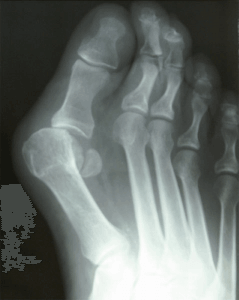
Bunions come in all shapes and sizes. I have seen very large ones that are not painful and very small ones that are painful. It is amazing how it can really be all over the spectrum and size and pain do not always coordinate. The most important first step regardless of pain is to have them evaluated.
The evaluation should be done by a bunion expert. I have spent years and time with 1000s of patients evaluating bunions. I can now say some do very well with conservative care and some require surgery. I always recommend x-rays and looking at the rest of the foot to see if it is affected. Sometimes as the bunion gets bigger the smaller toes begin to curl and hammer. It is paramount to appreciate the rest of the foot and its function as well.
The treatment for bunions is not all the same. The treatment depends on individual foot structures, bone quality and lifestyle or activity levels. If you are suffering from bunion pain, I can help. I have seen how painful and debilitating it can be. Make an appointment online or give us a call at 425-391-8666 today.
Sincerely,
American College of Foot & Ankle Surgeons
Dr Brandon Nelson, A Board-Certified Physician & Surgeon Discusses Heel Pain
Heel pain can come on very suddenly. I remember when I first had heel pain and could hardly get out of bed. That first step in the morning was brutal. It would take hours for my heel to calm down. Then every time I sat down and got back up it would start. It was a terrible cycle that felt like it would never stop. Well, this really helped me to understand how patients were feeling. It also helped me come up with a treatment protocol that speeded recovery and permanently get rid of heel pain.
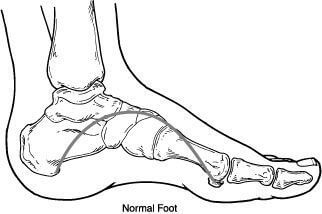
Most of all heel pain is plantar fasciitis. The plantar fascia is a thick fibrous tissue that is the main supporting structure of the foot. It helps with all phases of gait. It is chronically under load and tension and is the workhorse of the foot. This is why it can be so common to have heel pain. It is believed that something like 60% of all adults will experience heel pain at some point in their lives.
The treatment protocol I developed took me years to perfect and 1000s of patients. All heel pain is not the same just as all foot structures are not the same. If you are suffering from heel pain, I can help. I have seen how painful and debilitating it can be. Make an appointment at 425-391-8666 or contact us online.
Sincerely,
Hammertoe Deformities
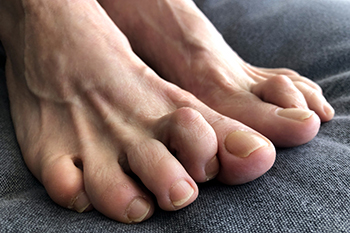
A hammertoe is caused by the misalignment in one of the toe joints which results in the toe developing a Z-shaped deformity. It can develop from rheumatoid arthritis, neurologic foot disorders, or other causes. Typically, the second toe is affected, and this happens because of an elongated second metatarsal and pressure from a bunion on the big toe. Corns can progress on the hammertoe deformity and can be an additional source of pain. When one has a hammertoe, it is important to wear shoes with a wider toe box so the toes have enough room to move freely, as well as to accommodate the foot deformity. Toe pads and orthotics might also help those with hammertoes. If these conservative measures are not helpful, speak to your podiatrist and see if surgery is an option. If you suffer with a hammertoe, it is suggested that you visit a podiatrist for an examination and treatment.
Hammertoes can be a painful condition to live with. For more information, contact the podiatrists of Issaquah Foot & Ankle Specialists. Our doctors will answer any of your foot- and ankle-related questions.
Hammertoe
Hammertoe is a foot deformity that occurs due to an imbalance in the muscles, tendons, or ligaments that normally hold the toe straight. It can be caused by the type of shoes you wear, your foot structure, trauma, and certain disease processes.
Symptoms
- Painful and/or difficult toe movement
- Swelling
- Joint stiffness
- Calluses/Corns
- Physical deformity
Risk Factors
- Age – The risk of hammertoe increases with age
- Sex – Women are more likely to have hammertoe compared to men
- Toe Length – You are more likely to develop hammertoe if your second toe is longer than your big toe
- Certain Diseases – Arthritis and diabetes may make you more likely to develop hammertoe
Treatment
If you have hammertoe, you should change into a more comfortable shoe that provides enough room for your toes. Exercises such as picking up marbles may strengthen and stretch your toe muscles. Nevertheless, it is important to seek assistance from a podiatrist in order to determine the severity of your hammertoe and see which treatment option will work best for you.
If you have any questions, please feel free to contact one of our offices located in Issaquah, WA . We offer the newest diagnostic and treatment technologies for all your foot care needs.
Hammertoe
Hammertoe is a foot deformity that occurs due to an imbalance in the tendons, muscles, or ligaments that are responsible for holding the toes in their normal position. This condition may be caused by poor footwear, foot structure, trauma, and disease. The most common solution for hammertoe is to relieve the pain by changing your footwear and wearing orthotics. In severe cases, surgery may be required.
The shoes that are most likely to cause hammertoe are high heeled shoes or shoes that are too tight in the toe box. Tight shoes will force your toes to crowd together in a curled position. This position will likely continue when you take your shoes off. Another cause is trauma. When you stub your toe, you are increasing the chance that you will develop hammertoe.
There are risk factors that may make you more likely to develop this condition. Women are more likely to have the condition compared to men, and it is also more likely to appear in those who are older in age.
Many different foot problems can be avoided by wearing shoes that have adjustability, adequate toe room, and low heels. Furthermore, if you want to buy new shoes, you should look to purchase them at the end of the day and make sure you know your correct size. The importance of buying shoes at the end of the day is that your feet swell as the day progresses. You should also ensure that you are wearing your correct size because your shoe size may change as you grow older.
To diagnose someone with hammertoe, your podiatrist will need to conduct a thorough examination of your foot. Your doctor may even order an x-ray to evaluate the bones and joints of your feet and toes.
If you have hammertoe, your podiatrist may recommend that you wear shoes that fit you better along with inserts to place inside them. Additionally, he or she may suggest special exercises for you to perform to stretch your toes. One helpful exercise it to pick up marbles with your feet or crumple a towel with your toes.
Prior to meeting with your podiatrist, it will be helpful to make a list of all the symptoms you are experiencing. You should also make a note of medications you are taking and important personal information about your medical history.
Are You Suffering From Nerve Damage?

Neuropathy is a condition that can lead to numbness or loss of sensation in the feet, but it can also cause pain. This condition is more likely to develop for those who are diabetic, obese, or with high blood pressure.
Dr Brandon Nelson, A Board-Certified Physician & Surgeon Discusses Neuromas
Do you have pain and or burning in one of your feet? Have you felt like maybe your sock is balled up in the front of your shoe or you are walking on a pebble? Do you find yourself taking off your shoe and sock to rub your forefoot? If these symptoms sound familiar you could have Morton’s Neuroma. This is a common condition that presents between the ages of 40-60.
A neuroma is a condition that occurs when a nerve is irritated in the foot and can swell. This normally occurs in the 3rd interspace of the foot. This is because the large nerve in the ankle that supplies the innervation to the foot divides into two branches. These two branches are the medial and lateral plantar nerves of the foot. These then come together in the 3rd interspace and create a spot of compression. Most physicians believe that this area lacks enough space and with ambulating the nerve can become irritated and a neuroma can develop.
Once a neuroma develops it can be very challenging to get the nerve to calm down. I have seen all sorts of creative solutions by patients but there are some tried and true methods. The first seems to be offloading of a nerve. Specifically, a prescription orthotic that is custom made for your anatomy works very well. This will need to be done by a physician, a shoe store or non-physician does not have access to the correct technology or laboratory equipment nor the training. Secondly, alcohol injections provide incredible relief to the irritated nerve. There is a great long-term study that shows this is effective up to 89% of the time.
If you are suffering from what you believe is a neuroma I can help. I have seen how painful and debilitating these can be. Make an appointment at 425-391-8666 or by filling out a contact form online.
Sincerely,
Dr Brandon Nelson
American College of Foot & Ankle Surgeons
Dr. Timothy Young Discusses Bunion Surgeries Part 3
.jpg)
Dr. Timothy Young Discusses Bunion Surgeries Part 3
After the surgery Dr. Young likes to keep close tabs on his patients' and their recovery. It is important that any post procedure pain is well-controlled. It is also important that they have proper instructions beforehand, so they are prepared at home when all the anesthetic wears off. This is where being a couch potato pays off. Keeping the feet elevated, using ice, and taking medication as prescribed is critical. It is also critical to protect the surgical site either using a special boot, splint, crutches, or scooter. All the presurgical advice like getting a shower protector keeping the dressing intact to protect the surgical site comes into play. At each postoperative visit, the surgical site is checked to make certain it is healing properly and that there are no signs of infection.
Post acute recovery involves:
This involves bone remodeling and healing and soft tissue remodeling and healing. Sutures are removed. Post procedure x-rays are taken to verify the correction is maintained and that the bones are starting to bridge together properly. Our patients take special bone healing supplements also. We also often work with outside physical therapy clinics to help our patients heal faster and obtain proper range of motion and strength.
In conclusion, preparing for bunion surgery requires a comprehensive approach that considers the patient’s medical history, the extent of the deformity, and the type of surgery required. A skilled surgeon will carefully plan the surgery, provide detailed instructions for pre- and post-operative care, and closely monitor the patient’s recovery to ensure the best possible outcome.
If you are experiencing foot or ankle pain, give us a call at 425-391-8666 or make an appointment online today.
Athlete’s Foot
Athlete’s foot, or tinea pedis, is a skin disease caused by a fungal infection. The infection typically occurs between the toes, and the feet are most subject to this disease because shoes best create the warm, dark, and moist environment in which fungus thrives. Other areas that create a similar environment, such as swimming pools, public showers, and locker rooms; can also promote fungi growth.
Symptoms of athlete’s foot include dry skin, itching, scaling, inflammation, and blistering. Sometimes, blisters can evolve into the cracks or breaks in the skin. The exposed tissue can then create pain, swelling, and discharge. The spread of infection can cause itching and burning as well.
While athlete’s foot commonly occurs between the toes, it may also spread to the toenails or soles of the feet. Other parts of the body, such as the groin or underarms, can also become infected if they are touched after the original area of infection is scratched. Aside from physical contact, athlete’s foot can also spread through the contamination of footwear, clothing or bedsheets.
Proper foot hygiene is essential in preventing athlete’s foot. You can prevent the fungus from spreading by frequently washing your feet using soap and water, thoroughly drying the feet between the toes, changing shoes and socks every day to reduce moisture, and ensuring that bathroom and shower floors are disinfected. Other tips include using shower shoes, avoiding walking barefoot in public environments, wearing light and airy shoes, and wearing socks that keep the feet dry.
While treatment for athlete’s foot can involve topical or oral antifungal drugs, mild cases of the infection can be treated by dusting foot powder in shoes and socks. Any treatment used can be supplemented by frequently bathing the feet and drying the toes. If proper foot hygiene and self-care do not ease your case of athlete’s foot, contact your podiatrist. He will determine if the underlying cause of your condition is truly a fungus. If that is the case, a comprehensive treatment plan may be suggested with the inclusion of prescription antifungal medications.
Symptoms of Athlete’s Foot
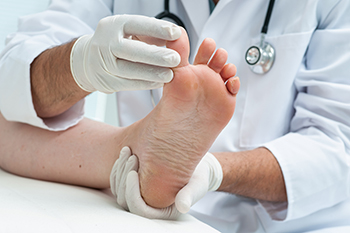
Athlete’s foot, or tinea pedis, is a common fungal infection that causes redness, itching, and flakiness. The skin may also begin to crack between the toes and on the soles of the feet. Additionally, changes in skin color and a foul smell may accompany athlete’s foot. One does not have to be an athlete to get athlete’s foot. This ailment got its name from being common among athletes who frequent gyms and locker rooms, that are breeding grounds for athlete’s foot fungus. Anyone can get athlete’s foot, and the chances may increase with a weakened immune system, poor foot hygiene, or possibly from diabetes. This condition is contagious, and can be spread through contact with infected skin or through indirect contact with clothing, towels, or floors. It is beneficial for athlete’s foot to be treated promptly, and if left untreated, it may become worse, and affect the toenails. If you have athlete’s foot, it is suggested that you consult with a podiatrist who can provide you with treatment and prevention methods.
Athlete’s Foot
Athlete’s foot is often an uncomfortable condition to experience. Thankfully, podiatrists specialize in treating athlete’s foot and offer the best treatment options. If you have any questions about athlete’s foot, consult with the podiatrists from Issaquah Foot & Ankle Specialists. Our doctors will assess your condition and provide you with quality treatment.
What Is Athlete’s Foot?
Tinea pedis, more commonly known as athlete’s foot, is a non-serious and common fungal infection of the foot. Athlete’s foot is contagious and can be contracted by touching someone who has it or infected surfaces. The most common places contaminated by it are public showers, locker rooms, and swimming pools. Once contracted, it grows on feet that are left inside moist, dark, and warm shoes and socks.
Prevention
The most effective ways to prevent athlete’s foot include:
- Thoroughly washing and drying feet
- Avoid going barefoot in locker rooms and public showers
- Using shower shoes in public showers
- Wearing socks that allow the feet to breathe
- Changing socks and shoes frequently if you sweat a lot
Symptoms
Athlete’s foot initially occurs as a rash between the toes. However, if left undiagnosed, it can spread to the sides and bottom of the feet, toenails, and if touched by hand, the hands themselves. Symptoms include:
- Redness
- Burning
- Itching
- Scaly and peeling skin
Diagnosis and Treatment
Diagnosis is quick and easy. Skin samples will be taken and either viewed under a microscope or sent to a lab for testing. Sometimes, a podiatrist can diagnose it based on simply looking at it. Once confirmed, treatment options include oral and topical antifungal medications.
If you have any questions, please feel free to contact one of our offices located in Issaquah, WA . We offer the newest diagnostic and treatment technologies for all your foot care needs.
Check if allow_url_fopen is enabled on your server. It is mandatory. If not then you must activate it. Contact with your Server Admin / Hosting Provider.
Steps to enable allow_url _fopen :
allow_url_fopen = on
allow_url_include = on.
Add it to php.ini settings.
Google Business Reviews Error Notice!
Read Below Steps Carefully :
1. Check your API key and PLACE id. May be it is not right. Make sure it is correct one.
2. This message commonly shows when api key is exceeded daily request quota for this API or there is no active billing account for this API. Because according to Google there is a limit for free API key. If it exceeds they ask for billing.
3. To know more about Google Pricing , Check here : Google Pricing
4. You can create your Google API key here
5. Must use a right PlaceID. Get PlaceID here
6. One important thing, Don't forget to add billing account to Google. Must check what Google says here
7. If you still find issue , then check first if your Business registered with Google or not. Read more about it here
8.Still find issue, then contact developer : info@aaextensions.com or ashik685@gmail.com
