




September 2021
Heel Pain
Heel pain can be difficult to deal with, especially if you do not know what the underlying cause is. If you ignore your heel pain, the pain can magnify and potentially develop into a chronic condition. Depending on the location of your heel pain, you have developed a specific condition.
One condition is plantar fasciitis. Plantar fasciitis is caused by the inflammation of the plantar fascia, or the band of tissue that connects the heel bone to the base of the toes. The pain from this condition is initially mild but can intensify as more steps are taken when you wake up in the morning. To treat this condition, medication will likely be necessary. Plantar fasciitis is often associated with heel spurs; both require rest and special stretching exercises.
There are various options your podiatrist may suggest for heel pain. Treatment options for heel pain typically include non-steroidal anti-inflammatory drugs (NSAIDS), which may reduce swelling and pain. Other options are physical therapy, athletic taping, and orthotics. In severe cases of heel pain, surgery may be required.
Preventing heel pain is possible. If you are looking to prevent heel pain from developing in the future, be sure to wear shoes that fit you properly and do not have worn down heels or soles. Be sure to warm up properly before participating in strenuous activities or sports that place a lot of a stress on the heels. If you are experiencing any form of heel pain, speak with your podiatrist to determine the underlying cause and receive the treatment you need.
Are Bunions Affecting Your Everyday Life?

Have you noticed a bony protrusion on the side of your big toe? If so, you may have developed the foot condition known as a bunion. Don't let bunions interfere with your daily activities.
Tenex Procedure for Plantar Fasciitis, Dr Brandon Nelson a Board Certified Physician and Surgeon
Despite all the available conservative options available for plantar fasciitis some patients do still require surgery. There are many different surgical procedures to address chronic plantar fasciitis. This includes the traditional open fasciotomy, the endoscopic fasciotomy, Topaz procedure and the Tenex procedure. The Tenex procedure is relatively new and has showed promising results with minimally invasive technology.
Tenex, is basically a small tool that you insert in the fascia that removes tiny pieces of the fascia. It is inserted multiple times via a very small incision and safely removes some of the diseased fascia and stimulates new fascial growth. The procedure itself can be done in less than 10 minutes and does not require anesthesia. A little bit of numbing medication can be injected around the fascia and then the procedure can be performed. Patients are required to wear a walking boot for about 3 weeks.
The initial results are very promising, and patients experience no pain after the procedure. I have seen very little swelling or bruising after the procedure and patients have been extremely satisfied with the recovery course and reduction of plantar fascial pain. I believe this procedure will change the open approach for a lot of surgeons and is demonstrating incredible results. If you are suffering from plantar fasciitis we can help.
Give us a call today at 425-391-8666 or make an appointment online today.
Dr. Timothy Young, Board Certified Foot Surgeon Discusses a More Involved Tailor's Bunion Surgery Correction
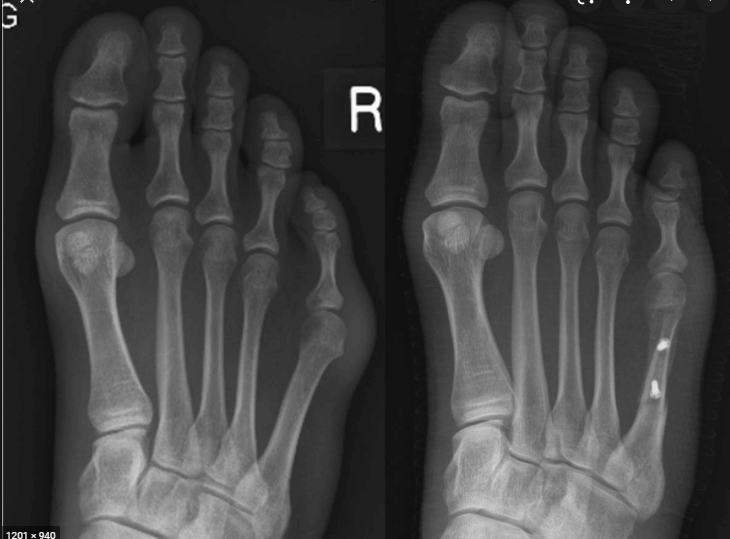
In some cases, the fifth metatarsal bone was away from the adjacent fourth metatarsal so much that to correct the problem we must reset the bone. This is much like creating a surgical fracture realigning the bone exactly where it should be amenable allowing it to heal in its new position. This can correct a more pronounced tailor's bunion.
This requires some type of fixation. Usually this involves one or 2 small screws to hold the bone in the newly aligned position. Bone healing typically takes 6–8 weeks. Therefore, the cast boot is used long enough to allow for the additional bone healing. This can also help if the patient has a pressure point under the fifth metatarsal or callus under the fifth metatarsal. There are several different ways of realigning the bone and then fixating this.
Does Hammertoe Surgery Hurt?

If you have hammertoes, you may be weighing your treatment options. Advanced cases of hammertoe, in which the bent toe joints are permanently fixed in a painful, flexed position, are often treated surgically. Hammertoe surgery is used to straighten the deformed toes and relieve painful symptoms. These surgeries are typically outpatient procedures, meaning that you get to go home the same day as the operation. The surgery will be done under local anesthesia, so you will not feel pain during the actual operation. Following surgery, you may experience some pain and swelling. Your doctor will likely prescribe medications to manage pain and prevent infection. You will also probably need to wear a special shoe or boot to keep the foot in the proper position as it heals. Full recovery from a hammertoe surgery may take 4 to 6 weeks. To learn more about hammertoe surgery, please consult with a podiatrist.
Hammertoes can be a painful condition to live with. For more information, contact the podiatrists of Issaquah Foot & Ankle Specialists. Our doctors will answer any of your foot- and ankle-related questions.
Hammertoe
Hammertoe is a foot deformity that occurs due to an imbalance in the muscles, tendons, or ligaments that normally hold the toe straight. It can be caused by the type of shoes you wear, your foot structure, trauma, and certain disease processes.
Symptoms
- Painful and/or difficult toe movement
- Swelling
- Joint stiffness
- Calluses/Corns
- Physical deformity
Risk Factors
- Age – The risk of hammertoe increases with age
- Sex – Women are more likely to have hammertoe compared to men
- Toe Length – You are more likely to develop hammertoe if your second toe is longer than your big toe
- Certain Diseases – Arthritis and diabetes may make you more likely to develop hammertoe
Treatment
If you have hammertoe, you should change into a more comfortable shoe that provides enough room for your toes. Exercises such as picking up marbles may strengthen and stretch your toe muscles. Nevertheless, it is important to seek assistance from a podiatrist in order to determine the severity of your hammertoe and see which treatment option will work best for you.
If you have any questions, please feel free to contact one of our offices located in Issaquah, WA . We offer the newest diagnostic and treatment technologies for all your foot care needs.
Hammertoe
Hammertoe is a foot deformity that occurs due to an imbalance in the tendons, muscles, or ligaments that are responsible for holding the toes in their normal position. This condition may be caused by poor footwear, foot structure, trauma, and disease. The most common solution for hammertoe is to relieve the pain by changing your footwear and wearing orthotics. In severe cases, surgery may be required.
The shoes that are most likely to cause hammertoe are high heeled shoes or shoes that are too tight in the toe box. Tight shoes will force your toes to crowd together in a curled position. This position will likely continue when you take your shoes off. Another cause is trauma. When you stub your toe, you are increasing the chance that you will develop hammertoe.
There are risk factors that may make you more likely to develop this condition. Women are more likely to have the condition compared to men, and it is also more likely to appear in those who are older in age.
Many different foot problems can be avoided by wearing shoes that have adjustability, adequate toe room, and low heels. Furthermore, if you want to buy new shoes, you should look to purchase them at the end of the day and make sure you know your correct size. The importance of buying shoes at the end of the day is that your feet swell as the day progresses. You should also ensure that you are wearing your correct size because your shoe size may change as you grow older.
To diagnose someone with hammertoe, your podiatrist will need to conduct a thorough examination of your foot. Your doctor may even order an x-ray to evaluate the bones and joints of your feet and toes.
If you have hammertoe, your podiatrist may recommend that you wear shoes that fit you better along with inserts to place inside them. Additionally, he or she may suggest special exercises for you to perform to stretch your toes. One helpful exercise it to pick up marbles with your feet or crumple a towel with your toes.
Prior to meeting with your podiatrist, it will be helpful to make a list of all the symptoms you are experiencing. You should also make a note of medications you are taking and important personal information about your medical history.
Arthritic Foot Care
During your lifetime, you will probably walk about 75,000 miles, which is quite a lot of stress to put on your feet. As you get older, the 26 bones and 30 joints in each of your feet will lose flexibility and elasticity. Your foot’s natural shock absorbers will wear down as well. Having arthritis added to this mix only makes matters worse. Your joints will become distorted and inflamed, which is why arthritic foot care needs to be something to think about every day.
When dealing with arthritis, having additional foot complications, such as bunions, hammertoes, or neuroma, can be a serious detriment. To avoid these, buy well-fitting shoes with a lower heel and good support. Arthritis causes you to lose your arch, so having shoes with good arch support is also highly recommended.
Aside from getting good arch support, the shoes need to fit comfortably and properly as well. A good place to start is by leaving a finger width between the back of the shoe and your foot to gauge proper size. It is also helpful to have a square or rounded toe box in the front to provide even more comfort. Another thing to look for is a rubber sole that can provide a cushion and absorb shock as you walk. This adds flexibility to the ball of your foot when you push off your heel to walk.
Exercise is another key aspect of arthritic foot care. Exercise not only strengthens and stretches your muscles and joints, but helps to prevent further injury and pain as well. Stretching the Achilles tendon, the tendon located in the back of your heel, will give you added mobility and reduce pain due to stress. Another thing you can do is massage your feet, kneading the ball of your foot as well as your toes from top to bottom.
Stretching the Achilles tendon is a simple exercise that you can do at home anytime. Lean against the wall with your palms flat against the surface while placing one foot forward, towards the wall, and one foot behind you. Bend your forward knee towards the wall while keeping your back knee locked straight, and make sure both your heels are completely touching the ground at all times. This will stretch your Achilles tendon and calf muscles as well. You will feel the stretch almost immediately. You can also stretch your toes in a couple ways. One involves taking a rubber band and wrapping it around both your big toes while your heels remain together. Then, pull them apart to stretch your big toe. You can also place a rubber band around all the toes of one of your feet. Then, try to separate each individual toe, stretching them all.
A final step you can take to help your arthritis is taking non-steroid, non-inflammatory drugs or topical medicines with capsaicin. Unfortunately, there is no complete way to remove all of your arthritic pain. However, following some of this advice can go a long way in staying as pain-free as possible.
What Is Infectious Arthritis?
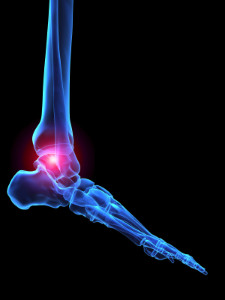 Infectious arthritis is a sudden and painful form of arthritis caused by bacterial, viral, or fungal infections. This type of arthritis typically only affects one joint and can be caused by an infection spreading from one part of your body to the joint or joint lining, or by an infection-causing germ entering the body through open wounds, injections, or surgery. The symptoms of infectious arthritis include intense swelling, pain, fever, and chills. Although infectious arthritis usually affects the knees, it can also attack hips, wrists, and ankles. If you have symptoms of infectious arthritis in your ankle, a podiatrist may be able to help. For more information about the different types of arthritis, the effects of arthritis on your feet, and how to care for arthritic feet and ankles, please consult with a podiatrist.
Arthritis can be a difficult condition to live with. If you are seeking treatment, contact the podiatrists from Issaquah Foot & Ankle Specialists. Our doctors can provide the care you need to keep you pain-free and on your feet.
Arthritic Foot Care
Arthritis is a joint disorder that involves the inflammation of different joints in your body, such as those in your feet. Arthritis is often caused by a degenerative joint disease and causes mild to severe pain in all affected areas. In addition to this, swelling and stiffness in the affected joints can also be a common symptom of arthritis.
In many cases, wearing ill-fitting shoes can worsen the effects and pain of arthritis. Wearing shoes that have a lower heel and extra room can help your feet feel more comfortable. In cases of rheumatoid arthritis, the arch in your foot may become problematic. Buying shoes with proper arch support that contour to your feet can help immensely.
Alleviating Arthritic Pain
- Exercises that stretch the foot can prevent further pain and injury and increase mobility
- Most of the pain can be alleviated with anti-inflammatory drugs, heat, and topical medications
- Massages can help temporarily alleviate pain.
It is best to see your doctor for the treatment that is right for your needs and symptoms. Conditions vary, and a podiatrist can help you determine the right method of care for your feet.
If you have any questions please feel free to contact one of our offices located in Issaquah, WA . We offer the newest diagnostic tools and technology to treat your foot and ankle needs.
