




April 2021
Dr. Brandon Nelson, a Board Certified Physician and Surgeon, Discusses the Best Treatment Option to Stop Heel Pain Quickly and Forever
The weather is changing and I find myself spending more time outside. I think we are all feeling a little cooped up after the Northwest winter. I know how important it is for us to all get outside and recharge with some fresh air. The hiking, biking and running options in the Northwest are always abound and they help to provide some create therapy for our minds and our souls. I see an increase in patients that come in the office this time of year for heel pain and I want to help my patients get back out there as soon as possible and pain free.
The most common cause of heel pain is plantar fasciitis and it can be very difficult to exercise with this condition. I encourage anybody suffering from heel pain to come see a foot and ankle physician quickly as this will speed up the process of getting better. I see a direct correlation with how long the symptoms have been present and the time it takes to get relief. Additionally, there are many other causes of heel pain that can be complicated by waiting to see your doctor.
Plantar fasciitis typically will present with pain in the morning or pain after you get out of bed. It usually gets better as you stretch and walk and returns any time you sit down or are off your feet. Most patients describe a bruised like sensation and often think they have stepped on something that has started this process.
The current most effective treatment that we have to offer has almost a 100% success rate. In the past some patients would not get better despite conservative treatment options and would require surgery. This rarely happens now at our clinic as heel pain is the most common pathology we see. We have spent years developing and tracking our treatment success and now have perfected the most successful conservative treatment option available. The majority of patients we see will be 100% in less than 3 weeks and never experience heel pain again. Do not go into summer with heel pain let us help.
Give us a call at 425-391-8666 or make an appointment online today.
Ankle Joints, The Achilles Tendon, and High Heels
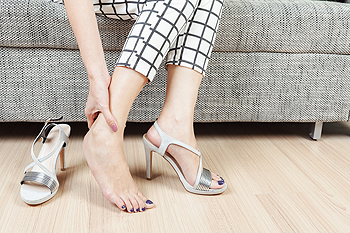 The ankles may suffer for women who choose to frequently wear high heels. This can be a result of the amount of body weight the ankle joints bear, and is generally increased when high heels are worn. Research has shown that arthritis may develop in women who enjoy wearing high heels, which can cause severe pain and discomfort. Additionally, the Achilles tendon can be affected. This is the tendon that is located in the back of the leg, and connects the calf muscles to the heel. Consistent wearing of high heels, can make this tendon feel stiff. If you would like additional information about the effect high heels have on the feet, please confer with a podiatrist.
High heels have a history of causing foot and ankle problems. If you have any concerns about your feet or ankles, contact the podiatrists from Issaquah Foot & Ankle Specialists. Our doctors can provide the care you need to keep you pain-free and on your feet.
Effects of High Heels on the Feet
High heels are popular shoes among women because of their many styles and societal appeal. Despite this, high heels can still cause many health problems if worn too frequently.
Which Parts of My Body Will Be Affected by High Heels?
- Ankle Joints
- Achilles Tendon – May shorten and stiffen with prolonged wear
- Balls of the Feet
- Knees – Heels cause the knees to bend constantly, creating stress on them
- Back – They decrease the spine’s ability to absorb shock, which may lead to back pain. The vertebrae of the lower back may compress.
What Kinds of Foot Problems Can Develop from Wearing High Heels?
- Corns
- Calluses
- Hammertoe
- Bunions
- Morton’s Neuroma
- Plantar Fasciitis
How Can I Still Wear High Heels and Maintain Foot Health?
If you want to wear high heeled shoes, make sure that you are not wearing them every day, as this will help prevent long term physical problems. Try wearing thicker heels as opposed to stilettos to distribute weight more evenly across the feet. Always make sure you are wearing the proper shoes for the right occasion, such as sneakers for exercising. If you walk to work, try carrying your heels with you and changing into them once you arrive at work. Adding inserts to your heels can help cushion your feet and absorb shock. Full foot inserts or metatarsal pads are available.
If you have any questions, please feel free to contact one of our offices located in Issaquah, WA . We offer the newest diagnostic and treatment technologies for all your foot care needs.
Effect of High Heels on the Feet
For hundreds of years, women have been wearing various kinds of high heels for aesthetic reasons. Women who wear high heels appear to be taller and have longer and thinner legs, and the wearer’s gait and posture changes. Though high heels have had an association with femininity and have kept them popular over the years, there are definite health problems caused by wearing them too frequently.
The motion of the ankle joints is limited when heels are worn. The ankle joint is very important to the body when it comes to walking. Because of their location, these joints have a great deal of weight put on them. Thus, it is very important to keep them as healthy as possible. The Achilles tendon is the main tendon in the ankle. Wearing high heels too often, studies have shown, can cause the calf muscle and Achilles tendon to shorten and stiffen. This can cause problems when shoes without heels are worn.
By putting a great deal of pressure on the ball of the foot and by forcing the toes into a small toe box, high heels can cause or may worsen many foot problems. These include corns, hammertoe, bunions, Morton’s neuroma and plantar fasciitis.
Not only does wearing high heels regularly have negative effects on the feet, the rest of the body can suffer as well. The knees, one of the most important joints in the entire body, can be affected by wearing high heels. High heels can cause the knees to stay bent all the time. Also, it can cause them to bend slightly inward as well. Doctors believe that women can suffer from osteoarthritis later in life because of constantly walking like in high heels. By limiting the natural motion of the foot during walking, high heels also cause an increased in stress on the knees.
Similarly, high heels can cause the back to go out of alignment. If high heels are worn constantly, the spine’s ability to absorb shock can cause continued back pain. They can compress the vertebrae of the lower back, and can overuse the back muscles.
However, this is not to say that high heels can never be worn. If worn occasionally and not often, they will not cause serious problems. They should not be worn every day. It’s important to wear them modestly to avoid the long-term physical health problems of the feet, knees, ankles, and back mentioned above.
Dr. Timothy Young a Board Certified Foot Surgeon, Talks About Surgical Treatment of Capsulitis of the Second Toe and a Bunion Deformity Combined
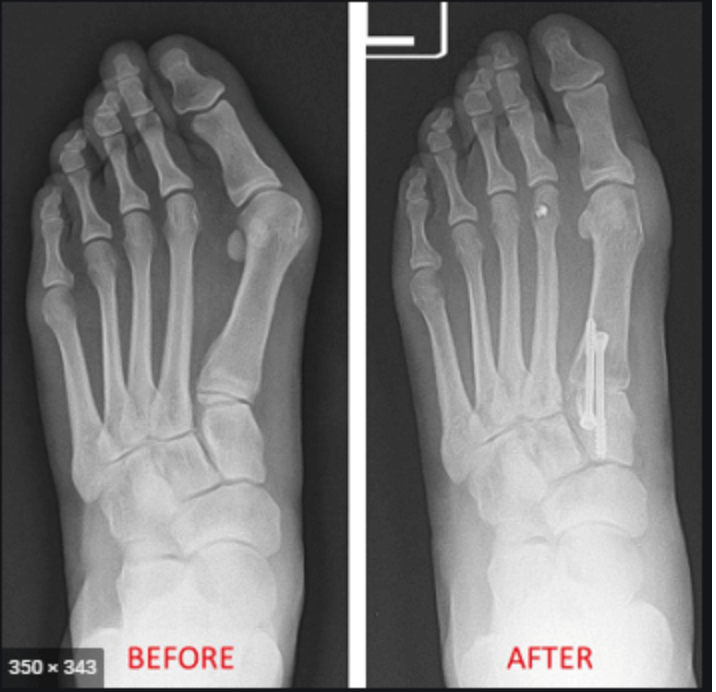
Surgical treatment for this condition involves correction of the bunion deformity, which often helps the second MTP joint capsulitis. The ideal procedure for this would be fusion of the first metatarsal-cuneiform joint in combination with the bunionectomy (lapidus bunionectomy or lapiplasty). The fusion of the first metatarsal stabilizes the first metatarsal and therefore able to bear the weight that it should be proportional to the rest of the foot. Therefor this procedure takes some of the stress off of the next in line 2nd metatarsal. So a lapidus bunionectomy is often a very effective treatment for both the bunion and capsulitis of the 2nd toe.
Dr. Brandon Nelson, A Board Certified Physician, Discusses Capsulitis of the Second Toe
Capsulitis is an inflammation of a capsule or joint. Your joints are defined by where two bones come together and have cartilage on the opposing surfaces and a joint sac (capsule) that encircles the two ends of those bones. Additionally in the joint capsule is fluid which helps the joint to glide smoothly.
The human body has many joints, the human foot has the highest concentration of joints with 33. The foot is an extremely complex structure and small deviations in the alignment can cause significant problems.
Capsulitis can have many causes, one of the most common is abnormal wear of a joint. Abnormal wear of a joint is usually attributed to increase pressures in that joint and can ultimately lead to arthritis. In the foot instability of the big toe can increase pressure in the 2nd toe leading to inflammation of that joint, the 2nd metatarsal phalangeal joint or MTPJ. What is typically seen is a patient with a bunion or a flat foot that causes results in high pressures of the 2nd MTPJ and the net result is pain. The pain can present with swelling, numbness or tingling. The eventual progression of this can lead to dislocation of the toe or what we call a cross over toe.
If you have pain around the second toe, icing and stretching can be very helpful. However it is important to have your foot evaluated as this is usually a progressive deformity that can cause increasing discomfort and eventual structural changes. I recommend an x-ray and an overall foot exam. Often times there are great conservative options to help this condition and help patients return back to activities. If you have 2nd MTPJ pain give us a call at 425-391-8666 or make an appointment online today.
How to Care for Your Child's Feet
It is never normal for a child to experience pain in his or her feet. Foot pain that lasts more than a few days and limits a child’s ability to walk should be examined by a podiatrist. Many adult foot ailments originate in childhood and may be present at birth. Common foot issues that are experienced by children are pediatric flat foot, Sever’s disease, ingrown toenails, and plantar warts.
A child’s foot grows rapidly during the first year, allowing it to reach almost half of their adult foot size. Consequently, foot specialists consider the first year to be the most crucial point in the foot development process. There are ways you can help ensure that your child’s foot develops properly. One way is to carefully look at your baby’s feet. If you notice any deformities, you should immediately seek professional care. You should also loosely cover your child’s foot, since tight coverings may prevent movement and inhibit normal development. Another tip is to change the baby’s positioning throughout the day. If your baby lies down in one spot for too long, it may put an excess amount of strain on the feet and legs.
It is best that you try not to force a child to start walking. Children will begin to walk when they are both physically and emotionally capable to do so. You should also avoid comparing your child’s walking progress with other children because the age range for independent walking may range. When your child’s feet begin to develop, you may need to change both their shoe and sock size every few months to allow room for their feet to grow.
Kids are sometimes prone to splinters, cuts, and severe injuries because they tend to walk around barefoot. This also makes them more susceptible to developing plantar warts which is a condition caused by a virus that invades the sole of the foot through breaks in the skin. These ailments can be avoided by making sure your child wears shoes in unsanitary environments. You should also wash any minor cuts or scrapes on your child’s feet. It is a myth that exposure to fresh air will heal injuries; fresh air will only expose your child’s cuts to germs.
As a parent, you should ensure that your child’s feet are developing properly and are being properly maintained. Consequently, it is important that you perform routine inspections on his or her feet to detect any injuries or deformities in their early stages. Early detection and treatment will help to ensure that your child does not develop any serious foot conditions.
The Right Shoes May Prevent Foot Problems in Kids
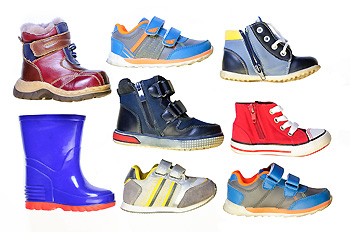 Children, like adults, can have a variety of foot problems. Many children have flat feet, an overpronated gait, blisters, calluses, or corns. The right shoes can help mitigate some of these issues. Children with flat feet often have an overpronated gait in which their feet roll inwards as they walk. The right pair of shoes can help correct overpronation and adequately support your child’s feet. Blisters, calluses, and corns all affect the skin of the feet. The most common culprit behind these issues is wearing the wrong shoes. Shoes that are too small, tight, or narrow put excess pressure and friction on the feet, causing these skin problems to develop. Not wearing socks can sometimes make these problems worse. To avoid irritations to the skin of the feet, it is important to wear shoes that fit properly and socks to protect the feet. If your child has foot problems, please consult with a podiatrist.
Making sure that your children maintain good foot health is very important as they grow. If you have any questions, contact the podiatrists of Issaquah Foot & Ankle Specialists. Our doctors can provide the care you need to keep you pain-free and on your feet.
Keeping Children's Feet Healthy
Having healthy feet during childhood can help prevent medical problems later in life, namely in the back and legs. As children grow, their feet require different types of care. Here are some things to consider...
Although babies do not walk yet, it is still very important to take care of their feet.
Avoid putting tight shoes or socks on his or her feet.
Allow the baby to stretch and kick his or her feet to feel comfortable.
As a toddler, kids are now on the move and begin to develop differently. At this age, toddlers are getting a feel for walking, so don’t be alarmed if your toddler is unsteady or ‘walks funny’.
As your child gets older, it is important to teach them how to take care of their feet.
Show them proper hygiene to prevent infections such as fungus.
Be watchful for any pain or injury.
Have all injuries checked by a doctor as soon as possible.
Comfortable, protective shoes should always be worn, especially at play.
If you have any questions, please feel free to contact one of our offices located in Issaquah, WA . We offer the newest diagnostic and treatment technologies for all your foot care needs.
