

July 2017

Friday, 28 July 2017 16:59

Bunion Surgery With Faster Healing


Bunion Surgery With Faster Healing
 
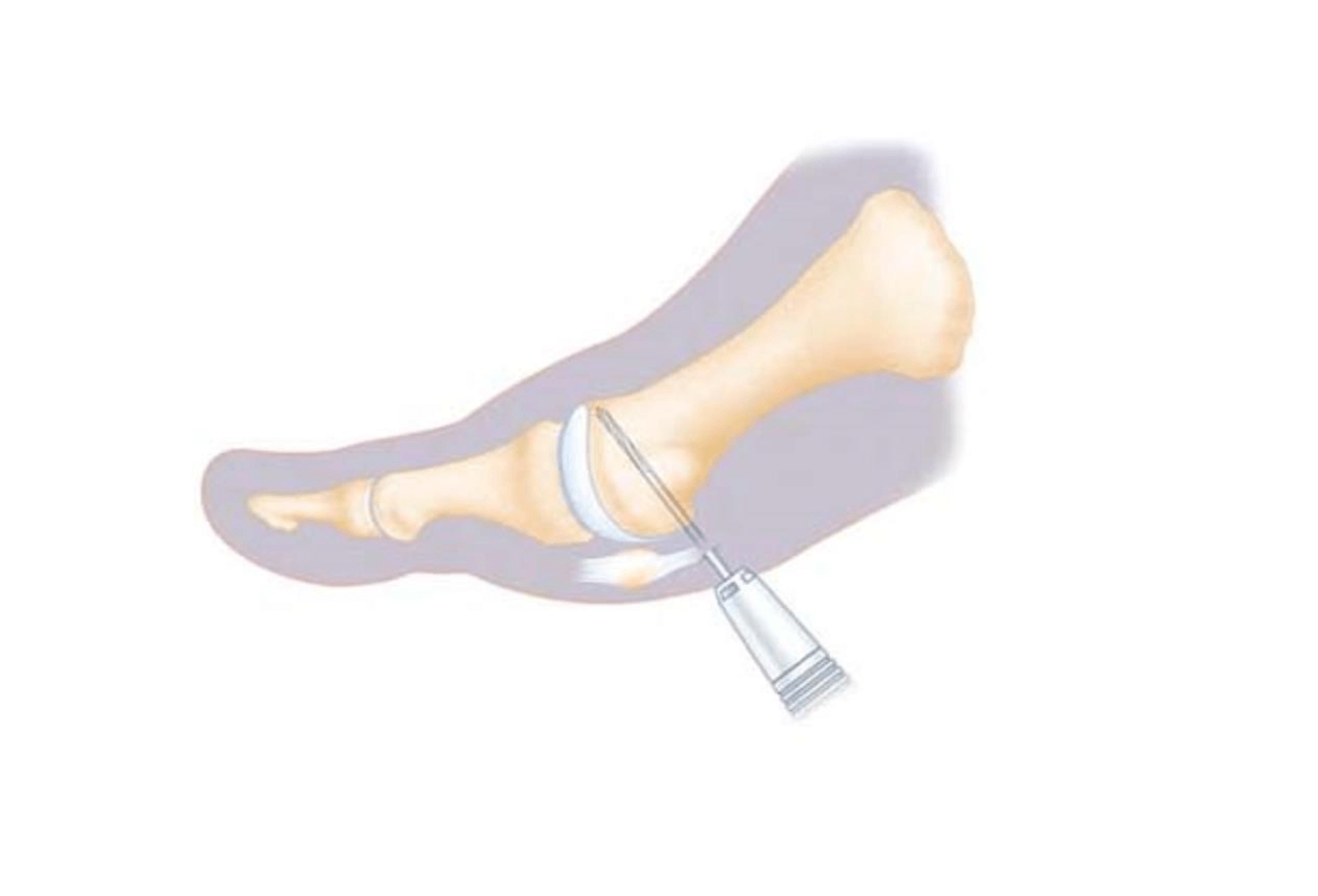
There are different types of bunion surgeries.  The majority involves soft tissue and bone healing. In general the more corrective bunion surgeries would either involve repositioning of the bone at the head of the first metatarsal or the base of the first metatarsal in the midfoot.  Either way we want to maximize bone healing and soft tissue healing.
 
So here are some of our strategies and treatments.
 
Prior to surgery, blood is drawn for PRP or platelet rich plasma. During the surgery itself, before closing the incision the platelet rich plasma is irrigated throughout the entire wound to maximize healing of the soft tissue and bone.
 
During the surgery itself, if there is major bone healing or a fusion is required then autogenous (using yourself as the donor and not cadaver bone) bone graft Is harvested and implanted during the surgery itself at the fusion site.  
 
After the surgery patients take special nutrients to maximize healing.  This includes Ortho Pro Bono which is a bone healing super nutrient available at our clinic. After the surgery bone stimulation therapy can also be done.  This can be one of several different technologies that maximize bone healing and enhance bone healing.  These are not always covered by insurance.
 
Physical therapy including electrical stimulation also can enhance soft tissue healing and maximize postprocedure range of motion.A special cast can be made out of fiberglass and then split and a special walking heel applied to allow for those patients that have a midfoot fusion to put weight on the heel which helps reduce atrophy compared to non weight bearing status.
 
If you would like to find out more information about this advanced treatment approach.  Please contact our office, either myself Dr. Timothy Young, or my partner Dr. Brandon Nelson.


Recently I am seeing a lot of patients with big toe pain and swelling. I believe it is probably the nice weather and we are all getting outside and enjoying the Pacific Northwest. The summer is short-lived around here! The majority of these patients have arthritis of the big toe or great toe and are experiencing difficulty exercising. It is fairly easy to diagnosis this condition with testing the range of motion of the toe and x-ray.

Typically I am able to offer some great conservative measures that provide significant pain relief. However, a few people will be better candidates for surgical intervention. There are two types of surgical intervention what we call joint sparing and joint destructive procedures. When possible I prefer to preform joint sparing so patients retain motion of that toe. But, some patients possess pathology that is too far gone and require a fusion of that joint. I am excited to be able to offer an alternative to fusion.

This is a new implant that acts as a joint spacer that has great results and I am one of the only surgeons in the Pacific Northwest to offer this advanced technique. The implant is called Cartiva and acts as a joint spacer to provide pain relief and preserve motion of the arthritic joint. It is a great alternative to anybody contemplating fusion. If you live in Seattle, Bellevue, Redmond, Issaquah, Tacoma, Everett, Alaska, Oregon give us a call at 425-391-8666 or visit us online.

There is a lot of discussion lately about minimally invasive keyhole bunionectomies. These are great procedures that can have good functional outcomes. It is important to note that not every person is a candidate for keyhole style bunionectomy. The most important piece of advice I can give somebody is to be properly evaluated for the type of surgical procedure that provides the best long-term outcomes. The keyhole minimally invasive bunionectomy can have a quicker recovery because the incisions are smaller and there is not as much disruption of the soft tissues.

However, this should not be the determining factor in whether or not to have bunion surgery. The determining factor should be based on proper procedure selection which decreases complications and maximize long-term results. At Issaquah Foot and Ankle Specialist we have an on-site surgery center and typically perform bunionectomies every Monday. It is important to see a physician that performs a lot of bunions and an on-site surgery Center can save you thousand dollars. If you live in Issaquah, Seattle, Bellevue, Kirkland, Redmond, Maple Valley, Tacoma or the greater Puget Sound area, come visit us at our office or online.

We've had a request recently to discuss the advantages/disadvantages of having surgery on both feet at the same time (for bunions).

Bunion surgery often requires realigning the first metatarsal.  This means that there is bone healing.  This is very similar to fracture healing, and this involves the first metatarsal or possibly bone healing involving the base of the first metatarsal.  Whenever there is fracture healing or bone healing, there are several different considerations.  These are often time-dependent.  Typical bone healing takes 8–10 weeks. 
 
It can be shorter the younger you are (for example a teenager) and it can be longer the older you are (for example those patients who are over 50 or 60 years old).  Typically for fracture to heal we would recommend a cast boot or a regular fiberglass cast.  The good news is that there is often full weightbearing allowed with either the cast boot or the fiberglass cast.  The time spent in the cast allows for protection and bone healing with proper immobilization.  This means that it may be hard to drive with the right foot until there is at least some initial bone healing.  It also means that for longer distances it may be helpful to use either a scooter or crutches. 
 
When surgery is just done on 1 foot at a time, the opposite foot can compensate and help protect the surgical side.  This can make it easier to drive and get around.  It also means if there is any discomfort from the surgery it's just surgery from 1 foot instead of 2.  When you have physical therapy you can really concentrate and focus on regaining normal range of motion on 1 foot instead of doubling the time and effort spent on two feet.  It is nice to have 1 good foot and leg for best possible balance instability.  You don't want to have an injury or fall during her initial postoperative healing.
So to summarize: The advantage for 1 foot at a time:

-Allows for postoperative driving
-Allows for better balance
-Allows for 100% attention to postprocedure rehabilitation on 1 foot at a time
 
Considerations of having both feet at the same time:

-You're combining the postoperative timeframe.
-High risk of falling or compromising one or both surgical sites from injury
-Bone healing postoperative nutrition supplements are only taken one suspended twice.
-The need for outside help (family or close friend) is only needed one time instead of 2. 
 
Most patients who have 1 foot done like to wait approximately 6 months or even a year before the have the next foot done.
 
It is our general recommendation that only 1 foot be done at a time.  There have been a few exceptions over the years were we have done both feet at once.  We would be happy to further discuss these options.  If you would like a consultation with either Dr. Nelson or myself please contact our office.  It would make most sense to review this in person and especially with x-rays available.
Saturday, 01 July 2017 05:59

Heel Bursitis

Saturday, 01 July 2017 05:57

Burning And Tingling Of The Heel

5 out of 5 stars
Total Reviews : 268