




November 2025
We Can Treat Your Foot or Ankle Pain

Foot or ankle pain can negatively affect your day-to-day life and can occur due to several different conditions. Pain can also be an indicator of a more serious underlying condition, which is why you should seek professional help as soon as you notice any abnormalities in your feet.
Resuming Running After a Broken Ankle

Getting back to running after breaking an ankle depends on bone healing, joint stability, and strength in the foot and ankle. After an ankle fracture, stiffness, swelling, and weakness often occur due to immobilization in a cast or boot. Before running again, the ankle must handle body weight without pain or instability. A podiatrist can evaluate the ankle’s condition through imaging and physical testing to confirm proper alignment and strength. They can also prescribe custom orthotics or insoles to improve foot support and help distribute pressure evenly during impact. Attempting to run too soon can increase the risk of re-injury or chronic pain. Wearing stable running shoes and progressing slowly helps protect the ankle as mobility improves. In cases where surgery was needed, additional time and medical monitoring are essential before resuming running. If you are recovering from a broken ankle, it is suggested that you make an appointment with a podiatrist for a diagnosis and guidance on returning to strenuous activities.
Broken ankles need immediate treatment. If you are seeking treatment, contact the podiatrists from Issaquah Foot & Ankle Specialists. Our doctors can provide the care you need to keep you pain-free and on your feet.
Broken Ankles
A broken ankle is experienced when a person fractures their tibia or fibula in the lower leg and ankle area. Both of these bones are attached at the bottom of the leg and combine to form what we know to be our ankle.
When a physician is referring to a break of the ankle, he or she is usually referring to a break in the area where the tibia and fibula are joined to create our ankle joint. Ankles are more prone to fractures because the ankle is an area that suffers a lot of pressure and stress. There are some obvious signs when a person experiences a fractured ankle, and the following symptoms may be present.
Symptoms of a Fractured Ankle
- Excessive pain when the area is touched or when any pressure is placed on the ankle
- Swelling around the area
- Bruising of the area
- Area appears to be deformed
If you suspect an ankle fracture, it is recommended to seek treatment as soon as possible. The sooner you have your podiatrist diagnose the fracture, the quicker you’ll be on the way towards recovery.
If you have any questions, please feel free to contact one of our offices located in Issaquah, WA . We offer the newest diagnostic and treatment technologies for all your foot care needs.
Custom Orthotics For Teen Athletes

Parents, support your athletic teens with Custom Orthotics! As they excel in sports and activities, their feet need optimal care. Custom Orthotics provide the right alignment, reducing fatigue and enhancing performance. They help absorb shocks, minimize injuries, and cater to their unique foot structure. Don't let foot discomfort sideline their passion. Invest in their comfort and athletic future by choosing Custom Orthotics from our office. Call today for an appointment.
Understanding Hammertoe

Hammertoe is a condition where one or more toes bend abnormally at the middle joint, creating a curled or claw-like appearance. This often happens when muscles and tendons in the toe become imbalanced, pulling the joint into the wrong position. Wearing tight or ill-fitting shoes, high heels, or inherited foot structure can all play a role in its development. At first, hammertoe may cause only mild discomfort, but over time, it can lead to pain, corns, calluses, or difficulty wearing certain shoes. The affected toe may also become stiff, making it harder to move. Treatment depends on how advanced the condition is. Early care can include wearing shoes with a wide toe box, using pads or orthotics, and doing simple stretching exercises. In more severe cases, surgery may be needed to straighten the toe. If you are experiencing pain or changes in your toes, it is suggested that you see a podiatrist for expert advice and guidance.
Hammertoes can be a painful condition to live with. For more information, contact the podiatrists of Issaquah Foot & Ankle Specialists. Our doctors will answer any of your foot- and ankle-related questions.
Hammertoe
Hammertoe is a foot deformity that occurs due to an imbalance in the muscles, tendons, or ligaments that normally hold the toe straight. It can be caused by the type of shoes you wear, your foot structure, trauma, and certain disease processes.
Symptoms
- Painful and/or difficult toe movement
- Swelling
- Joint stiffness
- Calluses/Corns
- Physical deformity
Risk Factors
- Age – The risk of hammertoe increases with age
- Sex – Women are more likely to have hammertoe compared to men
- Toe Length – You are more likely to develop hammertoe if your second toe is longer than your big toe
- Certain Diseases – Arthritis and diabetes may make you more likely to develop hammertoe
Treatment
If you have hammertoe, you should change into a more comfortable shoe that provides enough room for your toes. Exercises such as picking up marbles may strengthen and stretch your toe muscles. Nevertheless, it is important to seek assistance from a podiatrist in order to determine the severity of your hammertoe and see which treatment option will work best for you.
If you have any questions, please feel free to contact one of our offices located in Issaquah, WA . We offer the newest diagnostic and treatment technologies for all your foot care needs.
Enhancing Sports Performance with Orthotics

Orthotics help to improve foot alignment and reduce strain on muscles and joints during sports and physical activities. They work to optimize skeletal movement, minimize unnecessary muscle work, and enhance overall efficiency. The shoe sole acts as the first filter for force impact, orthotics serve as the second filter, and the plantar surface of the foot functions as the third filter. Together they create a balanced system to absorb shock and improve stability. A podiatrist can assess foot mechanics, design custom orthotics, and provide guidance to prevent injuries and boost performance. If you have foot pain after physical activity, it is suggested that you schedule a visit with a podiatrist to discuss the benefits of orthotics for improved comfort, endurance, and athletic performance.
Custom orthotics are specialized shoe inserts created to support and align the feet according to each person’s unique structure and walking pattern. They are an effective way to relieve foot discomfort caused by conditions such as flat feet, high arches, plantar fasciitis, bunions, and heel pain. When the natural alignment of the foot is off balance, it can lead to pressure points, strain, and pain that affect how a person stands, walks, and moves. Orthotics work by redistributing weight evenly and supporting the arch to reduce stress on the muscles, tendons, and joints of the feet and lower legs.
Foot discomfort can develop for many reasons, including wearing improper footwear, long hours of standing, repetitive motion, or underlying structural problems. Over time, this discomfort can extend beyond the feet, contributing to knee, hip, or lower back pain. Custom orthotics help correct these issues by improving alignment and promoting more efficient movement. They are made using precise measurements and imaging to ensure the best fit for each patient, providing targeted support and cushioning where it is needed most.
Unlike generic insoles, custom orthotics are durable, medically designed, and tailored to your specific needs. Whether you are managing chronic pain, recovering from an injury, or simply seeking better comfort and stability, orthotics can make a noticeable difference in how your feet feel throughout the day.
If you are experiencing persistent foot discomfort or fatigue, it may be time to have your feet evaluated by a podiatrist. Call our office today for more information or to schedule an appointment.
If you have any questions, please feel free to contact one of our offices located in Issaquah, WA .
The Importance of a Biomechanical Assessment of the Foot and Ankle

A biomechanical assessment of the foot and ankle is a valuable way to understand how movement patterns may contribute to discomfort or injury. During this evaluation, a podiatrist studies how the joints and muscles work together while walking or standing. The structure of the arch, alignment of the heel, and flexibility of the ankle are carefully observed. Sometimes uneven weight distribution or muscle imbalances place extra stress on certain areas, leading to pain or reduced mobility. This type of assessment can help uncover underlying causes of conditions such as heel pain, shin splints, or recurrent ankle sprains. Once the source is identified, personalized treatment options such as orthotics, targeted exercises, or footwear recommendations can be provided. If you are experiencing ongoing foot or ankle concerns, it is suggested that you consult a podiatrist for a thorough biomechanical evaluation.
If you have any concerns about your feet, contact the podiatrists from Issaquah Foot & Ankle Specialists. Our doctors can provide the care you need to keep you pain-free and on your feet.
Biomechanics in Podiatry
Podiatric biomechanics is a particular sector of specialty podiatry with licensed practitioners who are trained to diagnose and treat conditions affecting the foot, ankle and lower leg. Biomechanics deals with the forces that act against the body, causing an interference with the biological structures. It focuses on the movement of the ankle, the foot and the forces that interact with them.
A History of Biomechanics
- Biomechanics dates back to the BC era in Egypt where evidence of professional foot care has been recorded.
- In 1974, biomechanics gained a higher profile from the studies of Merton Root, who claimed that by changing or controlling the forces between the ankle and the foot, corrections or conditions could be implemented to gain strength and coordination in the area.
Modern technological improvements are based on past theories and therapeutic processes that provide a better understanding of podiatric concepts for biomechanics. Computers can provide accurate information about the forces and patterns of the feet and lower legs.
Understanding biomechanics of the feet can help improve and eliminate pain, stopping further stress to the foot.
If you have any questions please feel free to contact one of our offices located in Issaquah, WA . We offer the newest diagnostic and treatment technologies for all your foot and ankle needs.
Are Flip-Flops Good for the Feet?
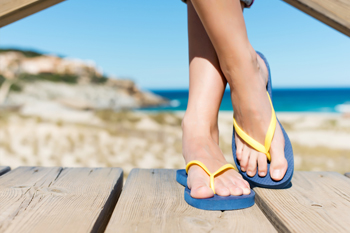 Many people enjoy wearing lighter clothes during the warm summer months, and that includes footwear. Flip-flops are easy to put on, and come in a variety of colors and styles. Research has indicated that it may be harmful to the feet when flip-flops are worn for the majority of the day. This can be due to a lack of an arch, and the toes typically grasp the front of the shoe to keep it on the foot. The style of walking may change to accommodate the type of flip-flop that is worn, and minimal protection may be offered for the feet. It may be beneficial to alternate supportive shoes with flip-flops, and a strap across the back of the shoe may help the shoe to stay on the foot. If you choose to wear flip-flops, and would like more information about what type of flip-flops to wear, please consult with a podiatrist.
Flip-flops are not always the best choice of footwear. If you have any concerns about your feet or ankles, contact the podiatrists from Issaquah Foot & Ankle Specialists. Our doctors will assist you with all of your foot and ankle needs.
Flip-Flops and Feet
When the weather starts warming up, people enjoy wearing flip-flops. Flip-flops are comfortable, stylish, and easy to slip on and off; they're perfect for any summer beach goer. However, these shoes can cause harm to the feet.
How Can Flip-Flops Affect Me Long-Term?
- Ankle problems
- Hip problems
- Lower back problems
- Pain in the balls of the feet
- Problems with foot arches
- Changes in the way you walk
Are There Injuries Associated with Flip-Flops?
Yes. Since flip-flops are relatively weak and do not provide the same amount of support as sneakers, people who wear flip-flops regularly are more susceptible to injuries. On top of that, the open nature of the shoe makes your feet more prone to other problems, such as cuts and even infections. Common injuries and ailments include:
- Sprained ankles
- Blisters
- Infections
- Cuts and Scrapes
I like Wearing Flip-Flops. Are There Safe Alternatives?
When buying flip-flops, try to find ones that have sturdy soles and that are made of high-quality materials that will support for your feet. These flip-flops will cost more but will also last longer as a result.
If you have any questions, please feel free to contact one of our offices located in Issaquah, WA . We offer the newest diagnostic and treatment technologies for all your foot care needs.
