




May 2022
Taking Care of Children’s Feet
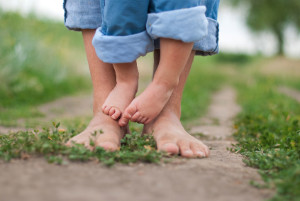
Foot health is important for everyone but because children’s feet are soft, pliable, and still developing, they are more vulnerable to injuries, diseases, and conditions that can interfere with normal movement. More common foot problems among children are Sever’s disease, flat feet, toes pointing in or out, ankle weakness, and foot deformities. Sever’s disease is heel pain in children that may come on during puberty or when experiencing growth spurts. This is usually a temporary affliction and can be managed by stopping sports or activities involving running or jumping until the pain subsides. Flat foot is when the entire sole of the child’s foot lies flat against the ground. If a child walks with their toes pointed in or out it may be because a child’s leg alignment is constantly changing and again may improve as the child grows and muscles get stronger. Children’s ankles may be weak and give way more easily during sports and everyday activities leading to chronic ankle instability. Children may even suffer from congenital foot deformities. It is important to consult with a podiatrist for help in learning and understanding the growth of children’s feet, proper footwear choices as they age, and to treat any foot problems that may arise and are not transitory.
Making sure that your children maintain good foot health is very important as they grow. If you have any questions, contact the podiatrists of Issaquah Foot & Ankle Specialists. Our doctors can provide the care you need to keep you pain-free and on your feet.
Keeping Children's Feet Healthy
Having healthy feet during childhood can help prevent medical problems later in life, namely in the back and legs. As children grow, their feet require different types of care. Here are some things to consider...
Although babies do not walk yet, it is still very important to take care of their feet.
Avoid putting tight shoes or socks on his or her feet.
Allow the baby to stretch and kick his or her feet to feel comfortable.
As a toddler, kids are now on the move and begin to develop differently. At this age, toddlers are getting a feel for walking, so don’t be alarmed if your toddler is unsteady or ‘walks funny’.
As your child gets older, it is important to teach them how to take care of their feet.
Show them proper hygiene to prevent infections such as fungus.
Be watchful for any pain or injury.
Have all injuries checked by a doctor as soon as possible.
Comfortable, protective shoes should always be worn, especially at play.
If you have any questions, please feel free to contact one of our offices located in Issaquah, WA . We offer the newest diagnostic and treatment technologies for all your foot care needs.
Two Types of Flat Feet
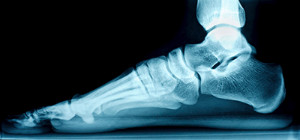
The medical term for flat feet is known as pes planus or pes valgus. The noticeable symptom of flat feet is a lack of an arch when the foot is lying flat on the ground. Most babies are born with flat feet and the arch typically develops with age. Research has indicated there are two types of flat feet. An arch that can be seen when the foot is elevated is known as a flexible flat foot and an absent arch also when the foot is elevated is known as a rigid flat foot. Flexible flat feet generally do not cause severe pain although some patients may feel mild achiness if intensely walking. Abnormal foot development may be the cause of rigid flat foot and surgery can be a necessary option for a significant correction. Some patients will even have a second surgery after the foot has fully formed to fuse the bones together. If you have flat feet, it is advised that you confer with a podiatrist.
Flatfoot is a condition many people suffer from. If you have flat feet, contact the podiatrists from Issaquah Foot & Ankle Specialists. Our doctors will treat your foot and ankle needs.
What Are Flat Feet?
Flatfoot is a condition in which the arch of the foot is depressed and the sole of the foot is almost completely in contact with the ground. About 20-30% of the population generally has flat feet because their arches never formed during growth.
Conditions & Problems:
Having flat feet makes it difficult to run or walk because of the stress placed on the ankles.
Alignment – The general alignment of your legs can be disrupted, because the ankles move inward which can cause major discomfort.
Knees – If you have complications with your knees, flat feet can be a contributor to arthritis in that area.
Symptoms
- Pain around the heel or arch area
- Trouble standing on the tip toe
- Swelling around the inside of the ankle
- Flat look to one or both feet
- Having your shoes feel uneven when worn
Treatment
If you are experiencing pain and stress on the foot you may weaken the posterior tibial tendon, which runs around the inside of the ankle.
If you have any questions, please feel free to contact one of our offices located in Issaquah, WA . We offer the newest diagnostic and treatment technologies for all your foot care needs.
Edema Is Common Among Pregnant Women
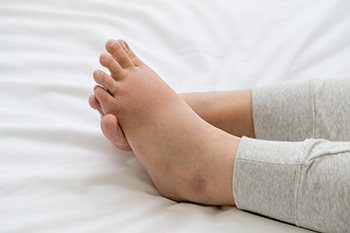
A common symptom that many pregnant women notice is edema. This causes considerable swelling, and often affects the feet. It is considered to be a normal part of pregnancy, despite the fact that it may cause discomfort. Edema generally begins in the 5th month, and other factors may contribute to it. These can include spending too much time on the feet, not having enough potassium, or eating foods that have elevated sodium levels. Many pregnant women have found relief from drinking plenty of fresh water daily, sleeping on their left side, and limiting time on their feet. It is important to wear shoes that fit comfortably, and it may help to apply cold compresses to swollen ankles and feet. Swimming in a pool may help to compress tissue and provide temporary relief. Additionally, it is suggested to avoid foods and drinks that have high sodium levels, and drinking and eating foods with caffeine. If you would like more information about how pregnancy can affect the feet, please confer with a podiatrist.
Pregnant women with swollen feet can be treated with a variety of different methods that are readily available. For more information about other cures for swollen feet during pregnancy, consult with the podiatrists from Issaquah Foot & Ankle Specialists. Our doctors will attend to all of your foot and ankle needs.
What Foot Problems Can Arise During Pregnancy?
One problem that can occur is overpronation, which occurs when the arch of the foot flattens and tends to roll inward. This can cause pain and discomfort in your heels while you’re walking or even just standing up, trying to support your baby.
Another problem is edema, or swelling in the extremities. This often affects the feet during pregnancy but tends to occur in the later stages.
How Can I Keep My Feet Healthy During Pregnancy?
- Wearing orthotics can provide extra support for the feet and help distribute weight evenly
- Minimize the amount of time spent walking barefoot
- Wear shoes with good arch support
- Wear shoes that allow for good circulation to the feet
- Elevate feet if you experience swelling
- Massage your feet
- Get regular, light exercise, such as walking, to promote blood circulation to the feet
If you have any questions, please feel free to contact one of our offices located in Issaquah, WA . We offer the newest diagnostic and treatment technologies for all your foot care needs.
Wounds That Don't Heal Need to Be Checked

Your feet are covered most of the day. If you're diabetic, periodic screening is important for good health. Numbness is often a sign of diabetic foot and can mask a sore or wound.
Foot Conditions May Develop From Having Rheumatoid Arthritis

There are many people who suffer from the condition that is known as rheumatoid arthritis. The feet can become affected by this ailment which may lead to other foot conditions arising. Permanent relief may be found when foot surgery is performed. Rheumatoid arthritis may lead to the development of bunions. This produces a large, bony protrusion on the side of the big toe and may be the result of the toes shifting due to the arthritic disease. Bunion surgery involves cutting the affected bones in the foot and realigning them in a normal position. Additionally, arthritis may damage specific joints in the foot and a fusion may be needed that can help to reduce pain. There are many benefits to having foot surgery performed such as resuming normal functions of the feet, completing daily activities without pain, and wearing appropriate footwear. If you have chronic pain in your feet or you are afflicted with arthritis, please confer with a podiatrist who can determine if foot surgery is right for you.
Foot surgery is sometimes necessary to treat a foot ailment. To learn more, contact the podiatrists of Issaquah Foot & Ankle Specialists. Our doctors will assist you with all of your foot and ankle needs.
When Is Surgery Necessary?
Foot and ankle surgery is generally reserved for cases in which less invasive, conservative procedures have failed to alleviate the problem. Some of the cases in which surgery may be necessary include:
- Removing foot deformities like bunions and bone spurs
- Severe arthritis that has caused bone issues
- Cosmetic reconstruction
What Types of Surgery Are There?
The type of surgery you receive will depend on the nature of the problem you have. Some of the possible surgeries include:
- Bunionectomy for painful bunions
- Surgical fusion for realignment of bones
- Neuropathy decompression surgery to treat nerve damage
Benefits of Surgery
Although surgery is usually a last resort, it can provide more complete pain relief compared to non-surgical methods and may allow you to finally resume full activity.
Surgical techniques have also become increasingly sophisticated. Techniques like endoscopic surgery allow for smaller incisions and faster recovery times.
If you have any questions, please feel free to contact one of our offices located in Issaquah, WA . We offer the newest diagnostic and treatment technologies for all your foot care needs.
Plantar Fasciitis Is the Most Likely Cause of Heel Pain
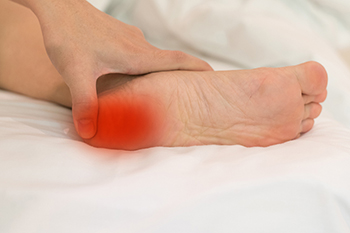
During the propulsion (toe off) stage of walking, toes bear the weight of the body as your heels rise. During this process, the toes are supported by the long, fibrous plantar fascia ligament on the bottom of the foot that connects the toes with the heel. The plantar fascia also absorbs weight and support the toes and arch when running, jumping, and dancing. Repeated stress due to overuse, obesity, improper footwear, structural anomalies in the feet, and other factors can cause the plantar fascia to become irritated, torn, and inflamed. This is a painful condition known as plantar fasciitis. The pain felt with plantar fasciitis is typically at its worst in the morning when you first wake up and begin to take your first steps. Because it is the most common form of heel pain, podiatrists see plantar fasciitis patients regularly and have a variety of options to treat it. If you are having heel pain, make an appointment with a podiatrist for an exam to get properly diagnosed and treated.
Plantar fasciitis can be very painful and inconvenient. If you are experiencing heel pain or symptoms of plantar fasciitis, contact the podiatrists from Issaquah Foot & Ankle Specialists. Our doctors can provide the care you need to keep you pain-free and on your feet.
What Is Plantar Fasciitis?
Plantar fasciitis is the inflammation of the thick band of tissue that runs along the bottom of your foot, known as the plantar fascia, and causes mild to severe heel pain.
What Causes Plantar Fasciitis?
- Excessive running
- Non-supportive shoes
- Overpronation
- Repeated stretching and tearing of the plantar fascia
How Can It Be Treated?
- Conservative measures – anti-inflammatories, ice packs, stretching exercises, physical therapy, orthotic devices
- Shockwave therapy – sound waves are sent to the affected area to facilitate healing and are usually used for chronic cases of plantar fasciitis
- Surgery – usually only used as a last resort when all else fails. The plantar fascia can be surgically detached from the heel
While very treatable, plantar fasciitis is definitely not something that should be ignored. Especially in severe cases, speaking to your doctor right away is highly recommended to avoid complications and severe heel pain. Your podiatrist can work with you to provide the appropriate treatment options tailored to your condition.
If you have any questions, please feel free to contact one of our offices located in Issaquah, WA . We offer the newest diagnostic and treatment technologies for all your foot care needs.
