




September 2020
Dr. Timothy Young Talks About Joint fluid and Bunion Surgery.
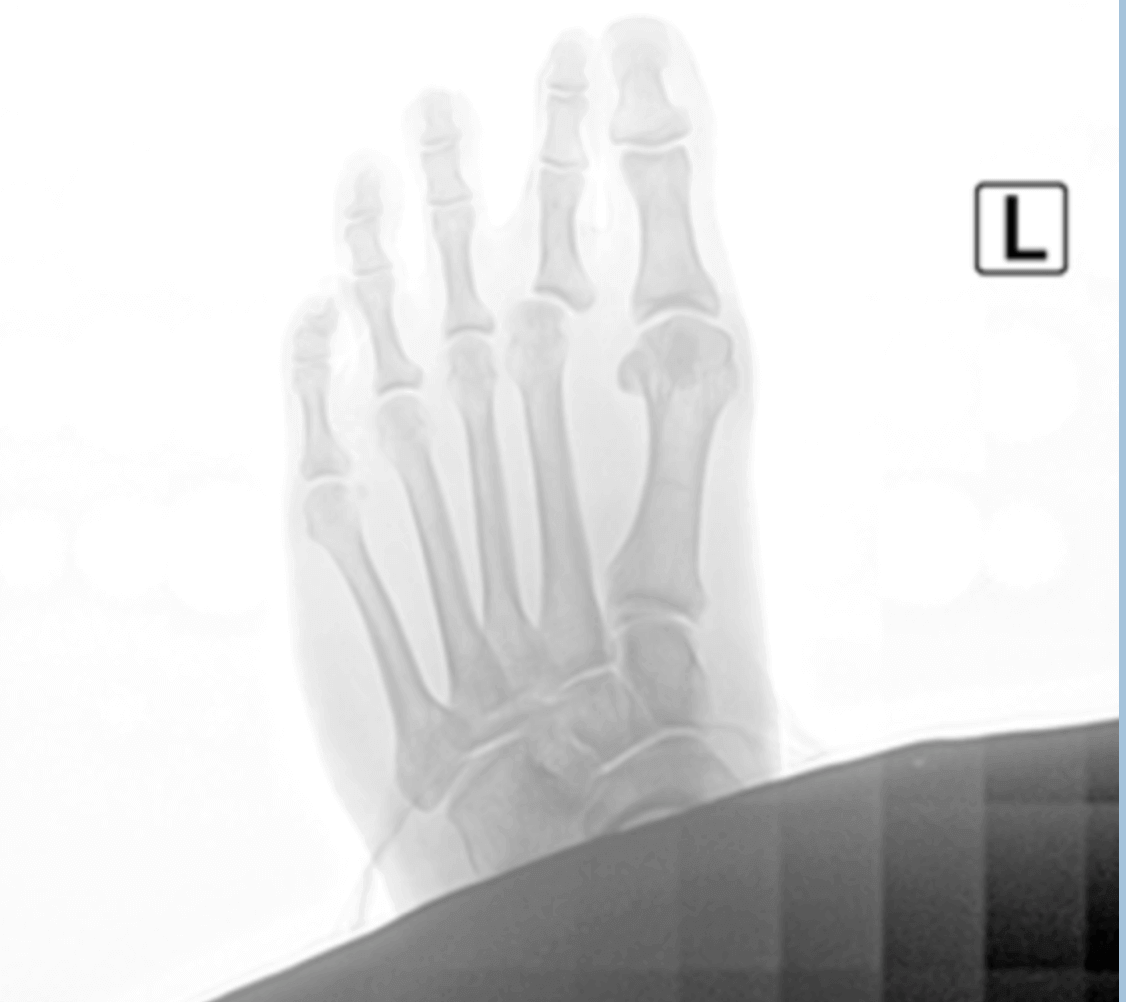
Surgical bunion correction is a common procedure at our clinic and our Surgical Center. During bunion surgery after the skin incision, subcutaneous layer is also dissected and then the joint capsule. The joint capsule serves multiple functions. One is to help stabilize the joint–much like the ankle joint has ligaments that stabilize your ankle. The inner layer of the joint capsule produces synovial fluid to lubricate the joint.
During surgery this joint fluid comes out during the procedure. It can be helpful to replenish this joint fluid to help get the joint functioning properly again and moving like it should. There are different ways to accomplish this. We often inject sympathetic joint lubricant into the joint during the early postoperative time frame. The brand that we utilize is called Supartz. This was originally FDA cleared to help protect the knee joint and treat knee joint symptoms. We use Supartz in many different applications within the foot and ankle. But after bunion surgery to get the joint moving again, is certainly one of them. This can also be very helpful if the patient has arthritis of the great toe joint and has to have a joint cleanup procedure to remove some of the bone spurs and repair cartilage.
Blisters on the Feet
Blisters are a common ailment of people who wear shoes that are either too tight or rub against the feet in an uncomfortable way. Knowing the basics of blisters is important for understanding how they are formed and what treatments should be used for them.
A blister on the foot, or any other part of the body, is a small pocket that is filled with fluid. It usually forms on the upper layer of the skin because these layers are loose enough to allow a blister to form. The most common fluid in a blister is just a clear, watery-like fluid that usually isn’t cause for concern. However, blisters can fill up with blood if they are deep enough and pus if they have become infected with bacteria.
Blisters almost always form on the feet due to shoes rubbing up against the foot, where the friction causes blisters. These can occur after you have walked for a long period of time or when your shoes do not fit you properly. Your feet are also more prone to blisters if they are moist, so keeping them dry and clean is one preventative step you can take.
Preventing infection should be the number one concern when treating blisters, as well as relieving the pain they can cause. Using a bandage to cover up the blister will help it heal and prevent bacteria from entering it. New skin will form under the blister and eventually cause it to pop. You can also take a sterilized pin and try to pop it yourself.
If the blister is filled with pus or blood, seeking treatment from a doctor is ideal. Antibiotics may need to be taken in order to completely eliminate the bacteria inside the blister. See a doctor to have an antibiotic prescribed.
The best way to treat blisters is to prevent them all together. Keeping your feet dry and making sure that your shoes fit properly are just two of the steps you can take to prevent blisters. Shoes that are too tight or shoes that are too loose and allow your feet to slide in them will cause blisters. Applying a bandage to an area where you think a blister is about to form is another way you can prevent them.
Can Blisters Be Prevented While Hiking?
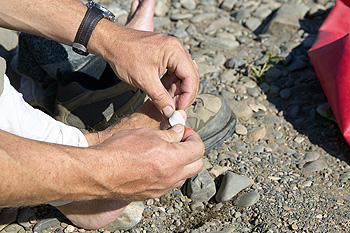 People who enjoy hiking often experience blisters on their feet. The most common cause of this ailment is excess friction, and this often occurs from wearing shoes and socks that do not fit correctly. Many hikers choose to wear boots, and it is helpful to break them in before beginning a hike. Wear the boots around your home or work with the socks you intend to hike with, and your feet will thank you later. Keeping the feet as dry as possible may also help in preventing blisters from developing. It is beneficial to pack extra socks, which can be swapped out immediately if the first pair becomes moist or wet. Please confer with a podiatrist if you would like additional tips on how to prevent blisters on the feet.
Blisters are prone to making everyday activities extremely uncomfortable. If your feet are hurting, contact the podiatrists of Issaquah Foot & Ankle Specialists. Our doctors can provide the care you need to keep you pain-free and on your feet.
Foot Blisters
Foot blisters develop as a result of constantly wearing tight or ill-fitting footwear. This happens due to the constant rubbing from the shoe, which can often lead to pain.
What Are Foot Blisters?
A foot blister is a small fluid-filled pocket that forms on the upper-most layer of the skin. Blisters are filled with clear fluid and can lead to blood drainage or pus if the area becomes infected.
How Do Blisters Form?
Blisters on the feet are often the result of constant friction of skin and material, usually by shoe rubbing. Walking in sandals, boots, or shoes that don’t fit properly for long periods of time can result in a blister. Having consistent foot moisture and humidity can easily lead to blister formation.
Prevention & Treatment
It is important to properly care for the affected area in order to prevent infection and ease the pain. Do not lance the blister and use a Band-Aid to provide pain relief. Also, be sure to keep your feet dry and wear proper fitting shoes. If you see blood or pus in a blister, seek assistance from a podiatrist.
If you have any questions, please feel free to contact one of our offices located in Issaquah, WA . We offer the newest diagnostic and treatment technologies for all your foot care needs.
Dr Brandon Nelson Discusses Heel Pain after Walking
There are many sources of heel pain. Heel pain can be caused from a bone spur, stress fracture or the most common reason plantar fasciitis. Plantar fasciitis is caused by inflammation within your plantar fascia which is a big thick ligament like structure that supports the bottom of your foot. The fascia begins in your heel and runs to your toes.
This is why the most common spot for heel pain is right where the fascia attaches to your calcaneus or heel bone. With an increase in exercise or walking we see more stress on the fascia. This in turn can begin to create and inflammatory cycle and the beginning of plantar fasciitis. One of the best things we can do in the beginning is to stretch your calf muscles. I recommend stretching at least 3 times a day for about 2-3 minutes each session. One must make sure to stretch both the gastroc and soleous muscles.
If you are suffering from heel pain or plantar fasciits we can help. Give us a call today at 425-391-8666 or make an appointment online.
Dr. Brandon Nelson Discusses Common Questions Regarding Bunion Surgery
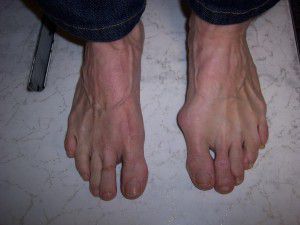
Do I need bunion surgery?
Quite a few patients ask this question. There are many factors that go into whether I think a patient should undergo surgery. Pain is the primary factor that I like to use for patients deciding whether or not they need bunion surgery. Another factor includes whether or not their second toe is affected from the bunion with something like a hammertoe occurring. Another important factor to consider is that a bunion is a progressive deformity and at some point usually requires to be fixed.
How long doesn’t take to recover from bunion surgery?
This is a much harder question to answer because there are many variables that play into this. The most important variable is the type of bunion surgery that was performed. It also depends on one's definition of recovery. Majority of patients we see are walking within 1 week and can return to normal activities as quickly as 6 weeks or as long as 3 months.
Doesn’t hurt to have bunion surgery?
I find this question very easy to answer yes bunion surgery can be uncomfortable. However, at our office we typically perform 3-5 bunion surgeries every week and are very well-versed in helping patients with pain management. Any type of surgery will typically produce pain as this is a normal an inflammatory response. The majority of people that we treat typically will take pain medications for approximately 1-3 days.
Can I still Drive after having bunion surgery?
This question really depends on the type of bunion surgery that is performed. A large majority of bunion surgeries the patient can drive as soon as they feel comfortable. The majority of patients will drive in a stiff shoe however some patients with larger reconstructions may not be able to drive for approximately 4-6 weeks.
What Are Hammertoes?
Hammertoes are painful deformities that frequently form on the second, third, or fourth toe. The condition is often caused by an issue in foot mechanics. This can be caused by the person’s specific gait or the manner in which they walk, or by shoes that do not comfortably fit the deformity. Hammertoes can be formed after wearing shoes that are too narrow or short for the foot or have excessively high heels. Shoes that are not properly sized will force the toes into a bent position for long periods of time. This can cause the muscles to shorten and toes to bend into the deformity of a hammertoe.
Hammertoe can also be caused by complications from rheumatoid arthritis, osteoarthritis, trauma to the foot, heredity, or a cerebral vascular accident. Pain and difficult mobility of the toes, deformities, calluses, and corns are all symptoms of a hammertoe.
Someone who suspects they have the symptoms of a hammertoe should consult with a physician—particularly a podiatrist. Podiatrists diagnose and treat complications of the foot and ankle. If the podiatrist discovers that the affected toes are still flexible, treatment for the hammertoe may simply involve exercise, physical therapy, and better-fitting shoes. Treatment for hammertoes typically involves controlling foot mechanics, such as walking, through the use of customized orthotics.
For more serious cases in which the toes have become inflexible and rigid, surgery may be suggested. During the operation, the toe would receive an incision to relieve pressure on the tendons. A re-alignment of the tendons may then be performed by removing small pieces of bone to straighten the toe. In some cases, the insertion of pins is needed to keep the bones in the proper position as the toe heals. The patient is usually allowed to return home on the same day as the surgery.
If surgery is performed to repair a hammertoe, following the postoperative directions of your doctor is essential. Directions may include several stretches, picking up marbles with your toes, or attempting to crumple a towel placed flat against your feet. Wear shoes that have low heels and a wide amount of toe space to maintain comfort. Closed-toe shoes and high heels should be avoided. Shoes with laces allow the wearer to adjust how fitted he or she may want the shoes to be and also allow for greater comfort. To provide adequate space for your toes, select shoes that have a minimum of one-half inch of space between the tip of your longest toe and the inside of the shoe. This will also relieve pressure on your toes and prevent future hammertoes from forming.
Other preventative measures that can be taken include going shopping for new shoes in the middle of the day. Your feet are its smallest in the morning and swell as the day progresses. Trying on and purchasing new shoes midday will give you the most reliable size. Be sure to check that the shoes you purchase are both the same size. If possible, ask the store to stretch out the shoes at its painful points to allow for optimum comfort.
Reasons Hammertoe Can Develop
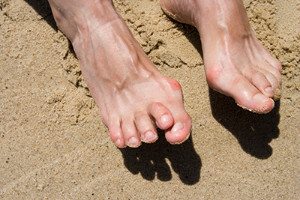 The medical condition that causes the toes to bend downward may be referred to as hammertoe. The muscles and ligaments in the middle toes are generally affected, and can appear deformed. There are several reasons that may cause this ailment to develop. These can include having high arches, enduring a toe injury, genetics, and wearing shoes that do not fit correctly. Additionally, existing medical conditions like arthritis may gradually cause hammertoe to develop. Research has indicated that it may be difficult for the toes to straighten out when hammertoe exists, and this may be a result of wearing shoes that are extremely pointed. Many patients experience pain and discomfort with hammertoe, and it is suggested that you consult with a podiatrist as quickly as possible who can offer you the best treatment techniques.
Hammertoe
Hammertoes can be a painful condition to live with. For more information, contact the podiatrists from Issaquah Foot & Ankle Specialists. Our doctors will answer any of your foot- and ankle-related questions.
Hammertoe is a foot deformity that affects the joints of the second, third, fourth, or fifth toes of your feet. It is a painful foot condition in which these toes curl and arch up, which can often lead to pain when wearing footwear.
Symptoms
- Pain in the affected toes
- Development of corns or calluses due to friction
- Inflammation
- Redness
- Contracture of the toes
Causes
Genetics – People who are genetically predisposed to hammertoe are often more susceptible
Arthritis – Because arthritis affects the joints in your toes, further deformities stemming from arthritis can occur
Trauma – Direct trauma to the toes could potentially lead to hammertoe
Ill-fitting shoes – Undue pressure on the front of the toes from ill-fitting shoes can potentially lead to the development of hammertoe
Treatment
Orthotics – Custom made inserts can be used to help relieve pressure placed on the toes and therefore relieve some of the pain associated with it
Medications – Oral medications such as anti-inflammatories or NSAIDs could be used to treat the pain and inflammation hammertoes causes. Injections of corticosteroids are also sometimes used
Surgery – In more severe cases where the hammertoes have become more rigid, foot surgery is a potential option
If you have any questions, please feel free to contact one of our offices located in Issaquah, WA . We offer the newest diagnostic and treatment technologies for all your foot care needs.
Dr. Timothy Young Talks About When to Do Bunion Surgery Continued
We have talked previously about timing for bunion surgery and how bunions progress over time. The challenge is that it is never the right time for bunion correction surgery. So what are your alternatives, how can you buy some time. There are some different options.
Dr. Brandon Nelson Discusses the Best Options for Bunion Surgery
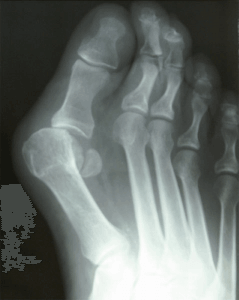
Contemplating bunion surgery can be an overwhelming task. Often times we see patients that have visited multiple practitioners. The best piece of advice I can give my patients is to be comfortable with the physician. There are many different types of bunion surgeries. The majority of bunion procedures can be broken up to either head or base procedures. The way to think about it is really large bunion deformities as base procedures and smaller bunion deformities can utilize head procedures.
The most common head procedures performed are the Austin bunionectomy or some form of a Chevron osteotomy. The most common of base type procedure is the Lapidus or arthrodesis of the metatarsal cuneiform joint. The procedure performed really dictates the postoperative recovery. The majority of patients we see are walking within the first week and usually do not take more than 3-5 days off of work. Another great things about Issaquah Foot and Ankle Specialists is we have an on-site surgery center which really reduces the cost and time. If you are contemplating bunion surgery we would happily discuss it with you and help you come up with the best available options.
Give us a call at 425-391-8666 or make an appointment online today.
Falls Prevention
Elderly Americans are very susceptible to falls as they get older. Everyone experiences decreases in flexibility, balance, strength, and the senses as they age. This correlates to some eye-opening statistics. 1 in 4 Americans aged 65 and older fall each year. An elderly American is being treated for a fall in an emergency room every 11 seconds. In light of these striking statistics, one can see the importance of taking steps to prevent falls.
Finding an exercise program for the elderly is an excellent way to reduce the likelihood of falls. Look for an exercise program that improves strength and balance. Elderly people who live a more sedentary lifestyle, with little physical activity, are at an increased risk of falling. Wearing well-fitted footwear that provides good foot support and cushion will help prevent falls from poorly fitted shoes. Talking to a podiatrist about your susceptibility to falls and about inspecting your prescriptions will help to avoid any medication that could make falls more likely. Due to a decline in the senses among the elderly, having your eyes and hearing checked is recommended.
Around half of all falls occur in the household. Removing tripping hazards in the home and making it more accommodating to older persons can significantly reduce falls. Some notable household changes include increasing lighting around the house, installing grab bars in the shower and bathroom, and making sure the floor is clear of clutter. Other smart options include installing a shower chair, using rubber-bottomed rugs, and placing railings on both sides of stairwells.
Finally, discuss with a doctor and your family about your fear of falling. This will help to increase awareness among the population on the need for fall prevention. A lack of awareness on the matter, and a downplaying of importance are what increase the risks of falling. Following these tips can help to reduce the risk for yourself and your loved ones.
