




January 2026
Advanced MLS Laser Therapy for Heel Pain
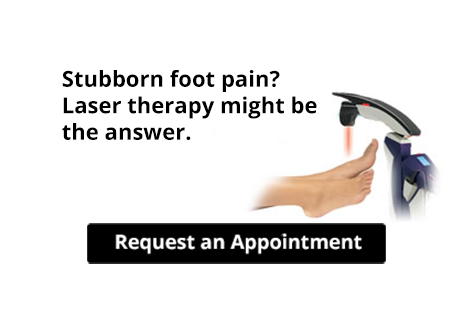
Multiwave Locked System (MLS) laser therapy is an advanced, safe, and effective way to treat heel pain. Contact our office for more information and to see if this treatment is right for you.
Solutions for Cracked Heels
Cracked heels may make you want to think twice about showing off your feet in warmer weather. However, cracked heels may be harmful to more than just the appearance of your feet. If deep fissures and cracks develop in your heels, they may make walking and standing painful for you. Additionally, these openings make way for germs to enter through your skin and cause infection.
There are several different causes of cracked heels. One of the most common reasons for this ailment is dry skin. This problem may make your keeps feel rough tight and itchy. Dry skin may be caused by cold air, extremely hot water, harsh soaps, and aging. Skin disorders such as eczema and psoriasis may eventually lead to dry skin. In some cases, complications may arise from cracked heels. Some of these complications are a loss of feeling in the heel, cellulitis, or a diabetic foot ulcer.
There are ways you can try to prevent getting cracked heels. One of the best ways to do so is to avoid wearing flip flops and sandals because these shoes increase your risk of drying out your feet. You should also avoid wearing shoes with a tall skinny heel, because these shoes cause your heel to expand sideways. At night, you should slather on a thick moisturizing cream on your feet and then cover them in socks to keep your feet moisturized overnight. Drinking water to stay hydrated is also a good way to ensure that your skin doesn’t become dry.
If you suffer from a severe case of cracked feet, you should make an appointment with your podiatrist to see what treatment methods are best for you.
Healing Cracked Heels and Fissures for Healthy Feet

Cracked heels, also known as heel fissures, occur when the skin on the heels becomes dry, thickened, and splits, often caused by obesity, excessive pressure, or underlying conditions like eczema. The heels may look rough, dry, and sometimes develop deep cracks, or fissures. In severe cases, bleeding or infection can set in. Many individuals experience pain, burning, or itching, especially when walking or standing for extended periods. In some cases, heel fissures can worsen during dry seasons or with frequent exposure to open footwear, increasing the risk of discomfort and infection. A podiatrist can assess the severity of the heel fissures, examine the skin condition, and recommend treatments. Included are professional debridement, moisturizing therapies, protective dressings, and guidance on footwear or pressure relief techniques. Early intervention promotes healing, reduces pain, and prevents complications. If you notice persistent dryness, cracking, or discomfort in your heels, it is suggested that you make an appointment with a podiatrist.
If the skin on your feet starts to crack, you may want to see a podiatrist to find treatment. If you have any concerns, contact the podiatrists from Issaquah Foot & Ankle Specialists. Our doctors can provide the care you need to keep you pain-free and on your feet.
Cracked Heels
It is important to moisturize your cracked heels in order to prevent pain, bleeding, and infection. The reason cracked heels form is because the skin on the foot is too dry to support the immense pressure placed on them. When the foot expands, the dry skin on the foot begins to split.
Ways to Help Heal Them
- Invest in a good foot cream
- Try Using Petroleum Jelly
- Ease up on Soaps
- Drink Plenty of Water
Ways to Prevent Cracked Heels
- Moisturize After Showering
- Skip a Shower
- Keep Shower Water Lukewarm
- Don’t Scrub Your Feet
If you are unsure how to proceed in treating cracked heels, seek guidance from a podiatrist. Your doctor will help you with any questions or information you may need.
If you have any questions, please feel free to contact one of our offices located in Issaquah, WA . We offer the newest diagnostic and treatment technologies for all your foot care needs.
Everything You Need to Know About Corns
Corns are hard and thick areas of skin that form as a result of constant rubbing, friction, or pressure on the skin. They are patches of dead skin with a small plug toward the center. They may appear on the tops and sides of toes and can make walking painful.
Soft corns are typically thinner with a white color and rubbery texture. Soft corns tend to appear between the toes. Seed corns are another type of corn that appear in clusters and can be tender if they are on a weight-bearing part of the foot. Seed corns usually appear on the bottom of the foot and are likely caused by a blockage in sweat ducts.
While corns and calluses are somewhat similar, calluses are a bit different. Calluses are a patch of dead skin that can occur anywhere on the body. In comparison to corns, calluses are usually a bit larger in size. However, both corns and calluses are caused by increased friction on the skin.
There are some risk factors that may increase your chances of developing corns and calluses. If you have bunions, hammertoe, or a bone spur, you are more likely to develop a corn or callus on your foot.
While Corns and Calluses tend to disappear when the friction to the affected area ceases, the help of a podiatrist may be useful in the removal process. It is important to remove the dead skin around the area and this may be done in a few different ways. Moisturizing creams may be helpful in softening and removing the dead skin around the callus. You should never use razors or other pedicure equipment to remove your corns. Doing this may worsen your corn or callus and cause infection.
In some cases, corns and calluses may be caused by abnormal foot structure or walking motion. In such a case, you should seek a podiatrist’s assistance in order to correct the issue.
Two Classifications of Corns
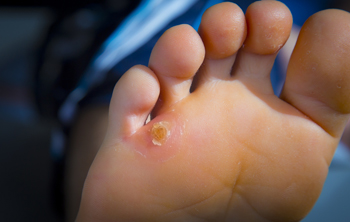 A corn is a thickened portion of skin that is made of keratin, and is caused by repeated friction. A corn can develop between the toes or on the bottom of the feet and can cause severe pain and discomfort. There are two types of corn classifications: hard and soft corns. Corns that are found between the toes are considered to be soft, and corns that form on the bottom of the feet are hardened as a result of the pressure they endure from walking and standing. There are some patients who find that they have corns on the outside of their pinky toe, and this generally comes from wearing shoes that do not have adequate room for the toes to move freely in. If you have corns anywhere on your feet, please consult with a podiatrist who can effectively treat this condition.
If you have any concerns regarding your feet and ankles, contact the podiatrists of Issaquah Foot & Ankle Specialists. Our doctors will treat your foot and ankle needs.
Corns: What Are They? and How Do You Get Rid of Them?
Corns can be described as areas of the skin that have thickened to the point of becoming painful or irritating. They are often layers and layers of the skin that have become dry and rough, and are normally smaller than calluses.
Ways to Prevent Corns
There are many ways to get rid of painful corns such as wearing:
- Well-fitting socks
- Comfortable shoes that are not tight around your foot
- Shoes that offer support
Treating Corns
Treatment of corns involves removing the dead skin that has built up in the specific area of the foot. Consult with Our doctors to determine the best treatment option for your case of corns.
If you have any questions, please feel free to contact one of our offices located in Issaquah, WA . We offer the newest diagnostic and treatment technologies for all your foot care needs.
Custom Orthotics Provide Relief From Heel Pain

Experiencing persistent heel pain? Custom Orthotics might be your solution. These custom-designed shoe inserts adapt to your unique foot structure, optimizing support and alleviating discomfort. By redistributing pressure, they can significantly reduce heel pain, enhancing your daily mobility. Dive into a pain-free lifestyle and elevate your walking experience. Curious about the benefits of Custom Orthotics?
Contact our office today.
Working on Your Feet
Foot care is important regardless of your profession, but those who work on their feet must pay special attention. Bunions, calluses, blisters, and plantar warts are just a few of the many conditions that can arise after standing all day. While painful at their worst, these conditions can easily be avoided with the right foot care. This includes both appropriate footwear and proper posture—important elements that affect the health of your feet.
Choosing appropriate footwear means choosing a shoe that has a negative heel. This means that the heel is slightly lower than the ball of your foot, which places less of a strain. If you have a profession that requires you to be on your feet all day, investing in a pair of high-quality shoes is pertinent. High-quality shoes can be purchased from a respected manufacturer that emphasizes foot care and foot health.
Despite the regularity of wearing shoes, the feet are naturally not designed to be enclosed. Regular “barefoot” time for your feet can be beneficial for foot health. Among other methods, allowing your feet to breathe can help alleviate the pain and pressure your feet may be experiencing from being on your feet all day.
Simple foot exercises and yoga positions can help improve both the health and function of your feet. Active foot exercises that create movement will stimulate your foot’s blood flow and circulation, and yoga positions that place your feet flat onto the floor will stretch out their muscles. Yoga is particularly beneficial for your Achilles tendon and calf muscles, which are areas that can become especially problematic if not taken care of. Foot exercises and yoga positions can be easily performed every day at virtually any location and any time; whether it is at the office, at the gym, or at home right before you go to bed. Simple stretching can increase your foot health by miles.
The foot pain you experience after lengthy hours working on your feet may seem inevitable and unavoidable; in reality, however, that is not the case. Wearing proper footwear and performing simple foot exercises and stretches can help ease foot pain and allow you to truly avoid frustrating foot problems.
Your feet can easily be kept healthy with some education and a little effort. Pain that begins at the feet can eventually affect the whole body. Begin taking care of your feet now!
Choosing the Right Shoes for Restaurant Work

Restaurant work requires long hours on your feet, making the right shoes essential for comfort and safety. Wearing proper footwear helps reduce fatigue, improve posture, and protect against slips and falls in fast-paced environments. Shoes designed for restaurant work should offer good support to cushion the feet and reduce stress on the ankles and knees. Durability is also important, since shoes must withstand constant movement, spills, and repeated cleaning. Additionally, a good grip on the sole helps prevent slipping on wet or greasy floors, which is a common workplace hazard. Wearing poor footwear can lead to foot pain, heel discomfort, and long-term problems. A podiatrist can evaluate your foot structure, work demands, and pain concerns to recommend supportive shoes or custom orthotics. If foot pain is affecting your job performance, it is suggested that you consult a podiatrist who can treat various foot and ankle conditions, and guide you on appropriate shoes to wear for your workday.
While working on the feet, it is important to take the proper care of them. For more information about working on your feet, contact the podiatrists from Issaquah Foot & Ankle Specialists. Our doctors will treat your foot and ankle needs.
Working on Your Feet
Standing on your feet for long periods of time can cause stress and pain in your feet. Your whole body may experience change in terms of posture, back pain, bunions, callouses and or plantar warts. There are ways to avoid these conditions with proper foot care, smart choices and correct posture.
Positive Changes
Negative heeled shoe – Choosing this shoe type places the heel slightly lower than the ball of the foot. These are great for overall foot health. Find shoes that fit you correctly.
Go barefoot – Our feet were not designed to be enclosed for all hours of the day. Try to periodically expose your feet to air.
Eliminate Pain
Foot Exercises – Performing simple exercises, incorporating yoga and doing stretches are beneficial. This will allow increased blood flow to the area and muscles of the foot.
Achilles tendon – Stretching the foot out flat on the floor will relax the calf muscles and tendon. These exercises can be performed almost anywhere. Make sure you add these exercises to your daily regimen.
With a little bit of this information and knowing more about foot health, you will notice changes. Foot stretches and proper footwear will help with pain and prevent further issues.
If you have any questions please contact one of our offices located in Issaquah, WA . We offer the newest diagnostic and treatment technologies for all your foot and ankle needs.
Sole Marketing Foot and Ankle Injuries
Custom orthotics are designed to provide personalized support that enhances comfort, stability, and movement for people recovering from foot or ankle injuries. By addressing the specific structure and alignment of each foot, orthotics help correct imbalances that often lead to pain or recurring injury. They cushion areas under pressure, support weakened arches, and improve shock absorption, making daily activities and exercise safer and more comfortable.
Many foot and ankle injuries are caused by overuse, wearing improper footwear, or poor alignment. When these issues are left uncorrected, they can cause chronic strain on tendons, ligaments, and joints. Custom orthotics help distribute weight more evenly, reducing excess stress and allowing tissues to heal properly. They are an important part of healing after sprains, fractures, or surgery, helping to restore balance and prevent future injury.
Each pair of custom orthotics is made using advanced imaging and a detailed assessment by a podiatrist to ensure a precise fit. Unlike store-bought insoles, they are tailored to your unique gait and medical needs, offering long-term benefits for comfort and mobility.
Foot Orthotics and Malalignment Syndrome

Foot orthotics play an important role in improving gait patterns in patients with malalignment syndrome, a condition where improper alignment of the feet and lower limbs affects movement and posture. When the feet do not function correctly, abnormal forces travel through the ankles, knees, hips, and lower back, leading to pain and inefficient walking. Advanced three dimensional gait analysis allows detailed evaluation of how the body moves during walking, identifying imbalances, joint stress, and abnormal motion patterns. Using this information, a podiatrist can design custom orthotics that support proper alignment, improve stability, and enhance movement efficiency. If you have recurring pain, poor balance, or abnormal walking patterns, it is suggested that you schedule a podiatry consultation to explore gait analysis and personalized orthotic solutions for improved comfort.
Custom orthotics are specialized shoe inserts created to support and align the feet according to each person’s unique structure and walking pattern. They are an effective way to relieve foot discomfort caused by conditions such as flat feet, high arches, plantar fasciitis, bunions, and heel pain. When the natural alignment of the foot is off balance, it can lead to pressure points, strain, and pain that affect how a person stands, walks, and moves. Orthotics work by redistributing weight evenly and supporting the arch to reduce stress on the muscles, tendons, and joints of the feet and lower legs.
Foot discomfort can develop for many reasons, including wearing improper footwear, long hours of standing, repetitive motion, or underlying structural problems. Over time, this discomfort can extend beyond the feet, contributing to knee, hip, or lower back pain. Custom orthotics help correct these issues by improving alignment and promoting more efficient movement. They are made using precise measurements and imaging to ensure the best fit for each patient, providing targeted support and cushioning where it is needed most.
Unlike generic insoles, custom orthotics are durable, medically designed, and tailored to your specific needs. Whether you are managing chronic pain, recovering from an injury, or simply seeking better comfort and stability, orthotics can make a noticeable difference in how your feet feel throughout the day.
If you are experiencing persistent foot discomfort or fatigue, it may be time to have your feet evaluated by a podiatrist. Call our office today for more information or to schedule an appointment.
If you have any questions, please feel free to contact one of our offices located in Issaquah, WA .
