




May 2022
Taking Care of Children’s Feet
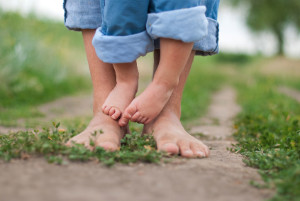
Foot health is important for everyone but because children’s feet are soft, pliable, and still developing, they are more vulnerable to injuries, diseases, and conditions that can interfere with normal movement. More common foot problems among children are Sever’s disease, flat feet, toes pointing in or out, ankle weakness, and foot deformities. Sever’s disease is heel pain in children that may come on during puberty or when experiencing growth spurts. This is usually a temporary affliction and can be managed by stopping sports or activities involving running or jumping until the pain subsides. Flat foot is when the entire sole of the child’s foot lies flat against the ground. If a child walks with their toes pointed in or out it may be because a child’s leg alignment is constantly changing and again may improve as the child grows and muscles get stronger. Children’s ankles may be weak and give way more easily during sports and everyday activities leading to chronic ankle instability. Children may even suffer from congenital foot deformities. It is important to consult with a podiatrist for help in learning and understanding the growth of children’s feet, proper footwear choices as they age, and to treat any foot problems that may arise and are not transitory.
Making sure that your children maintain good foot health is very important as they grow. If you have any questions, contact the podiatrists of Issaquah Foot & Ankle Specialists. Our doctors can provide the care you need to keep you pain-free and on your feet.
Keeping Children's Feet Healthy
Having healthy feet during childhood can help prevent medical problems later in life, namely in the back and legs. As children grow, their feet require different types of care. Here are some things to consider...
Although babies do not walk yet, it is still very important to take care of their feet.
Avoid putting tight shoes or socks on his or her feet.
Allow the baby to stretch and kick his or her feet to feel comfortable.
As a toddler, kids are now on the move and begin to develop differently. At this age, toddlers are getting a feel for walking, so don’t be alarmed if your toddler is unsteady or ‘walks funny’.
As your child gets older, it is important to teach them how to take care of their feet.
Show them proper hygiene to prevent infections such as fungus.
Be watchful for any pain or injury.
Have all injuries checked by a doctor as soon as possible.
Comfortable, protective shoes should always be worn, especially at play.
If you have any questions, please feel free to contact one of our offices located in Issaquah, WA . We offer the newest diagnostic and treatment technologies for all your foot care needs.
What to Do to Keep Your Child’s Feet Healthy
Being a parent involves caring for your child in every way you can. You make sure they are eating the right food, being nice to others, and staying out of any trouble. However, it is also important that you are watchful of their health, more specifically their foot health. Maintaining good foot health in childhood is important in preventing later conditions in life from happening. As children continue to develop, their feet require different techniques of care. Here are some various ways in which you can help your child’s feet stay healthy.
A baby needs a lot of care and attention overall, but the importance of their feet should never be forgotten. Before a baby turns one, their feet change and develop greatly. It is important that during this time, a mother avoids putting tight socks on their child. She should also encourage movement of their feet so the baby can begin to feel more comfortable using them.
As a baby enters the toddler years of his or her life, they are begin to walk around. When your baby begins to take those first steps, it is crucial that they are wearing protective shoes on their feet. As a mother that is observant of your child’s feet, you may notice changes in them. This is completely normal as the feet are becoming susceptible to the activity of walking. It is normal for a toddler to be a bit unsteady or to “walk funny” at first.
When your child grows out of their toddler years, it is important that you begin to show him or her how to care for their feet on their own. Practice with your child proper hygiene in order to prevent foot fungus or infection. Since children are constantly on the move, it is crucial to be cautious of any accidents or injuries that might occur. If an injury occurs, it is advised that you take your child to be examined by a doctor immediately. Since your child is still growing, particular injuries can shift the way in which a bone or other important part of the foot is developing.
Babies and kids are always changing and growing. Your job as a parent is to make sure they stay healthy and making sure they are properly maintained. This involves proper foot care and making sure the feet stay healthy. Following this guide, your child can live a long and happy life.
Dr. Brandon Nelson, a Board-Certified Foot and Ankle Surgeon and Physician, and Lapiplasty Surgeon Discusses Bunion Corrections
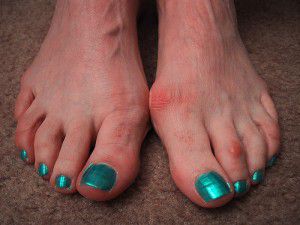
Bunion surgery is one of the most performed surgical procedures in the United States. The bunion can be corrected with many different types of procedure from osteotomies (the cutting of bone) to arthrodesis (the fusion of bones). Lapiplasty procedure is relatively new but utilizes a technique that has been around for years. The procedure is based on a Lapidus bunion surgery.
This procedure was named after a Dr Lapidus. It involves fusion of a tarsometatarsal joint to stabilize the foot and fix the bunion. The Lapiplasty allows for surgeons to have reproducible results utilizing special equipment and cutting jigs. I find Lapiplasty to be a reliable tool for bunion correction. Especially useful in large bunion cases and with people that have had long standing bunions. If you have a large bunion and would like to speak with a Lapiplasty Surgeon please contact my office and we can see if you are a candidate. Give us a call at 425-391-8666 or make an appointment online today.
Sincerely,
Lapiplasty Surgeon Dr. Brandon Nelson, Discusses 3-D Bunion Correction
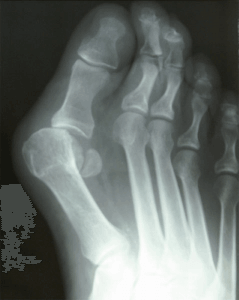
The Lapiplasty technique has created an effective tool for bunion surgery. The foot and ankle surgeon community has seen a reproducible tool that has helped revolutionize bunion surgery. This procedure has helped bunion surgeons get the best possible correction with incredible long term outcomes. The Lapiplasty combines a tried-and-true bunion surgery technique with modern jigs and fixation. Bunion surgery is challenging and any tools that can help with getting better outcomes are looked upon favorably. This is the case for the Lapiplasty system.
As a Board-Certified Surgeon and Physician and somebody that has done 1000’s of bunion surgeries, this is a welcomed tool in my armamentarium. I have found that Lapiplasty is a game changer. I find my results are outstanding and long lasting. I look forward to helping more patients with bunion recover faster and returning earlier to activities is a giant plus! If you suffer from bunion pain come see if you are a candidate for Lapiplasty. Give us a call at 425-391-8666 or make an appointment online today.
Sincerely,
Two Types of Flat Feet
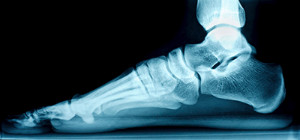
The medical term for flat feet is known as pes planus or pes valgus. The noticeable symptom of flat feet is a lack of an arch when the foot is lying flat on the ground. Most babies are born with flat feet and the arch typically develops with age. Research has indicated there are two types of flat feet. An arch that can be seen when the foot is elevated is known as a flexible flat foot and an absent arch also when the foot is elevated is known as a rigid flat foot. Flexible flat feet generally do not cause severe pain although some patients may feel mild achiness if intensely walking. Abnormal foot development may be the cause of rigid flat foot and surgery can be a necessary option for a significant correction. Some patients will even have a second surgery after the foot has fully formed to fuse the bones together. If you have flat feet, it is advised that you confer with a podiatrist.
Flatfoot is a condition many people suffer from. If you have flat feet, contact the podiatrists from Issaquah Foot & Ankle Specialists. Our doctors will treat your foot and ankle needs.
What Are Flat Feet?
Flatfoot is a condition in which the arch of the foot is depressed and the sole of the foot is almost completely in contact with the ground. About 20-30% of the population generally has flat feet because their arches never formed during growth.
Conditions & Problems:
Having flat feet makes it difficult to run or walk because of the stress placed on the ankles.
Alignment – The general alignment of your legs can be disrupted, because the ankles move inward which can cause major discomfort.
Knees – If you have complications with your knees, flat feet can be a contributor to arthritis in that area.
Symptoms
- Pain around the heel or arch area
- Trouble standing on the tip toe
- Swelling around the inside of the ankle
- Flat look to one or both feet
- Having your shoes feel uneven when worn
Treatment
If you are experiencing pain and stress on the foot you may weaken the posterior tibial tendon, which runs around the inside of the ankle.
If you have any questions, please feel free to contact one of our offices located in Issaquah, WA . We offer the newest diagnostic and treatment technologies for all your foot care needs.
Flat Feet
Flatfoot is a condition that occurs when the arches on the foot are flattened, which allows the soles of the feet to touch the floor. Flatfoot is a common condition and it is usually painless.
Throughout childhood, most people begin to develop arches in their feet, however, some do not. Those who do not develop arches are left with flatfoot. The pain associated with flat feet is usually at its worse when engaging in activity. Another symptom that may occur with those who have this condition is swelling along the inside of the ankle.
It is also possible to have flexible flatfoot. Flexible flatfoot occurs when the arch is visible while sitting or standing on the tiptoes, but it disappears when standing. People who have flexible flatfoot are often children and most outgrow it without any problems.
There are some risk factors that may make you more likely to develop flatfoot. Those who have diabetes and rheumatoid arthritis have an increased risk of flatfoot development. Other factors include aging and obesity.
Diagnosis for flat feet is usually done by a series of tests by your podiatrist. Your podiatrist will typically try an x-ray, CT scan, ultrasound, or MRI on the feet. Treatment is usually not necessary for flat foot unless it causes pain. However, therapy is often used for those who experience pain in their flat feet. Some other suggested treatment options are arch supports, stretching exercises, and supportive shoes.
Dr. Timothy Young, A Board Certified Foot Surgeon, Discusses Postsurgical Scar Formation and Supplements

Dr. Timothy Young, A Board Certified Foot Surgeon, discusses postsurgical scar formation and supplements.
In addition after bone is resected bone often has excellent blood flow and there can be a blood clot or hematoma on the surface of the bone, deep within the wound. This can be resorbed by the body and also can eventually convert to scar tissue and again cause ongoing swelling or stiffness to the surgical site. Two supplements may be helpful for this. One is nattokinase and the other is serrapeptase. Both of these supplements should be taken 30 minutes before food for best absorption. The nattokinase can be taken once a day and this serrapeptase can be taken twice a day. Talk to your surgeon or naturopath to further discuss the role of these supplements with your particular situation.
If you are experiencing foot or ankle pain, give us a call at 425-391-8666 or make an appointment online today.
Dr. Timothy Young, a Board-Certified Foot Surgeon, Discusses Neuroma Treatments
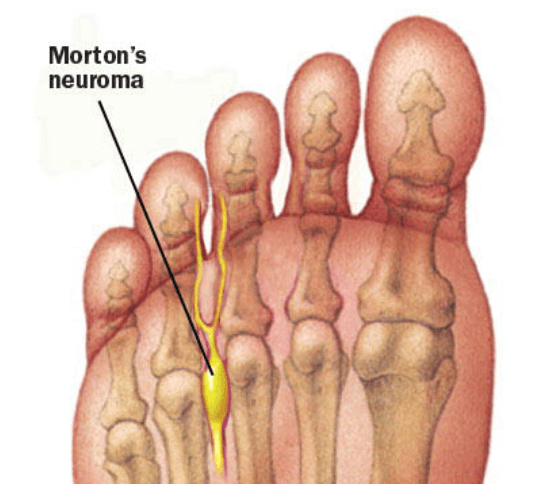
Dr. Timothy Young, a board-certified foot surgeon, discusses neuroma treatments:
Our Doctors have been using Alcohol injections for Morton's Neuroma for over 10 years with excellent success. Most patients have between 6 - 8 injections at weekly intervals. Occasionally a "mini-series" will be done after 12 months. For most patients, there is minimal discomfort after the injections and there is progressive relief from the Neuroma symptoms.
We typically use between 20-30% dehydrated alcohol. Ultrasound guidance is critical for correct injection technique. Most frequently we treat the 3rd intermetatarsal space, and runner up is the 2nd intermetatarsal space. This provides an excellent alternative to surgical treatment, and we also treat stump neuroma problems (where there is reoccurrence of the neuroma symptoms after prior foot surgery).
If you are experiencing foot or ankle pain, give us a call today at 425-391-8666 or make an appointment online.
Foot Care for Pregnant Women
The natural weight that pregnant women gain causes their center of gravity to be completely altered. This causes them to have a new weight-bearing stance which adds pressure to the knees and feet. As a result, pregnant women often experience severe foot pain. The two most common foot issues experienced by women in their pregnancies are edema and over-pronation. It is important for all pregnant women to learn more about how to take care of their feet so they are more comfortable during their pregnancy.
Over-pronation, which is commonly referred to as flat feet, is caused when a person’s arch flattens out upon weight bearing. This causes the person’s feet to roll inward while walking. Pregnant women often experience this due to the sudden weight they gain.
Edema, also referred as swelling in the feet, typically occurs in the later part of the pregnancy. It is the result of the extra blood accumulated in the pregnant woman’s body. The enlarged uterus puts more pressure on the blood vessels in the pelvis which causes leg circulation to slow down. This causes blood to pool in the lower extremities.
Fortunately, there are ways to treat both edema and over-pronation. Edema can be treated by elevating the foot as often as possible. Wearing proper fitting footwear will also be helpful for those with edema. A treatment method for over-pronation could be orthotics. Orthotic inserts should be designed with appropriate arch support and medial rear foot for your foot.
It is best for pregnant women to buy new shoes during the day, because this is the time where swelling is at its peak. Pregnant women also shouldn’t rush when buying shoes. It is always advised that you make sure your shoes fit properly but this is especially important during pregnancy.
If you are a pregnant woman, you should consult with a podiatrist in order to make sure your feet are healthy throughout the entirety of your pregnancy.
Edema Is Common Among Pregnant Women
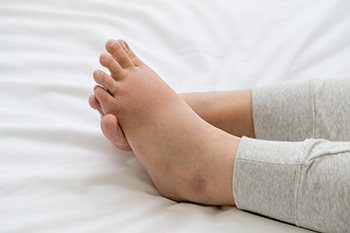
A common symptom that many pregnant women notice is edema. This causes considerable swelling, and often affects the feet. It is considered to be a normal part of pregnancy, despite the fact that it may cause discomfort. Edema generally begins in the 5th month, and other factors may contribute to it. These can include spending too much time on the feet, not having enough potassium, or eating foods that have elevated sodium levels. Many pregnant women have found relief from drinking plenty of fresh water daily, sleeping on their left side, and limiting time on their feet. It is important to wear shoes that fit comfortably, and it may help to apply cold compresses to swollen ankles and feet. Swimming in a pool may help to compress tissue and provide temporary relief. Additionally, it is suggested to avoid foods and drinks that have high sodium levels, and drinking and eating foods with caffeine. If you would like more information about how pregnancy can affect the feet, please confer with a podiatrist.
Pregnant women with swollen feet can be treated with a variety of different methods that are readily available. For more information about other cures for swollen feet during pregnancy, consult with the podiatrists from Issaquah Foot & Ankle Specialists. Our doctors will attend to all of your foot and ankle needs.
What Foot Problems Can Arise During Pregnancy?
One problem that can occur is overpronation, which occurs when the arch of the foot flattens and tends to roll inward. This can cause pain and discomfort in your heels while you’re walking or even just standing up, trying to support your baby.
Another problem is edema, or swelling in the extremities. This often affects the feet during pregnancy but tends to occur in the later stages.
How Can I Keep My Feet Healthy During Pregnancy?
- Wearing orthotics can provide extra support for the feet and help distribute weight evenly
- Minimize the amount of time spent walking barefoot
- Wear shoes with good arch support
- Wear shoes that allow for good circulation to the feet
- Elevate feet if you experience swelling
- Massage your feet
- Get regular, light exercise, such as walking, to promote blood circulation to the feet
If you have any questions, please feel free to contact one of our offices located in Issaquah, WA . We offer the newest diagnostic and treatment technologies for all your foot care needs.
