




April 2021
Shockwave (EPAT) An Extremely Effective Technique To Get Rid Of Plantar Fasciitis
If you have had plantar fasciitis you know how frustrating it can be to your everyday life. Often you wake up and have pain with your first step, and then it returns again at the end of the day or every time you sit down. You have been icing and stretching and talking to all your friends and still are not getting better.
Why, why will this heel pain not go away? The number one cause of plantar fasciitis or heel pain is overuse. The overuse begins to wear down the fibers of your plantar fascia and they become fragile and often tear. Most patients with heel pain that will not go away have microscopic tearing.
Well how do you fix this tearing? One of the most advanced and effective treatment options is shockwave therapy. It has no downtime, no anesthesia, is non-innvassive, no scarring and is fast and effective in healing the torn fascia. This is a great option for active or athletic patients. The best shockwave avaible is the EPAT or Extracorporeal Pulse Activation Technology by CuraMedix. There are a lot of other types out there but this has the best results and the most long term data. If you want to heal your plantar fasciitis fast and with no down time this is the device. kangen water
How it works? We typically employ 5 sessions all about 1 week apart. Each session takes about 10 minutes and is pain free and can be done in the office. The shockwave, EPAT, stimulates your bodies own healing cascade to recruit new cells and a new blood supply to heal your fascia. It is so effective that most professional sports teams have a unit to treat their athletes. If you are suffering from heal pain and want to get rid of it once and for all schedule an appointment with us today. Give us a call at 425-391-8666 or make an appointment online today.
Bunion Surgery and Bunion Correctors, Dr. Brandon Nelson, a Board Certified Bunion Surgeon, Discusses Both
.jpg)
Bunions are a common pathology that presents to my practice. The majority of bunions are seen on women between the ages of 30-50. Most have noticed the bunion at an early age and slowly have noticed them grow. A lot of patients feel their shoe selection has contributed to the growth or their activities like running. We know that bunions are an inherited foot structure that gets worse with time and usage.
Bunion correctors are common on the internet and I have seen them all. What we know about bunion correctors are they can help relieve some pain that is related to soft tissue contractures. The bunion itself is a bony malalignment of the foot and the bunion corrector cannot move bone back into position. The bunion corrector can help stretch some of the soft tissues as the bunion gets larger. However, it should be noted no bunion split or corrector will fix you bunion or change the shape of your bunion.
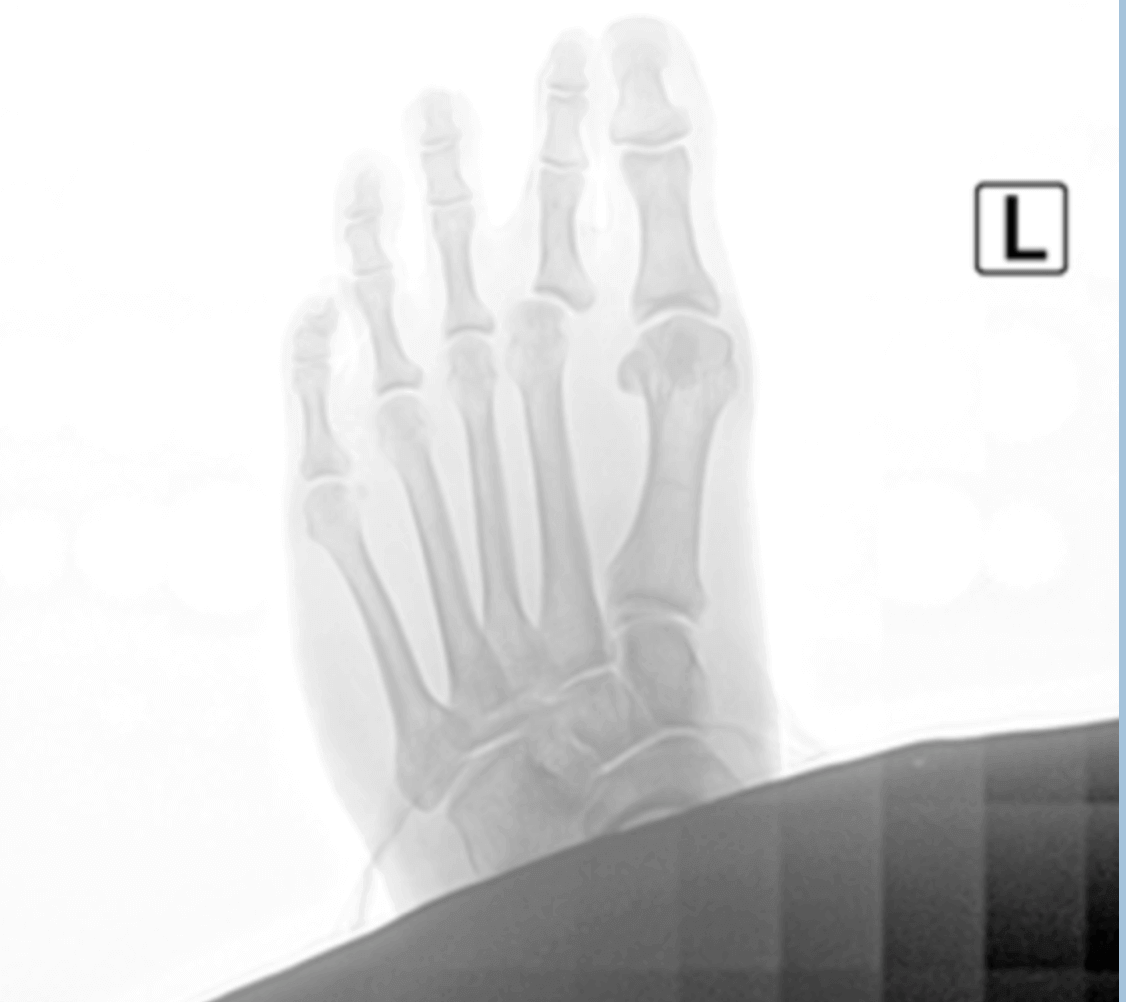
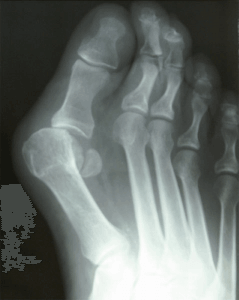
Bunion surgery is the only way to realign the bones that cause a bunion. I recommend bunion surgery for anybody that is having pain or difficulty fitting shoes. I consult and hundreds of bunions a year and can tell you that they are not all the same. It is very important to have a complete workup including physical exam and x-ray of the bunion. Proper procedure selection is key to fixing the bunion correctly.
If you are experiencing bunion pain and would like a consultation please call us at 425-391-8666 or make an appointment online and I will review all your options from conservative to surgical at your appointment.
Can Hammertoe Be Cured?
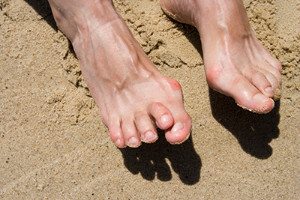 Hammertoe is a foot condition that is considered to be a deformity. It can cause the toes to curl and remain in a downward position. This condition often develops because of genetic factors, or from wearing shoes that do not have adequate room for the toes to move freely in. A muscle imbalance is often responsible for the abnormal position of the toes and can gradually worsen. Patients have found mild relief when orthotics or shoe inserts are worn, and it may help to prevent this ailment when shoes that are worn fit correctly. If you have developed hammertoe, it is suggested that you speak with a podiatrist who can offer you correct treatment techniques. In severe cases, surgery may be necessary to permanently straighten the toes.
Hammertoe
Hammertoes can be a painful condition to live with. For more information, contact the podiatrists from Issaquah Foot & Ankle Specialists. Our doctors will answer any of your foot- and ankle-related questions.
Hammertoe is a foot deformity that affects the joints of the second, third, fourth, or fifth toes of your feet. It is a painful foot condition in which these toes curl and arch up, which can often lead to pain when wearing footwear.
Symptoms
- Pain in the affected toes
- Development of corns or calluses due to friction
- Inflammation
- Redness
- Contracture of the toes
Causes
Genetics – People who are genetically predisposed to hammertoe are often more susceptible
Arthritis – Because arthritis affects the joints in your toes, further deformities stemming from arthritis can occur
Trauma – Direct trauma to the toes could potentially lead to hammertoe
Ill-fitting shoes – Undue pressure on the front of the toes from ill-fitting shoes can potentially lead to the development of hammertoe
Treatment
Orthotics – Custom made inserts can be used to help relieve pressure placed on the toes and therefore relieve some of the pain associated with it
Medications – Oral medications such as anti-inflammatories or NSAIDs could be used to treat the pain and inflammation hammertoes causes. Injections of corticosteroids are also sometimes used
Surgery – In more severe cases where the hammertoes have become more rigid, foot surgery is a potential option
If you have any questions, please feel free to contact one of our offices located in Issaquah, WA . We offer the newest diagnostic and treatment technologies for all your foot care needs.
What Are Hammertoes?
Hammertoes are painful deformities that frequently form on the second, third, or fourth toe. The condition is often caused by an issue in foot mechanics. This can be caused by the person’s specific gait or the manner in which they walk, or by shoes that do not comfortably fit the deformity. Hammertoes can be formed after wearing shoes that are too narrow or short for the foot or have excessively high heels. Shoes that are not properly sized will force the toes into a bent position for long periods of time. This can cause the muscles to shorten and toes to bend into the deformity of a hammertoe.
Hammertoe can also be caused by complications from rheumatoid arthritis, osteoarthritis, trauma to the foot, heredity, or a cerebral vascular accident. Pain and difficult mobility of the toes, deformities, calluses, and corns are all symptoms of a hammertoe.
Someone who suspects they have the symptoms of a hammertoe should consult with a physician—particularly a podiatrist. Podiatrists diagnose and treat complications of the foot and ankle. If the podiatrist discovers that the affected toes are still flexible, treatment for the hammertoe may simply involve exercise, physical therapy, and better-fitting shoes. Treatment for hammertoes typically involves controlling foot mechanics, such as walking, through the use of customized orthotics.
For more serious cases in which the toes have become inflexible and rigid, surgery may be suggested. During the operation, the toe would receive an incision to relieve pressure on the tendons. A re-alignment of the tendons may then be performed by removing small pieces of bone to straighten the toe. In some cases, the insertion of pins is needed to keep the bones in the proper position as the toe heals. The patient is usually allowed to return home on the same day as the surgery.
If surgery is performed to repair a hammertoe, following the postoperative directions of your doctor is essential. Directions may include several stretches, picking up marbles with your toes, or attempting to crumple a towel placed flat against your feet. Wear shoes that have low heels and a wide amount of toe space to maintain comfort. Closed-toe shoes and high heels should be avoided. Shoes with laces allow the wearer to adjust how fitted he or she may want the shoes to be and also allow for greater comfort. To provide adequate space for your toes, select shoes that have a minimum of one-half inch of space between the tip of your longest toe and the inside of the shoe. This will also relieve pressure on your toes and prevent future hammertoes from forming.
Other preventative measures that can be taken include going shopping for new shoes in the middle of the day. Your feet are its smallest in the morning and swell as the day progresses. Trying on and purchasing new shoes midday will give you the most reliable size. Be sure to check that the shoes you purchase are both the same size. If possible, ask the store to stretch out the shoes at its painful points to allow for optimum comfort.
Dr. Timothy Young, Board-Certified Foot Surgeon, Talks About Faster Soft Tissue Healing After Bunion Surgery and Bunion Swelling Relief
Dr. Timothy Young, Board-Certified Foot Surgeon, Talks About Faster Soft Tissue Healing After Bunion Surgery and Bunion Swelling Relief
Dr. Brandon Nelson, a Board Certified Physician, Discusses Capsulitis/Metatarsalgia
Capsulitis/metatarsalgia is a term we use to describe inflammation of the forefoot. It specifically refers to inflammation of the joints in the front of the foot. This condition is usually associated with an underlying foot pathology like a bunion, an elevated bone or a tight calf muscle. This foot structure is usually inherited but can be brought on by injury.
Patients often describe a burning or swelling at the base of the toes and it gets worse with activities. Often patients will state they rub their feet and it feels better or even ice and notice some improvement. Tingling or numbness is another description we often hear. This sometimes improves with shoe removal.
The cause is usually from genetics, foot structure and mechanics. From a genetic standpoint there is often a bunion that is inherited or a flatfoot. The foot structure aspect is typically a long second metatarsal or an elevated 1st metatarsal. Mechanics can play a large role as well with tight Achilles tendons or increased pronation.
Treatment consists of addressing any contributing factor. I like to focus on the mechanics and foot structure specifically. An x-ray is helpful along with a detailed physical exam. If you are suffering from tingling, burning or swelling in your feet, or think you have capsulitis/metatarsalgia we can help.
Give us a call at 425-391-8666 or make an appointment online today.
When Is Joint Replacement Surgery an Option?
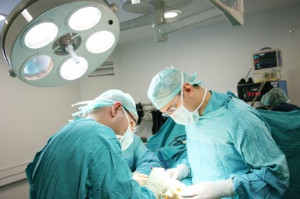
When damage or disease in a joint does not improve or respond to conservative treatment, joint replacement surgery may be an option to help the patient feel and move better. In joint replacement surgery, damaged or diseased joints are replaced with fabricated parts in an effort to help the joint work better, while relieving pain and increasing or restoring mobility. Joint replacement surgery can typically be performed on many different joints in the body, including the joints in the ankles and big toes. These prosthetic joints can last many years. If you are suffering from joint pain in your feet or ankles, contact a podiatrist to see if you are a good candidate for joint replacement surgery.
In certain cases, in which the patient suffers from extreme pain or damage in a joint, joint replacement surgery may be deemed useful. If you have constant pain in a foot joint, consult with the podiatrists from Issaquah Foot & Ankle Specialists. Our doctors will assess your condition and provide you with quality foot and ankle treatment.
What Is Joint Replacement Surgery?
Over time, joints wear down; this can be exacerbated by diseases and conditions. Joint replacement surgery, also known as arthroplasty, is when a damaged joint is surgically removed and replaced with a prosthesis. Prostheses, which can be made of ceramic, plastic, or metal, act as joints in lieu of an actual joint. One of the most prevalent causes for joint replacement is arthritis.
Arthritis in the Foot
Arthritis can occur in any joint in the body, including in the feet. Common types of arthritis in the foot are osteoarthritis, rheumatoid arthritis, and gout. The big toe is usually where arthritis occurs in the foot; this is known as hallux rigidus.
Joint Replacement Surgery in the Foot
The most common form of joint replacement in the foot is a first metatarsophalangeal (MTP) joint placement. MTP joint replacement surgery is designed to treat hallux rigidus. Surgery is not intensive, and recovery occurs within one to two months after the procedure has been done. Overall, joint replacement surgery is a safe and effective way to treat pain in the joint of the foot.
If you have any questions, please feel free to contact one of our offices located in Issaquah, WA . We offer the newest diagnostic and treatment technologies for all your foot care needs.
Joint Replacement Surgery
When conservative, noninvasive treatments prove unsuccessful, podiatrists will often turn to surgery as the last line of treatment for their patients. If patients are suffering from joint pain, issues in mobility, or are seeking to correct a deformity, joint replacement surgery is an effective option. Joint replacement surgery is also successful in treating arthritis, which is the most common cause of improperly working joints.
Patients with symptoms that include joint pain, stiffness, limping, muscle weakness, limited motion, and swelling are typically considered for joint replacement surgery. Range of motion and activity post-surgery will vary between patients and depending on the specific surgery performed, the affected joint, and the damage that will need to be repaired.
Joint replacement surgery replaces the damaged cartilage and bone, the latter if required. The damaged cartilage is typically replaced with a prosthesis that is attached to the bone, allowing the implant to grow into the bone. Following surgery, the patient will typically undergo physical therapy to become familiar with movement using the replaced joint.
It's Time for Beautiful Feet

You don't need an excuse to have beautiful nails. Step outside without worrying about the appearance of your feet.
Dr. Timothy Young, Board-certified Foot Surgeon and Bunion Specialist, Talks About How to Heal Your Bones Faster After Bunion Surgery
Dr. Timothy Young, Board-certified Foot Surgeon and Bunion Specialist, Talks About How to Heal Your Bones Faster After Bunion Surgery
Bone healing can be addressed with variety of different measures including proper immobilization with the cast or a boot to keep weight off the area where the bone is healing. Bone healing stimulation devices, supplements that enhance bone healing such as ortho pro bono can help. If you are experiencing foot or ankle pain, give us a call today at 425-391-8666 or make an appointment online.
