




November 2021
The Care and Treatment of Blisters
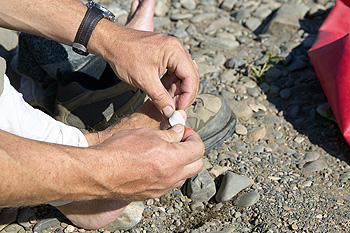 You’re on vacation in Europe and walking is a major part of your day. You’ve worn a new pair of shoes, and after a few hours your feet are crying out in pain. When you stop to take a look, you see that you’ve developed blisters on your toes and heels. The first reaction may be to pop the blister, but this can cause an infection. If you accidently break the skin on the blister and the fluid seeps out, keep it clean and protect it with a sterile gauze bandage until the area dries up. To prevent blisters from forming, be sure to wear shoes that fit properly and are broken in before walking long distances. If the area around the blister becomes red, or if the blister is discolored or enlarges in size, it may be infected. In that case, please see a podiatrist as soon as possible for the proper treatment.
Blisters are prone to making everyday activities extremely uncomfortable. If your feet are hurting, contact the podiatrists of Issaquah Foot & Ankle Specialists. Our doctors can provide the care you need to keep you pain-free and on your feet.
Foot Blisters
Foot blisters develop as a result of constantly wearing tight or ill-fitting footwear. This happens due to the constant rubbing from the shoe, which can often lead to pain.
What Are Foot Blisters?
A foot blister is a small fluid-filled pocket that forms on the upper-most layer of the skin. Blisters are filled with clear fluid and can lead to blood drainage or pus if the area becomes infected.
How Do Blisters Form?
Blisters on the feet are often the result of constant friction of skin and material, usually by shoe rubbing. Walking in sandals, boots, or shoes that don’t fit properly for long periods of time can result in a blister. Having consistent foot moisture and humidity can easily lead to blister formation.
Prevention & Treatment
It is important to properly care for the affected area in order to prevent infection and ease the pain. Do not lance the blister and use a Band-Aid to provide pain relief. Also, be sure to keep your feet dry and wear proper fitting shoes. If you see blood or pus in a blister, seek assistance from a podiatrist.
If you have any questions, please feel free to contact one of our offices located in Issaquah, WA . We offer the newest diagnostic and treatment technologies for all your foot care needs.
Blisters
Blisters are small pockets of fluid that occur on the top layers of the skin for several reasons. Friction, burns, and diseases are all known causes of blisters. Smaller blisters are known as vesicles, while larger blisters are referred to as bulla. The fluid inside the bubble can be blood, pus, or serum; which is a clear liquid that protects the skin. In most cases, blisters are not a major health issue, but they can be an indicator of a more serious condition.
Causes of blisters vary. Blisters are commonly caused by wearing poorly fitted shoes that rub against the foot. However, there are many other causes besides from friction; including burns, sunburn, insect bites, frostbite, poison ivy/oak, chemical exposure, impetigo, eczema, viral infections, and more.
Most blisters heal by themselves and do not require immediate medical care. If you have a blister, do not pop it since this may cause infection; it is advised to put a bandage over the blister to protect it. If the blister is large, causes pain, or if you have a fever, it is recommended that you see a doctor who can provide proper care. Blisters are easy to diagnose, and if considered prudent by the doctor, can easily be drained of fluid with a sterile needle as well.
To prevent blisters on the feet, wear shoes that fit properly and don’t cause rubbing. Socks can help prevent friction and it is recommended that you wear them if you are wearing shoes. Hand blisters can be avoided by wearing gloves during activities that cause friction against the hand. If you have a blister that pops, do not remove the dead skin, wash the area, apply antibiotic ointment, and cover with a bandage. It is okay in most cases to not seek immediate medical care for a blister if it was just caused by friction. However, if the blister causes pain or does not go away, it is suggested that you see a doctor for a diagnosis.
Dr Brandon Nelson, A Board-Certified Physician and Surgeon, Discusses the Best Long Term Outcome Bunion Surgery
Bunion surgery takes years to master and hundreds of procedures to become proficient. Experience is one of the best outcome predictors in addition to ongoing training and learning. As a physician part of our job is to constantly evaluate our own outcomes and explore techniques to improve our results. I continue to monitor my outcomes and satisfaction from patients. This has helped me to have a unique perspective on long term bunion surgery outcomes.
I have found that two bunion surgeries seem to be the most predictable procedures that have favorable results. They both have been around for years and have been utilized on hundreds of thousands of patients. These two procedures are the Austin and Lapidus bunionectomy.
The Austin is a procedure that is preformed on the head of the first metatarsal. It involves the release of some soft tissue around the bone and then cutting and sliding the bone back into position. This procedure works very well on smaller bunions with no foot instability. It has a quick recovery and can be done in under 1 hr.
The second is procedure the Lapidus or Lapiplasty is the work horse of bunion surgery. It utilized on larger bunions, people with foot instability or juveniles. It provides great correction and incredible long-term results. It involves release of some soft tissue structures around the head of the first metatarsal, then realignment of the first metatarsal and a tarsometatarsal fusion. It can take about 2 hours and has a longer recovery.
If you have a bunion, I would be glad to help you evaluate it and weigh your options between conservative and surgical correction. Give us a call at 425-391-8666 or make an appointment online today.
Board Certified Foot & Ankle Surgeon
Dr Brandon Nelson, A Board-Certified Physician and Surgeon, Discusses Heel Pain and Exercise
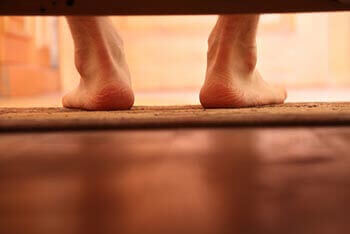
Exercise for me is an integral part of my daily life. I enjoy going for a run before work or on the weekends with my daughter. It provides much needed stress relief and helps to recharge my mind and body. I have suffered from heel pain and it was both depressing and challenging to continue on with my exercise and even daily activities.
Heel pain can often be exacerbated by exercise so I am going to provide a few tips that can be helpful:
1. Ice after exercise
2. Warm up before exercise and cool down
3. Stretching after you exercise
4. Switch to low impact activities until pain is under control
If you have suffered from heel pain for more than a month, please give us a call at 425-391-8666 or make an appointment online today.
How Older Adults Can Promote Foot and Ankle Health
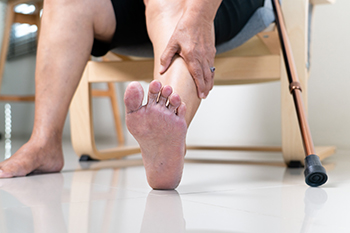
With age comes drier skin, brittle nails, decreased cushioning on bones, and even poor circulation. All of these factors can make foot and ankle health challenging. That is why it is important for older adults to be proactive about their foot and ankle health and help avoid problems from occurring. The best thing an older adult can do for their feet is to wear well-made, comfortable shoes that fit properly and offer adequate cushioning and support. Avoid wearing socks that are tight and can cut off circulation. Measure your feet when buying new shoes, because feet can widen with age. Try not to sit for too long without elevating your feet or doing gentle foot and ankle stretches to keep the blood flowing. Trim toenails straight across, but not too short, to avoid them becoming ingrown. Maintain a healthy weight prevent many painful foot conditions. Older adults with diabetes should avoid going barefoot, be sure to examine their feet every day, and check for developing wounds. Finally, older adults—and particularly those with diabetes—should make seeing a podiatrist regularly part of their foot and ankle health regimen.
If you need your feet checked, contact the podiatrists of Issaquah Foot & Ankle Specialists. Our doctors will attend to all of your foot and ankle needs and provide you with quality treatment.
Geriatrics and Podiatry
When people age, some common issues that may occur are bone density loss, dry skin, poor circulation, and rough brittle nails. These issues may also affect your foot health if the necessary steps are not taken to alleviate the problems.
It is important to take care of your feet because feet that are injured or diseased can affect your overall health. Having painful feet hinders your ability to do daily activities or may decrease your willingness to do the things that you need to do.
Visiting Your Geriatrician
As we age, health problems become more likely, so it is essential to visit your doctor for check-ups to ensure that you are doing the best you can to take care of your health. It is recommended to check your feet frequently for any possible cuts, bruises, swelling, corns or any other irregularities.
Taking Care of Elderly Feet
Cracked or dry feet can be treated by applying moisturizer often. It is also important not to wear old socks because the older the sock is, the higher the possibility there will be that there is bacteria there. Wear fresh socks and make sure they fit properly.
Proper foot health means that you can have a more active lifestyle and you will not be bogged down by pain. Foot health also leads to good circulation, which is paramount for overall health.
If you have any questions, please feel free to contact one of our offices located in Issaquah, WA . We offer the newest diagnostic and treatment technologies for all your foot care needs.
Geriatrics and Podiatry
Bone density loss, dry skin, poor circulation, and rough and brittle nails are some of the common problems that can occur as people age. The effect that these problems has on foot health should be of particular concern in comprehensive geriatric care.
Feet that are diseased or injured have a negative effect on overall health and safety. Painful feet limit a person’s willingness and ability to stay active. Poor foot health can also cause gait change, which can lead to falls and accidents. Even though recovery time from health problems naturally slows as we age, many foot problems can be avoided altogether with regular prophylactic care.
Feet should be thoroughly washed in warm water daily. Care must be taken to dry the feet well, making sure to dry between and under the toes. Any left-over moisture can cause problems like foot fungus. After cleaning feet carefully check for problems such as cracked skin, bruises, swelling, cuts, corns, or other irregularities.
Examine toenails for ingrown, jagged, or split nails. Long toenails should be cut straight across. Never cut toenails at an angle or down the side as this may lead to ingrown nails.
Cracked and dry feet should be treated once or twice a day with a non-greasy moisturizer. Rub the moisturizer into the skin and allow it to dry before putting on socks and shoes. Sweaty feet can be dusted with a small amount of talcum powder. Avoid putting talcum directly into shoes as this may make feet slip within the shoe and cause a serious fall.
Wear clean dry socks each day. Not only do clean socks feel better on the feet, but socks worn for longer periods may harbor disease and odor-causing bacteria. Socks should not be tight around the top as they can leave marks on the leg. Socks that are too small can bring about bruising caused by pressure against the toes.
Wear comfortable and well-fitting shoes. If possible, consult a professional footwear specialist when purchasing shoes. Do not walk around barefoot as this exposes the feet to possible injury and bacteria.
Good foot health allows a more active lifestyle, which improves blood flow. Good circulation aids in recovery from injury or illness. It is also important for maintaining overall health.
Serious health problems can manifest themselves as symptoms in the feet. The elderly should seek professional help from a podiatrist if experiencing foot problems like tingling, numbness, pain, infection, or a sore that does not heal. Taking care of these problems right away can prevent the development of severe cases.
Dr Brandon Nelson, A Board-Certified Physician and Surgeon, Discusses Ball of Foot Pain
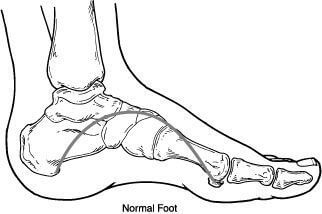
Ball of foot pain usually refers to pain in one’s feet right before or near where the toes start. This is a common area to experience pain and can be attributed to quite a few pathologies. Typically, we see certain foot structures that are associated with ball of foot pain, and these include high arched feet or a foot with a bunion deformity. These foot types can develop to two most common forefoot pathologies which are capsulitis or neuritis.
Capsulitis or metatarsalgia can create pain in the ball of one’s foot especially with activities. Most people that have capsulitis will see some swelling and sharp or a bruised type of sensation. It appears to be most common in the 2nd metatarsal and has a slow progression to worsening symptoms. Shoe gear usually makes it feel better and often there is some instability in the foot itself.
Neuritis or neuromas are often isolated to the 3rd interspace of the foot. We usually see this more often in females as opposed to males. Typically, it will be a burning or tingling type feeling. Shoes often exasperate the symptoms and foot structure does not usually have much of an influence on this pathology.
There are many different techniques to diagnosis and treat capsulitis, metatarsalgia or neuromas. It is important to obtain and x-ray and a thorough evaluation of the foot itself. There are a few instances where more advanced imaging like an MRI can provide some value. Treatment for either pathology is conservative in most cases and has a high resolution rate.
If you are suffering from ball of foot pain, make an appointment today and I will help you get back on your feet! 425-391-8666
Dr Brandon Nelson, A Board-Certified Physician and Surgeon, Discusses How to Get The Best Bunion Surgery
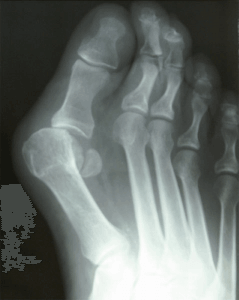
Bunion surgery can be overwhelming to think about, really any surgery can. In general, I see a few patients a day with questions about their bunions and about bunion surgery. I believe the process can be simplified when the surgeon you see has both experience and timelines to help you understand the entire process.
Most bunion surgeries can be done in an outpatient setting. At my office office, we are lucky enough to have an onsite surgery center which is both a huge cost and time savings. It also allows me to operate on more bunions and has provided me with a well of experience. It is important to understand that experience and the number of bunions a surgeon sees makes a dramatic difference.
Most bunion surgeons do two types of procedures one in the head of the 1st metatarsal and one in the base. The 1st metatarsal is the bone with the bunion deformity. The head procedures allow patients to walk right after surgery and is used for small to medium bunions. The base procedures usually require about 3-4 weeks of non-weight bearing. This procedure is usually for pediatrics or larger bunions. Both can provide excellent correction when used appropriately.
If you are thinking about bunion surgery come see me and I can be of some help with the process. Give us a call at 425-391-8666 or make an appointment online today.
How to Handle a Long Work Day on Your Feet
In 2014, the American Podiatric Medical Association surveyed 1,000 American adults and found that half of all respondents lived with foot pain. Fortunately, there are ways to avoid foot problems such as following a daily footcare routine and wearing proper footwear at work.
If you have a job that requires you to be on your feet, it is best that you do not wear flat sole shoes. Your heel should be slightly elevated (less than 2 inches, but at least ¼-inch) if you are going to be standing for a prolonged period. You should also make sure that the shoes you wear are not too small. Tight shoes may cut off circulation to your feet, which will result in pain and blisters. It is always best to purchase fitted shoes later in the day, because the feet tend to swell as the day progresses. It may also be helpful to buy shoes a half size larger if you plan on wearing custom orthotics or arch supports.
Your muscles may become stiff when you are constantly standing up. It is important to take breaks every hour to stretch and relax. One tip is to perform calf raises, because this exercise will help improve your circulation. To perform this stretch, you first need to stand on the edge of a step with your abdominal muscles pulled inward. You then need to grip the step with the balls of your feet with your heels hanging over the edge. Next, try to raise your heels above the step by a few inches while standing on your tiptoes; hold this pose for a second. You should then lower your heels back even to the platform. These calf raises should be done ten times for full effectiveness.
You should also take care of your feet while you are at home. One of the best ways to prepare your feet for a long day of work is to soak them in ice water. Doing so for 20 minutes will help fight the swelling and inflammation that results from being on your feet at work.
Nevertheless, if you are experiencing pain in your feet, you should seek help from your podiatrist. Your doctor will help treat any ailments you may have in addition to helping you prevent any other ailments from developing in the future.
How to Help Your Body Adjust to Working on Your Feet
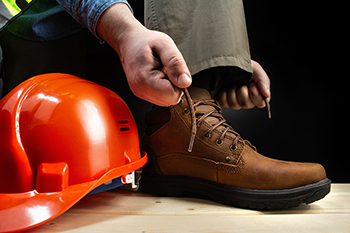
If you work on your feet all day, you may want to look into how you can lessen the impact this can have on your health. You may even be able to reduce pain, swelling, and other complications that working on your feet may be causing. The first order of business is to get yourself a good pair (or two) of leather shoes with quality construction, non-slip soles, cushioned inner lining, wide heels and support in the back for your ankles. Alternate those shoes daily. Take every break you are entitled to and sit down while elevating your feet. Try strengthening your body through fitness training, stretching, and building up your endurance. Soak your legs in a hot tub at night to relieve muscles. A podiatrist can also create custom orthotics to distribute weight more evenly and provide extra cushioning and structure. If your feet are in pain after working all day, seek the counsel of a podiatrist to explore all possible treatment options.
While working on the feet, it is important to take the proper care of them. For more information about working on your feet, contact the podiatrists from Issaquah Foot & Ankle Specialists. Our doctors will treat your foot and ankle needs.
Working on Your Feet
Standing on your feet for long periods of time can cause stress and pain in your feet. Your whole body may experience change in terms of posture, back pain, bunions, callouses and or plantar warts. There are ways to avoid these conditions with proper foot care, smart choices and correct posture.
Positive Changes
Negative heeled shoe – Choosing this shoe type places the heel slightly lower than the ball of the foot. These are great for overall foot health. Find shoes that fit you correctly.
Go barefoot – Our feet were not designed to be enclosed for all hours of the day. Try to periodically expose your feet to air.
Eliminate Pain
Foot Exercises – Performing simple exercises, incorporating yoga and doing stretches are beneficial. This will allow increased blood flow to the area and muscles of the foot.
Achilles tendon – Stretching the foot out flat on the floor will relax the calf muscles and tendon. These exercises can be performed almost anywhere. Make sure you add these exercises to your daily regimen.
With a little bit of this information and knowing more about foot health, you will notice changes. Foot stretches and proper footwear will help with pain and prevent further issues.
If you have any questions please contact one of our offices located in Issaquah, WA . We offer the newest diagnostic and treatment technologies for all your foot and ankle needs.
