




May 2020
Dr. Timothy Young Talks About Bunion Anatomy
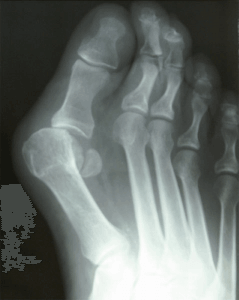
Most bunion problems involve an alignment issue with the underlying bones. The first metatarsal and the great toe become out of typical alignment. The joint itself become subluxed and is then prone to arthritis and adaptive changes.
Bunions can develop an early age. This is called juvenile onset. This involves the first metatarsal shifting away from the adjacent second metatarsal and the foot becomes wider. In some cases this involves a splayfoot. Also there is more risk of bunion formation when there is underlying metatarsus adductus. This is a genetic inherited foot structure. It is common to see other family members that have a bunion. Often times you can look to let say your mother or grandmother and find that they also have a bunion, because of this genetic pattern.
Tight shoes can speed the process up and make things worse! However, in general, you are born with a foot type that is prone to a bunion.
If you have concerns about a bunion, give us a call at 425-391-8666 or make an appointment online!
Dr. Timothy Young and Dr. Brandon Nelson.
Dr. Timothy Young Talks About Crossover Toe
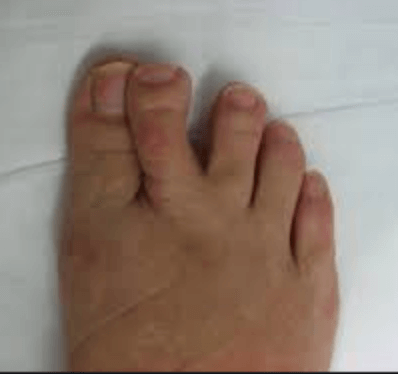
This typically involves the second toe. This is where the second toe deviates toward the great toe and can even ride over the top of the great toe. When this happens, the structure back at the knuckle behind the toe itself (second MTP joint) becomes out of alignment and can be subluxed. In severe cases the joint can also dislocate. This causes a tremendous amount of stress on the 2nd MTP joint capsule. It's not uncommon for the capsule to become attenuated or stretched and thinned out. It can have partial tearing. This can lead to pain in the joint and inflammation with local swelling.
Dr. Brandon Nelson Discusses How To Stop Heel Pain And Plantar Fasciitis Once And For All

I’m still constantly surprised on a daily basis how many people live with chronic heel pain. Plantar fasciitis or heel pain can be so challenging for patients and really be detrimental to their life. I see a lot of patients that have suffered for years and years from heel pain and have seen multiple physicians and are still having pain. I empathize with these patients and understand their frustration as this can really impact their life and the things they want to do. Having suffered from plantar fasciitis and heel pain myself and knowing how it impacted my life, I really enjoyed treating heel pain patients.
I now important it is for me to maintain an active and healthy lifestyle and I really want to provide this for my patients as well. Often times the majority of heel pain gets treated as plantar fasciitis when there are quite a few other pathologies that can cause heel pain. I can’t stress enough compounded is to find the underlying causes of heel pain which allows proper treatment plan to occur. If you suffer from heel pain for plantar fasciitis and are continuing to suffer please make an appointment or give us a call today at 425-391-8666 today and we will help you stop it once and for all.
Rheumatoid Arthritis and the Feet
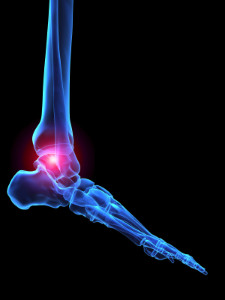 Rheumatoid arthritis is an inflammatory form of arthritis that can create complications with the feet. This condition may cause swelling within the joints of the feet, making it very painful to complete daily tasks. Other symptoms include joint stiffness, fatigue, muscle pain, and numbness. Some risk factors for developing rheumatoid arthritis include genetics, bacteria and viruses, physical trauma, and obesity. In order to treat this condition, it may be beneficial to visit a doctor for prescribed medication, partake in physical therapy, and in more severe cases, surgery. It’s been said that having a well balanced diet may help relieve some of the symptoms associated with this condition. For a proper diagnosis and advised treatment plan, it’s suggested that you consult with a podiatrist for professional care.
Arthritis can be a difficult condition to live with. If you are seeking treatment, contact the podiatrists from Issaquah Foot & Ankle Specialists. Our doctors can provide the care you need to keep you pain-free and on your feet.
Arthritic Foot Care
Arthritis is a term that is commonly used to describe joint pain. The condition itself can occur to anyone of any age, race, or gender, and there are over 100 types of it. Nevertheless, arthritis is more commonly found in women compared to men, and it is also more prevalent in those who are overweight. The causes of arthritis vary depending on which type of arthritis you have. Osteoarthritis for example, is often caused by injury, while rheumatoid arthritis is caused by a misdirected immune system.
Symptoms
- Swelling
- Pain
- Stiffness
- Decreased Range of Motion
Arthritic symptoms range in severity, and they may come and go. Some symptoms stay the same for several years but could potentially get worse with time. Severe cases of arthritis can prevent its sufferers from performing daily activities and make walking difficult.
Risk Factors
- Occupation – Occupations requiring repetitive knee movements have been linked to osteoarthritis
- Obesity – Excess weight can contribute to osteoarthritis development
- Infection – Microbial agents can infect the joints and trigger arthritis
- Joint Injuries – Damage to joints may lead to osteoarthritis
- Age – Risk increases with age
- Gender –Most types are more common in women
- Genetics – Arthritis can be hereditary
If you suspect your arthritis is affecting your feet, it is crucial that you see a podiatrist immediately. Your doctor will be able to address your specific case and help you decide which treatment method is best for you.
If you have any questions please feel free to contact one of our offices located in Issaquah, WA . We offer the newest diagnostic tools and technology to treat your foot and ankle needs.
How to Care for Your Arthritic Foot
Arthritis is an inflammation of the joints and it can occur at any joint in the body, especially in the foot. It generally effects those who are older, however, it can occur at any age. Although there are many different forms of arthritis, there are three main types that occur in the foot. The three types are osteoarthritis, rheumatoid arthritis, and gout.
The primary cause of osteoarthritis is aging. As you age, cartilage degenerates around the joints which causes friction and pain. Obesity can cause osteoarthritis through mechanical stress. Injuries that damage joints can increase the probability as well. Finally, a family history of osteoarthritis can also increase chances of having it.
Rheumatoid arthritis occurs when the immune system attacks the joint linings and weakens them over a long time. While there is no known cause of rheumatoid arthritis, obesity and smoking can increase your chances of getting it. Women are also more likely to get it than men.
Gout is a form of arthritis that occurs when there is too much uric acid in your blood and painful crystals form in your joints. Men are more likely to have gout than women. People who are obese or drink alcohol often are also more likely to develop gout. Furthermore, having diabetes, heart disease, high blood pressure, high cholesterol, gastric bypass surgery or a family history of gout may increase your likelihood of developing the condition.
Symptoms of arthritis include pain, stiffness, swelling in the joints. These symptoms can make it harder and more painful to walk. Physical activity can increase pain and discomfort. Furthermore, joint pain can worsen throughout the day for osteoarthritis. Gout attacks generally last several days with the first few being the worst.
Diagnosis of gout includes either a joint fluid test or a blood test. X-ray imaging can detect osteoarthritis but not gout. On the other hand, there is no blood test for osteoarthritis. Rheumatoid arthritis is difficult to diagnosis. Doctors utilize family and personal medical history, a physical examination, and antibody blood tests to determine if you have rheumatoid arthritis.
Treatment varies for the different kinds of arthritis. Anti-inflammatory medication or steroids can help reduce pain from inflammation of the joints. Changing shoe types can help with some symptoms. Wider shoes can help with discomfort from gout and osteoarthritis. High heels should be avoided. Shoes with proper arch support and that take pressure off the ball of the foot can help with rheumatoid arthritis. Drinking lots of water can also help rid uric acid from the blood. Losing weight, improving your diet, and limiting alcohol and smoking can also help prevent or lessen the symptoms of arthritis.
If you are having trouble walking or pain in your feet, see a podiatrist to check if you have arthritis.
Dr. Brandon Nelson Discusses Treating Bunions Without Surgery

Treating bunions without surgery can be fairly challenging for patients that currently have pain or difficulty fitting shoe gear. Bunions or bone deformity can be inherited from your mom or dad. It is not uncommon for bunions to begin early in adolescence and continuing to develop into adulthood. Patients are often interested in conservative measures that are available to help with bunion pain. It is important to note that there are no conservative measures that are going to fix your bunion deformity.
Quite a few patients come in with all sorts of strapping devices and splinting devices from the Internet. None of these tools fixture bunion or change the shape of your bunion as this deformity is a malalignment of a joint and bone. However, it should be noted that we have many options for people that are having bunion pain and do not want to have surgery performed. The most important issues to address are the mechanical instability and the joint pain. Often times stabilize the foot structure can significantly helped slow the deformity and reduce the pain. There are many options for the arthritic joint that can provide long-term relief. In office evaluation and x-ray are central to recognizing what type of bunion is developing how to best rectify the pain. At Issaquah Foot and Ankle Specialists we have seen thousands of bunions and have many different options available to save the patient’s lifestyle. Please give us a call at 425-391-8666 or make an appointment online if you have bunion pain.
How Does Plantar Hyperhidrosis Occur?
 Hyperhidrosis is the medical term that is used to define excessive sweating. Some patients have feet that sweat for the majority of the day, and this is referred to as plantar hyperhidrosis. It may happen as a result of anxiety, hormonal changes, or living in a hot environment. This condition may cause embarrassment during the day as the feet begin to slide in certain types of shoes. Additionally, rashes may develop, and there may be an odor coming from the feet. It is beneficial to wear shoes that are made of breathable materials, and comfort may be found when foot powder is frequently sprinkled in the shoes. If you have symptoms of plantar hyperhidrosis, it is strongly suggested that you consult with a podiatrist who can help you to manage this condition.
If you are suffering from hyperhidrosis contact the podiatrists of Issaquah Foot & Ankle Specialists. Our doctors can provide the care you need to attend to all of your foot and ankle needs.
Hyperhidrosis of the Feet
Hyperhidrosis is a rare disorder that can cause people to have excessive sweating of their feet. This can usually occur all on its own without rigorous activity involved. People who suffer from hyperhidrosis may also experience sweaty palms.
Although it is said that sweating is a healthy process meant to cool down the body temperature and to maintain a proper internal temperature, hyperhidrosis may prove to be a huge hindrance on a person’s everyday life.
Plantar hyperhidrosis is considered to be the main form of hyperhidrosis. Secondary hyperhidrosis can refer to sweating that occurs in areas other than the feet or hands and armpits. Often this may be a sign of it being related to another medical condition such as menopause, hyperthyroidism and even Parkinson’s disease.
In order to alleviate this condition, it is important to see your doctor so that they may prescribe the necessary medications so that you can begin to live a normal life again. If this is left untreated, it is said that it will persist throughout an individual’s life.
A last resort approach would be surgery, but it is best to speak with your doctor to find out what may be the best treatment for you.
If you have any questions, please feel free to contact one of our offices located in Issaquah, WA . We offer the newest diagnostic and treatment technologies for all your foot care needs.
Hyperhidrosis of the Feet
Each foot, on average, has about 250,000 eccrine sweat glands that produce half a pint of sweat each day. Sweating is a natural and important bodily function. It regulates the body’s temperature by cooling the skin so that it does not overheat. In individuals with hyperhidrosis, the sympathetic nervous system works in "overdrive", producing far more sweat than what is required. People with plantar hyperhidrosis experience an excess amount of sweat on their feet. It is estimated that 2% to 3% of all Americans suffer from some form of hyperhidrosis. This condition is often caused by neurologic, endocrine, infectious, and other systemic disease. Other factors that may trigger the condition are heat and emotions.
People with hyperhidrosis may notice an overabundance of sweat on their feet, along with a strong odor. The feet may also have a wet appearance coupled with infections such as athlete’s foot or toenail fungus. The sweat may even appear in low temperatures, such as during the winter months. People with plantar hyperhidrosis often need to change their socks several times throughout the day.
The specific cause of hyperhidrosis is unknown, and many believe it may be caused by over-activity. However, others believe the condition is genetic. Caffeine and nicotine are known to cause excitement and nervousness which are two emotions that may make the condition worse.
If you are looking to treat your hyperhidrosis the most important thing you should do is wash your feet every day. You may even need to wash your feet twice a day, if necessary. You should also make sure you are wearing the right socks. Wool and cotton socks are both known to be good for ventilation, meaning they allow the feet to breathe. You should avoid socks made from nylon which trap moisture and lead to sogginess. Other common treatment options are over-the-counter antiperspirants that contain a low dose of metal salt. In some cases, prescription strength antiperspirants that contain aluminum chloride hexahydrate may be necessary. In severe cases, surgery may be required.
Untreated hyperhidrosis can easily lead to complications. Some complications that may arise from the disorder include nail infections, warts, and bacterial infections. Consequently, it is important that you seek treatment from your podiatrist if you suspect that you may have plantar hyperhidrosis.
Dr. Brandon Nelson Discusses Causes of Children’s Heel Pain

At Issaquah Foot & Ankle Specialists we are the leaders in treating pediatric patients. We are the number one referral center for Pediatricians that are looking for a foot and ankle specialist. We have over 40 years of experience treating pediatric patients. The most common presentation we see is a child with heel pain. Kids begin to present with heel pain as sports start back up, especially soccer and basketball.
Typically children relate a pain that wraps around the back of their heel that often feels like a bruise and gets more painful with activities. Sometimes there is a family history of heel pain in a brother or sister or even mom and dad. I encourage parents to have their child examined as there are many causes of heel pain and those should be ruled out. Apophysitis or Sever’s Disease can be the cause of heel pain in children. This is a type of growth plate irritation that can be extremely uncomfortable. However, it should be noted that there are other causes and I would stress that parents should have their child evaluated before beginning treatment for apophysitis. If your child is suffering from heel pain give us a call today at 425-391-8666 or make an appointment online and we will help.
Dr. Brandon Nelson Discusses What to Expect With Bunion Surgery

Bunion surgery in the past was only performed in a hospital setting and patients often stayed the night at the hospital. Things have really changed and now patients do not stay the night in a hospital and most bunions are performed in a surgery center. The average bunion surgery takes less than 2 hours and patients will only require IV sedation as opposed to general sedation. This type of sedation makes for a much quicker recovery from anesthesia and often less side effects. I like to provide all my patients with a nerve block so they will get a good night's sleep the evening of surgery. The majority of patients will be pain free the first night.
The next day most patients will have pain that is well controlled with pain medication. Often patients will just take prescription pain medication for the first 24-48 hours and then switch to over the counter pain control. We utilize advanced techniques that allow all our bunion patients to walk after surgery thereby minimizing down time and speeding recovery. We have protocols to help get your ankle and toes moving right after surgery to decrease stiffness and swelling. Additionally, we will provide patients with exercise guidelines to help them stay fit and active during the recovery phase. One of the best aspects of our practice is we perform bunion surgery every single Monday and have fixed 1000’s of bunions. Another enormous advantage of our clinic is an onsite surgery suite that will save patients thousands of dollars on the surgery as we have special discounted pricing compared to other doctors that must take you to a hospital or surgery center. Do not let your bunion keep your from wearing a normal shoe or enjoying the activities you love give us a call at 425-391-8666 or make an appointment online so we can help.
