




September 2022
Swelling of the Feet
There are many reasons why patients experience swelling of the feet. It is rather common and may be a side effect of pregnancy or from sitting and standing for most of the day. Gravity could also play a role in the development of swollen feet. It is known that the weight of blood volume in our bodies is exerted on the veins in the legs and feet. The veins may not work as efficiently during the aging process, and this could make the blood flow backward causing swollen feet. Relief may be found when obese patients lose weight, and it may help to engage in compression therapy by wearing compression socks, stockings, or athletic sleeves. This method can release pressure on the feet and ankles which may help to reduce existing swelling. There are patients who have controlled their swollen feet by implementing healthy lifestyle changes. These can consist of reducing salt intake, incorporating a gentle exercise regime into the daily routine, and drinking plenty of fresh water. Swollen feet may be a temporary condition that affects people who travel via airplane or automobile, so it is beneficial to walk as frequently as possible even though it can be difficult. Swelling of the feet can also be indicative of other health issues so it is important to pay attention to any type of chest pain, mental confusion, dizziness, or fever. If you consistently have swollen feet, it is strongly suggested that you consult with a podiatrist who can help determine the cause and how to effectively treat it.
Why Are My Feet Swollen?

One can get swollen feet from walking or standing for long periods of time. The swelling is often relieved by resting and elevating the feet. Various other things can cause swelling in the feet, such as conditions with bones and tendons, problems with skin and toenails, or drug side effects. However, there are times when the swelling (or edema) is related to a more serious underlying problem like heart failure, developing blood clots, or kidney disease. So this must not be ignored. If you have swelling in your feet and you do not know the cause, or if the swelling worsens, causes pain, or interferes with mobility, contact a podiatrist immediately and have your feet examined. Swelling can be the first clue that something is going on in your body, and a proper diagnosis is imperative for effective treatment.
Swollen feet can be a sign of an underlying condition. If you have any concerns, contact the podiatrists of Issaquah Foot & Ankle Specialists. Our doctors can provide the care you need to keep you pain-free and on your feet.
Swollen feet are a common ailment among pregnant women and people who stand or sit for extended periods. Aging may increase the possibility of swollen feet and patients who are obese often notice when their feet are swelling too. There may be medical reasons why swollen feet occur:
- Phlebitis - A condition that causes the veins to become inflamed and can also cause leg pain.
- Liver disease - This may lead to low blood levels of albumin which is a protein. This can cause fluid in the blood to pass into the tissues and several areas of the body can become swollen.
- Heart failure - When the heart doesn’t pump properly the blood that is normally pumped back to the heart can pool in the veins of the legs causing swollen feet.
- Kidney disease - One of the main functions of the kidneys is releasing excess fluid in the body. This type of condition can make it difficult for the kidneys to function properly, and as a result the feet may become swollen.
- Deep-vein thrombosis (DVT)- This is a serious condition where blood clots form in the veins of the legs. They can block the return of blood from the legs to the heart which may cause the feet to swell. It is important to be treated by a podiatrist if this condition is present.
Swollen feet can also be caused by bone and tendon conditions, including fractures, arthritis, and tendinitis. Additionally, there may be skin and toenail conditions and an infection may cause the feet to swell. Patients who take medicine to treat high blood pressure may be prone to getting swollen feet.
Many patients elevate their feet to help relieve the swelling and this is generally a temporary remedy. When a podiatrist is consulted the reason behind the swelling can be uncovered and subsequently treated.
If you have any questions please contact one of our offices located in Issaquah, WA . We offer the newest diagnostic and treatment technologies for all your foot and ankle needs.
Dr Brandon Nelson, A Board Certified Physician & Surgeon, Discuss His Experience with the Lapiplasty Bunionectomy
.jpg)
After years of experience and 1000s of bunion surgeries I have taken some time to reflect back on different techniques and procedures. I have seen new products and new surgeries come in and out of fashion. Every few years a new health care company will introduce fancy new products that they want us surgeons to utilize. I have seen many new instruments and new ideas that are supposed to revolutionize outcomes and provide time and cost savings. It is interesting that things seem to always come back to the tried and true techniques that have been around for years.
The two most prolific bunion correction surgeries are the Lapidus and Austin bunionectomy. These two procedures have been around for years and have corrected 100’s of thousands of bunions. They continue to be the work horses of bunion surgery as they have predictable outcomes and long term follow up. I utilize both and have found the majority of bunions have great correction when one of these two techniques are used.
There is currently a lot of buzz around the Lapiplasty procedure and for good reason. It employs a surgical technique, the Lapidus, that has been around for almost 100 years. This procedure was brought to the forefront by a Surgeon in Seattle named Sigvard Hansen. Dr Hansen has since retired and is considered by many to have been a pioneer in the field. Some of us were lucky enough to spend time with him and learn his techniques and continue to utilize the Lapidus bunionectomy. The Lapiplasty is a tool kit that helps surgeons perform this procedure. It has helped to make outcomes more reproducible and simplified the technique.
The Lapiplasty is one of my most common procedures and I find it to have predictable and reproducible outcomes. If you have a bunion and would like to see what kind of candidate you are please contact my office and I would be happy to help. Give us a call at 425-391-8666 or make an appointment online today.
Sincerely,
How to Treat Your Toenail Fungus
While not a serious issue, toenail fungus, or onychomycosis, can be an embarrassing and uncomfortable condition to experience. Toenail fungus is often caused from public areas that harbor fungi and improper cleaning/drying of the foot. Once infected, the fungus grows deeper into the nail and can be very hard to get rid of.
There are different types of fungus that cause toenail fungus. Dermatophytes, yeasts, and molds are the most frequent forms of fungus to infect the toenail. Dermatophytes are the most common among the three. Symptoms associated with fungal nails include the discoloration of the toenail, brittleness, and in some circumstances, a smell. Pain is rarely a symptom caused by toenail fungus.
Diagnosis of fungal nails is generally a rather quick process. However podiatrists will make sure that the cause is not another condition such as lichen planus, psoriasis, onychogryphosis, or nail damage. Podiatrists will make use of fungal cultures and microscopy to verify that it is fungus.
While over-the-counter ointments are readily available, most are ineffective. This is due to the fact that the nail is very protective and that the fungus slips in between the nail plate and bed. Podiatrists can offer oral medication which currently provides the best results.
Ultimately, prevention is the best line of defense against toenail fungus. Avoid unsanitary public showers. If you do use a public shower, use shower shoes to provide your foot with protection. Once you are finished showering, make sure to thoroughly dry your feet. Fungi thrive in warm, dark, and moist places like sweaty, warm feet that are left dark in shoes all day.
Causes and Symptoms of Toenail Fungus
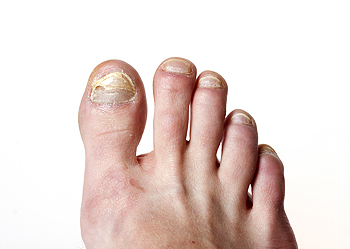
The toenails can become disfigured if they are infected by toenail fungus. The medical term for toenail fungus is onychomycosis, which can be quite unsightly. It is caused by a fungus that lives in warm and moist environments, including public swimming pools, shower room floors, and locker rooms. The fungus can enter the body through small cracks in the skin, and it feeds on keratin that is found on the hard surface of the toenails. Additional factors like poor foot hygiene or wearing socks that are too tight can contribute to the development of toenail fungus. Also, existing medical conditions, such as diabetes and poor circulation, may lead to toenail fungus. Toenail fungus symptoms include hard, brittle toenails that often turn white or yellow. In severe cases, the nail may separate from the nail bed, which may require medical attention. If you experience any symptoms of fungal infection on your toenails, it is suggested that you contact a podiatrist who specializes in diagnosing and treating this condition.
For more information about treatment, contact the podiatrists of Issaquah Foot & Ankle Specialists. Our doctors can provide the care you need to keep you pain-free and on your feet.
Toenail Fungus Treatment
Toenail fungus is a condition that affects many people and can be especially hard to get rid of. Fortunately, there are several methods to go about treating and avoiding it.
Antifungals & Deterrence
Oral antifungal medicine has been shown to be effective in many cases. It is important to consult with a podiatrist to determine the proper regiment for you, or potentially explore other options.
Applying foot powder on the feet and shoes helps keep the feet free of moisture and sweat.
Sandals or open toed shoes – Wearing these will allow air movement and help keep feet dry. They also expose your feet to light, which fungus cannot tolerate. Socks with moisture wicking material also help as well.
If you have any questions please contact one of our offices located in Issaquah, WA . We offer the newest diagnostic and treatment technologies for all your foot and ankle needs.
Dr Brandon Nelson, A Board Certified Physician & Surgeon, Discuss His Minimally Invasive Bunionectomy
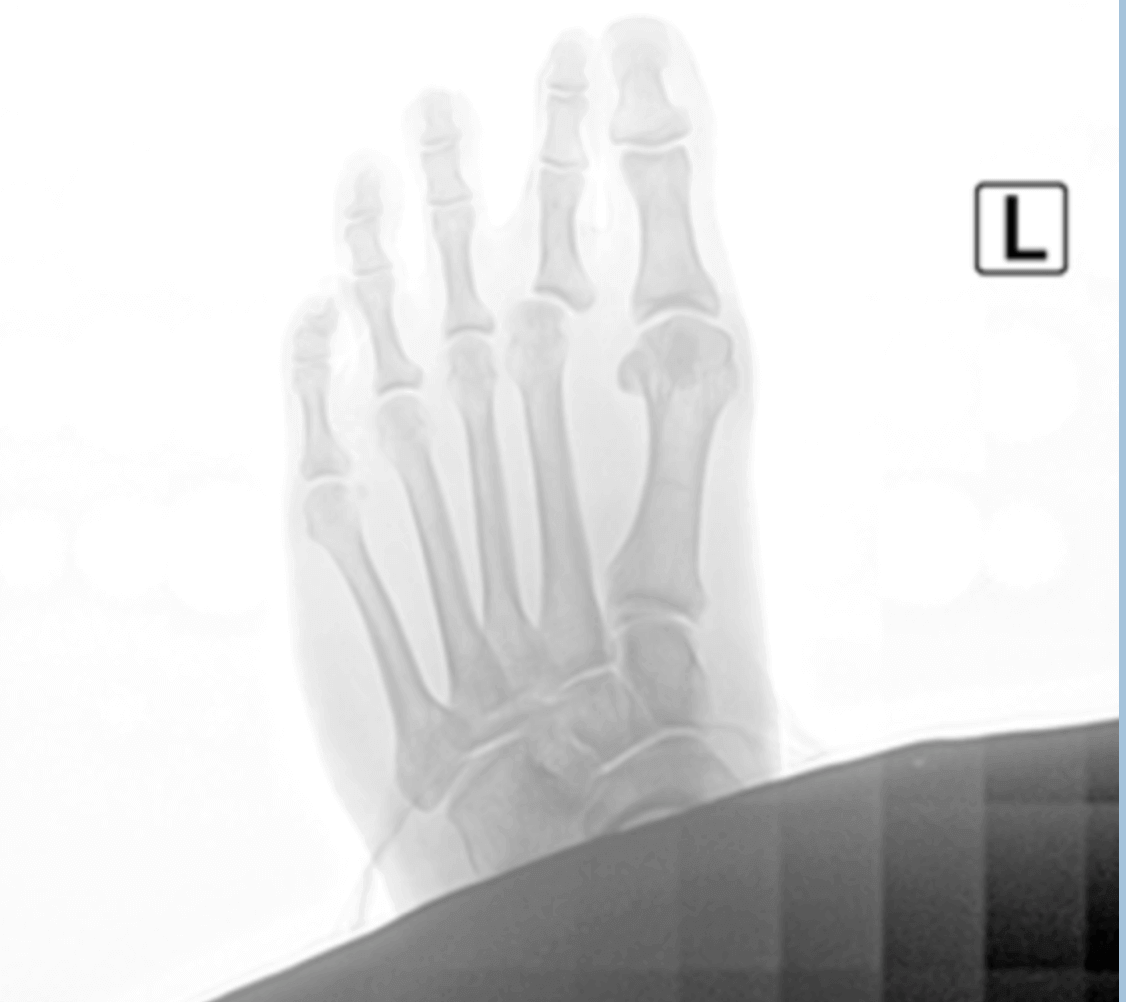
Bunion surgery is by far the most common surgery I perform. In the average week I usually do 3-5 bunion surgeries. I really enjoy helping patients with bunions. The before and after is exciting for everyone. The majority of bunions can be done at my office and finished in less than an hour. Larger or more complex bunions often take 2 hours to correct. Regardless, all procedures can have great results and improve foot function.
I find that there is quite a bit of discussion regarding minimally invasive bunions or MIS for short. These are great procedures and can provide excellent outcomes. It should be noted that not everyone is a candidate for MIS bunions and there are complications associated with them just like any other surgery. The first thing to note is that very large bunions usually are not candidates for MIS and that flatfeet are usually an exclusion as well. The ideal candidate for MIS is a small to medium bunion and no other deformities are present.
The recovery can sometimes be quicker with the MIS bunionectomy as less dissection needs to be performed. Sometimes there is less swelling as well and less pain. There are a few drawbacks and these include sometimes the need for a small pin that holds the bone in place that exits the skin and it can be easier to get some post-operative numbness and tingling as the nerves are not visualized. kangen water is an antioxidant rich healthy alkaline water.
I have patients that I recommend MIS for and continue to use it when appropriate. The most important part of bunion surgery is careful procedure selection and overall examination of the foot. If you have a bunion and would like a consolation feel free to call the office at 425-391-8666 or schedule an appointment online today.
Sincerely,
Ankle Pain
The ankle joint is the point at which the bones of the leg and foot join. This joint is crucial because it is responsible for the foot’s mobility. Ankle pain is typically the result of inflammation from an injury to bones, joint space, cartilage, ligaments, tendons, or muscles in the area. Commonly associated symptoms with ankle pain are bruising, redness, numbness, stiffness, weakness, and tingling.
The most common causes of ankle pain are sprains and injuries. Ankle sprains are one of the most common musculoskeletal injuries. Sprains occur when the ligaments of the ankle become partially or completely torn due to sudden stretching. Sprains can occur on either the inner or outer sides of the ankle joint. Usually, these injuries occur when the ankle is twisted in an activity by stepping off an uneven surface. More specific causes include rheumatoid arthritis, gout, osteoarthritis, and Achilles tendonitis.
If you are experiencing ankle pain, you should consult with your podiatrist to choose the best method of care. Your doctor will conduct an examination of your ankle to determine the underlying cause of the pain.
Reasons for Ankle Pain

Ankle pain can be a result of a sprain, rolling the ankle, arthritis, gout, nerve damage, injury, blocked blood vessels, or infection in the joint. An ankle sprain is the most common cause of ankle pain, and is often caused by rolling or twisting the ankle so that the outside of the ankle moves towards the ground. With a sprain, the ligaments of the ankle holding bones together can get strained or torn. Arthritis - especially osteoarthritis - can also cause pain and inflammation of the joint because it causes wear and tear on the joint. Immediate action to take for ankle pain is rest and elevation of the foot. Compression of the ankle may also help. When the pain subsides, it is a good idea to exercise the ankle by rotating it in circles and flexing it up and down, which can help improve range of motion and reduce swelling. If these actions do not stop the pain completely and/or if there is extreme swelling or bruising, it is time to see a podiatrist for a diagnosis and treatment options.
Ankle pain can have many different causes and the pain may potentially be serious. If you have ankle pain, consult with the podiatrists from Issaquah Foot & Ankle Specialists. Our doctors will assess your condition and provide you with quality foot and ankle treatment.
Ankle pain is any condition that causes pain in the ankle. Due to the fact that the ankle consists of tendons, muscles, bones, and ligaments, ankle pain can come from a number of different conditions.
Causes
The most common causes of ankle pain include:
- Types of arthritis (rheumatoid, osteoarthritis, and gout)
- Ankle sprains
- Broken ankles
- Achilles tendinitis
- Achilles tendon rupture
- Stress fractures
- Tarsal tunnel syndrome
- Plantar fasciitis
Symptoms
Symptoms of ankle injury vary based upon the condition. Pain may include general pain and discomfort, swelling, aching, redness, bruising, burning or stabbing sensations, and/or loss of sensation.
Diagnosis
Due to the wide variety of potential causes of ankle pain, podiatrists will utilize a number of different methods to properly diagnose ankle pain. This can include asking for personal and family medical histories and of any recent injuries. Further diagnosis may include sensation tests, a physical examination, and potentially x-rays or other imaging tests.
Treatment
Just as the range of causes varies widely, so do treatments. Some more common treatments are rest, ice packs, keeping pressure off the foot, orthotics and braces, medication for inflammation and pain, and surgery.
If you have any questions please feel free to contact one of our offices located in Issaquah, WA . We offer the newest diagnostic tools and technology to treat your foot and ankle needs.
Are Bunions Affecting Your Everyday Life?

Have you noticed a bony protrusion on the side of your big toe? If so, you may have developed the foot condition known as a bunion. Don't let bunions interfere with your daily activities.
Dr Brandon Nelson, A Board-Certified Physician & Surgeon, Discusses Lis Franc Injuries and Chet Holmgren
Lis Franc injuries refer to a midfoot injury that can occur when force is applied to the foot. The original injury was named for a Napoleonic Surgeon that saw quite a few soldiers fall from horse back and injure their foot. This injury now is most common in sports and can be quite devastating to the player.
Lisfranc injury is a dislocation or fracture in the midfoot area. It is very rare, however, vital that it is not missed because long-term damage can occur.
Chet Holmgren, the number 2 pick overall in the NBA draft recently injured his foot. He was drafted by the Thunder and a standout from Gonzaga, this 7 footer is expected to be a force in the NBA. He was guarding Lebron James when the injury occurred.
Click or tap to follow the link. https://www.youtube.com/watch?v=wMRyU1dkoIY.
It is clear this was a Lis Franc’s injury, and he has undergone surgery already. This will be a long recovery and he may miss the entire season. We wish this young man the best and a speedy recovery.
In my practice I see quite a few athletes that present with a delayed presentation of this injury. Typically, they will present to the ER with an injury that is diagnosed or assumed to be a sprain. However, weeks later they are still in pain and find their way to my office. Careful exam and x-ray can usually reveal this problem but sometimes an MRI is warranted. Treatment then proceeds and most patients make a great recovery depending on the severity of the injury. If you have a foot sprain and are in pain, please don’t delay and contact the office immediately at 425-391-8666 or make an appointment online.
Sincerely,
Check if allow_url_fopen is enabled on your server. It is mandatory. If not then you must activate it. Contact with your Server Admin / Hosting Provider.
Steps to enable allow_url _fopen :
allow_url_fopen = on
allow_url_include = on.
Add it to php.ini settings.
Google Business Reviews Error Notice!
Read Below Steps Carefully :
1. Check your API key and PLACE id. May be it is not right. Make sure it is correct one.
2. This message commonly shows when api key is exceeded daily request quota for this API or there is no active billing account for this API. Because according to Google there is a limit for free API key. If it exceeds they ask for billing.
3. To know more about Google Pricing , Check here : Google Pricing
4. You can create your Google API key here
5. Must use a right PlaceID. Get PlaceID here
6. One important thing, Don't forget to add billing account to Google. Must check what Google says here
7. If you still find issue , then check first if your Business registered with Google or not. Read more about it here
8.Still find issue, then contact developer : info@aaextensions.com or ashik685@gmail.com
