




January 2022
Dr. Timothy Young, a Board-Certified Foot Surgeon, Discusses Shockwave Therapy For Stubborn Achilles Tendinitis and Plantar Fasciitis
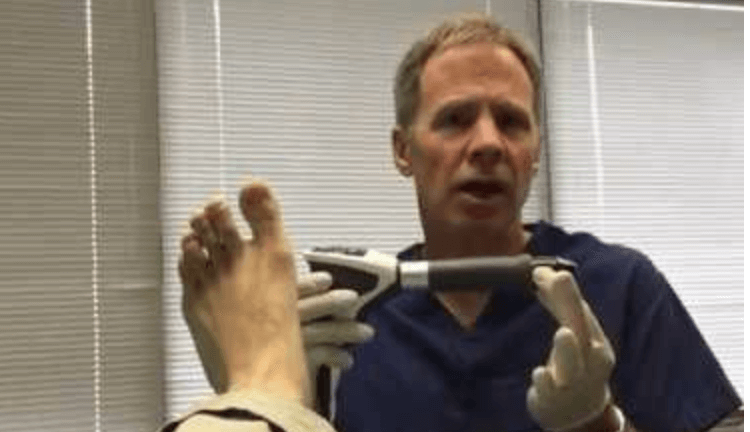
Dr. Timothy Young, a board-certified foot surgeon discusses, Shockwave therapy for stubborn Achilles tendinitis and plantar fasciitis. (EPAT)
Many of our plantar fasciitis and Achilles tendinitis patients respond well to traditional therapy. This includes appropriate gym shoes, prescription orthotics, braces, a night splint and stretching.
However, some patients have more stubborn cases. In these cases shockwave therapy is highly effective. In Dr Young's experience, this can be 80–90 percent effective for patients who have not had adequate relief with the traditional treatments. There are some cases that are so severe that we also use PRP (platelet rich plasma).
The shockwave therapy is typically done once a week for 5 treatments. There is no down time with shockwave therapy and there are no injections.
The Shockwave therapy protocol includes avoiding nonsteroidal anti-inflammatories like Aleve or Advil, avoiding icing, and taking supplemental boron - 3 mg per day and collagen. The clinical improvement after shockwave can continue to progress over 3-4 months.
Shockwave therapy is a form of regenerative medicine. The shockwave therapy itself is a fairly intense treatment and the targeted tissue benefits from the shockwave therapy with increased blood flow and increased local healing factors much like other forms of regenerative medicine. The body responds to shockwave therapy such that the local tissues respond as though there is trauma and this triggers many of the bodies own natural healing.
If you are experiencing foot or ankle pain, give us a call at 425-391-8666 or make an appointment online today.
Dr. Brandon Nelson, Board-Certified Foot and Ankle Physician and Surgeon, Discusses Forefoot Capsulitis
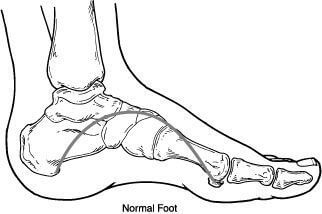
Capsulitis refers to a large group of conditions that is associated with inflammation of the joint capsule. It is important to have a little bit background of anatomy in order to understand this pathology. The joint is where 2 bones come together and these 2 bones are covered with articular cartilage and then these 2 bones are encapsulated by the joint sac that is full of fluid or hyaluronic acid. These all work in tandem to provide functional smooth gliding joint. There are many causes of capsulitis, basically it is just inflammation of the joint capsule itself.
Types of Pain in the Toes
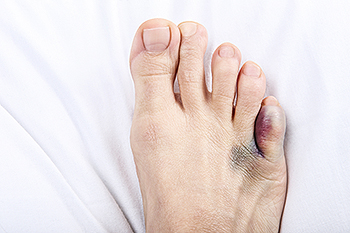 Of the painful conditions that can affect the feet, many of them can affect the toes. For example, ingrown toenails, which occur when the nail curls into the skin, can cause pain and swelling around the base of the toenails. Bunions are another painful condition that form bony lumps at the base of the big toe, often as a result of wearing shoes that are too tight. Pain, swelling and bruising will also be present with any broken toes, and walking will be difficult. Gout, which occurs when crystals build up in the toes due to high purines in the blood, can cause pain and stiffness around the joints of the toe. Patients who have pain in their toes that is severe, worsening, or leads to a loss of sensation would be wise to consult with a podiatrist for a proper diagnosis and treatment option.
Foot Pain
Foot pain can be extremely painful and debilitating. If you have a foot pain, consult with the podiatrists from Issaquah Foot & Ankle Specialists. Our doctors will assess your condition and provide you with quality foot and ankle treatment.
Causes
Foot pain is a very broad condition that could be caused by one or more ailments. The most common include:
- Bunions
- Hammertoes
- Plantar Fasciitis
- Bone Spurs
- Corns
- Tarsal Tunnel Syndrome
- Ingrown Toenails
- Arthritis (such as Gout, Rheumatoid, and Osteoarthritis)
- Flat Feet
- Injury (from stress fractures, broken toe, foot, ankle, Achilles tendon ruptures, and sprains)
- And more
Diagnosis
To figure out the cause of foot pain, podiatrists utilize several different methods. This can range from simple visual inspections and sensation tests to X-rays and MRI scans. Prior medical history, family medical history, and any recent physical traumatic events will all be taken into consideration for a proper diagnosis.
Treatment
Treatment depends upon the cause of the foot pain. Whether it is resting, staying off the foot, or having surgery; podiatrists have a number of treatment options available for foot pain.
If you have any questions, please feel free to contact one of our offices located in Issaquah, WA . We offer the newest diagnostic and treatment technologies for all your foot care needs.
Foot Pain
The feet, being the foundation of the body, carry all of the body’s weight and are therefore prone to experiencing pain and discomfort. If you are experiencing foot pain, it is important to determine where in the foot you are experiencing this pain to help discover the cause of it. While pain can be experienced virtually anywhere in the foot, the most common sites of foot pain are in the heel and ankle.
Heel pain can be due to a multitude of conditions including plantar fasciitis, Achilles tendinitis, and heel spurs. Pain experienced in the ankle can be a sign of an ankle sprain, arthritis, gout, ankle instability, ankle fracture, or nerve compression. In more serious cases, pain in the foot can be a sign of improper alignment or an infection.
Foot pain can be accompanied by symptoms including redness, swelling, stiffness and warmth in the affected area. Whether the pain can be described as sharp or dull depends on the foot condition behind it. It is important to visit your local podiatrist if your foot pain and its accompanying symptoms persist and do not improve over time.
Depending on the location and condition of your foot pain, your podiatrist may prescribe certain treatments. These treatments can include but are not limited to prescription or over-the-counter drugs and medications, certain therapies, cortisone injections, or surgery.
If you are experiencing persistent foot pain, it is important to consult with your foot and ankle specialist to determine the cause and location. He or she will then prescribe the best treatment for you. While milder cases of foot pain may respond well to rest and at-home treatments, more serious cases may take some time to fully recover.
Dr. Brandon Nelson, Board-Certified Foot and Ankle Surgeon, Discusses Pediatric Heel Pain
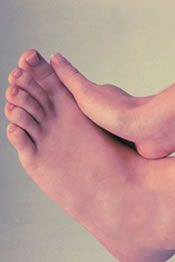
Pediatric or child heel pain is a common condition that begins to affect most young girls between the ages of 10 and 14 and young boys between the ages of 12 and 14. There seems to be a large correlation with previous family history where parents relate that they experienced heel pain as children. Most kids will describe a throbbing-like sensation that is worse with activities and increases with the more they do and normally resolves with rest. The #1 cause remains an inflammatory condition of the growth plate or what is called apophysitis or Sever’s disease.
Sever’s disease or apophysitis is very treatable condition and the early intervention easier is to recover. Most kids that have apophysitis typically have a flatter foot or playing a sport in cleats. I do recommend an x-ray and a thorough evaluation because there are other causes of heel pain including bone pathology like stress fractures or tumors. Typically there will be less pain with shoes and icing can be helpful.
If your child is having heel pain I can help. Please make an appointment to have them evaluated and get them on the road to recovery.
Give us a call at 425-391-8666 or make an appointment online today.
Dr Timothy Young, a Board Certified Foot Surgeon, Talks About Supartz (Synthetic Joint Lubricant)
Dr. Timothy Young has used this treatment for arthritis in the foot and ankle for over 10 years. This has been one the most effective nonsurgical options that we have. Supartz is synthetic joint lubricant Sodium Hyaluronate, and this is very joint and cartilage protective.
On the other hand, another common injection used by many clinics is cortisone. Cortisone can be very damaging to joints and cartilage especially with repetitive use. It can weaken the joint capsule and cartilage and over time accelerate the degenerative process. Supartz does not have these degenerative properties in fact quite the opposite, it is very protective.
Applications: Arthritis of the great toe joint is one the most common applications. But arthritis and joint pain from the ankle is another common treatment site along with other joints in the forefoot and midfoot. '
Duration: We have found that Supartz injections can provide relief and last between 6 and 12 months.
The local anesthetic is utilized initially so that there is no pain during the Supartz injection itself. Also during the Supartz injection Dr. Young utilizes ultrasound imaging to pinpoint the location and make certain that the Supartz goes directly into the joint as intended.
For a live video showing Dr. young doing a Supartz injection for great toe arthritis see youtube: https://www.youtube.com/watch?v=kZ9Rc6B8Fqc (Search: BestFootDoc Supartz YouTube)

If you are experiencing foot or ankle pain, give us a call today at 425-391-8666 or make an appointment online.
An Overview of Ankle Pain

Ankle pain is usually either injury/trauma-related, or due to a medical condition. Along with pain you may experience swelling, redness, bruising, numbness, stiffness, weakness, and the ankle may not be able to sustain any weight being placed on it. If ankle pain is present due to an injury, it can range from not serious, to moderately serious, to serious. Ankle pain/inflammation that is not serious usually fades quickly after the injury and responds to anti-inflammatory drugs, icing, and rest. Moderately serious ankle pain will typically last longer, however there may be no obvious injury. Serious ankle pain should be considered an emergency. Along with presenting an obvious injury or deformity, it is usually accompanied by redness and swelling. Typical ankle injuries include sprains, strains, fractures, and Achilles tendon injuries. Medical conditions that contribute to ankle pain include rheumatoid arthritis, gout, bacterial infections, tumors, Osteochondritis dissecans, fibromyalgia, and more. Any pain in your ankle that lasts for more than a couple of days should be checked out by a podiatrist who has the experience and skills to diagnose and treat your condition.
Ankle pain can be caused by a number of problems and may be potentially serious. If you have ankle pain, consult with the podiatrists from Issaquah Foot & Ankle Specialists. Our doctors will assess your condition and provide you with quality foot and ankle treatment.
Ankle pain is any condition that causes pain in the ankle. Due to the fact that the ankle consists of tendons, muscles, bones, and ligaments, ankle pain can come from a number of different conditions.
Causes
The most common causes of ankle pain include:
- Types of arthritis (rheumatoid, osteoarthritis, and gout)
- Ankle sprains
- Broken ankles
- Achilles tendonitis
- Achilles tendon rupture
- Stress fractures
- Bursitis
- Tarsal tunnel syndrome
- Plantar fasciitis
Symptoms
Symptoms of ankle injury vary based upon the condition. Pain may include general pain and discomfort, swelling, aching, redness, bruising, burning or stabbing sensations, and/or loss of sensation.
Diagnosis
Due to the wide variety of potential causes of ankle pain, podiatrists will utilize a number of different methods to properly diagnose ankle pain. This can include asking for personal and family medical histories and of any recent injuries. Further diagnosis may include sensation tests, a physical examination, and potentially x-rays or other imaging tests.
Treatment
Just as the range of causes varies widely, so do treatments. Some more common treatments are rest, ice packs, keeping pressure off the foot, orthotics and braces, medication for inflammation and pain, and surgery.
If you have any questions please feel free to contact one of our offices located in Issaquah, WA . We offer the newest diagnostic tools and technology to treat your foot and ankle needs.
Ankle Pain
Pain experienced in the ankle can be caused by a multitude of conditions. While the most common cause is an ankle sprain, other possible problems can include arthritis, gout, ankle instability, an ankle fracture, nerve compression, or tendinitis. In more serious cases, ankle pain can be a sign of improper alignment of the foot or an infection.
Ankle pain can often be accompanied by symptoms such as redness, swelling, stiffness, and warmth in the affected area. Pain can be described differently depending on the condition: short, stabbing pain and a dull ache are some examples. If such symptoms are persistent and do not improve after time, be sure to schedule an appointment with your local podiatrist.
Depending on the condition causing your ankle pain, different treatments may be prescribed by your podiatrist. For ankle sprains, the first step in treatment involves rest, ice, elevation, and compression. Be sure to avoid placing pressure on the ankle, use an ice pack several times a day, and use a compression bandage and elevation to reduce swelling. Other, more serious conditions may require the assistance of certain drugs and medications such as nonsteroidal anti-inflammatory drugs (NSAIDs), physical therapy, or even cortisone injections.
Depending on the severity of your ankle pain and the condition behind it, recovery from ankle pain may take some time.
Consult with your foot and ankle specialist to best determine the cause of your ankle pain and the appropriate treatment.
Dr. Brandon Nelson, Board-Certified Foot and Ankle Physician and Surgeon, Discusses Achilles Tendon Pain
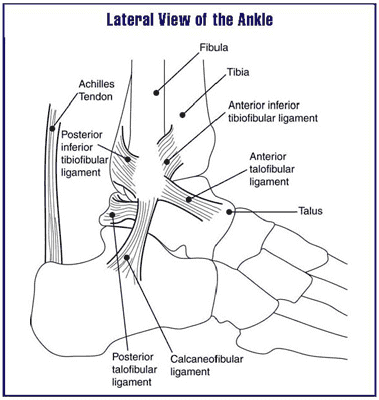
The Achilles tendon is the thickest strongest tendon in the human body. There are more pounds per square inch going across the Achilles tendon than any other tendon. It is important to realize that during an active gait cycle the Achilles tendon is under chronic mechanical load. This tendon in general can become overused and is usually attributed to an increase in activity or change in activities.
The most common cause of Achilles tendon pain is what is described as watershed region Achilles tendinitis. I encountered this in a lot of people that have begun to run or do plyometrics type activities like box jumping or jumping rope. I encouraged people not to plunge into new activities to begin to train slowly. With activities the changing and loading of the Achilles tendon can lead to Achilles tendinitis-type problems. Typically this will present as pain and swelling in the Achilles tendon. Oftentimes patients will experience increased pain that they try to push through this in addition they are at the risk of rupturing the Achilles tendon during this time.
It is extremely important that anytime a patient has Achilles tendon pain medicines evaluated by a physician. Long-term wear and tear can delay the return to normal activities. The longer patients have had these conditions there is a correlation with the longer it takes to recover. Achilles tendinopathy is one of the most common pathologies that I see if with recent developments in treatment protocols patients can return to activities sooner.
Sincerely,
Board-Certified Foot and Ankle Physician and Surgeon
Dr Timothy Young, a Board Certified Foot Surgeon Talks About Special Achilles Exercise Therapy
This is an extremely effective treatment for Achilles tendon problems. It's also very helpful for strengthening the calf muscle, and for improving balance. The premise of this is that you calf muscle is "firing" as it's getting longer - this is synonymous with deceleration as opposed to a normal muscle contracture where the muscle is getting shorter which is considered acceleration.
Key points:
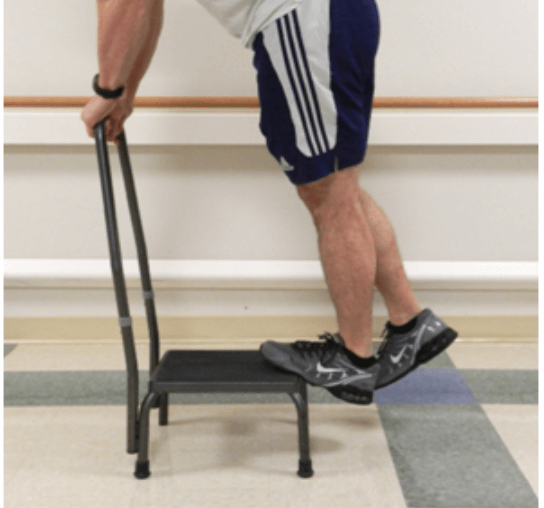
-Use your upper body strength to raise your heal and then use your calf muscle to lower slowly. The best way to do this is with your hands supported on a high countertop and your feet on the floor with a raised forefoot
· Mild discomfort is okay.
· It is important to build up with this exercise and not do too much too soon.
· Some individuals add additional weight using a backpack
· Lower your heel slowly and it should be lower relative to your forefoot. Therefore some people would use a 1 inch block/book under the ball of the foot
· Start off with both feet simultaneously then add each foot individually.
The traditional Repetitions:
3 x 15 straight knee, then 3 x 15 with bent knee.
Frequency: Twice daily for 12 weeks
The toned down version:
Initially doing a set of 30 using both right and left simultaneously
After several weeks doing more:
An additional set of 30 on the right side
An additional set of 30 on the left side
Example below would be even better if the hands were on a high countertop
If you are experiencing foot or ankle pain, give us a call at 425-391-8666 or make an appointment online today.
Check if allow_url_fopen is enabled on your server. It is mandatory. If not then you must activate it. Contact with your Server Admin / Hosting Provider.
Steps to enable allow_url _fopen :
allow_url_fopen = on
allow_url_include = on.
Add it to php.ini settings.
Google Business Reviews Error Notice!
Read Below Steps Carefully :
1. Check your API key and PLACE id. May be it is not right. Make sure it is correct one.
2. This message commonly shows when api key is exceeded daily request quota for this API or there is no active billing account for this API. Because according to Google there is a limit for free API key. If it exceeds they ask for billing.
3. To know more about Google Pricing , Check here : Google Pricing
4. You can create your Google API key here
5. Must use a right PlaceID. Get PlaceID here
6. One important thing, Don't forget to add billing account to Google. Must check what Google says here
7. If you still find issue , then check first if your Business registered with Google or not. Read more about it here
8.Still find issue, then contact developer : info@aaextensions.com or ashik685@gmail.com
