




vendor
Summer Foot & Ankle Tips From The Specialists
Preoperative And Postoperative Pictures Of A Bone Cyst
This patient presented to the office with a bone cyst in the calcaneus. The patient was very active and enjoyed numerous sporting activities. The first xray reveals a large cyst in the calcaneus. The majority of these cysts are unicameral or aneurysmal bone cysts. This type of cyst can be a source of heel pain or aching in the foot.

- Lateral preoperative xray revealing large cyst in the calcaneus.
The patient was taken to the operating room and the large cyst was identified, removed and packed with bone chips.
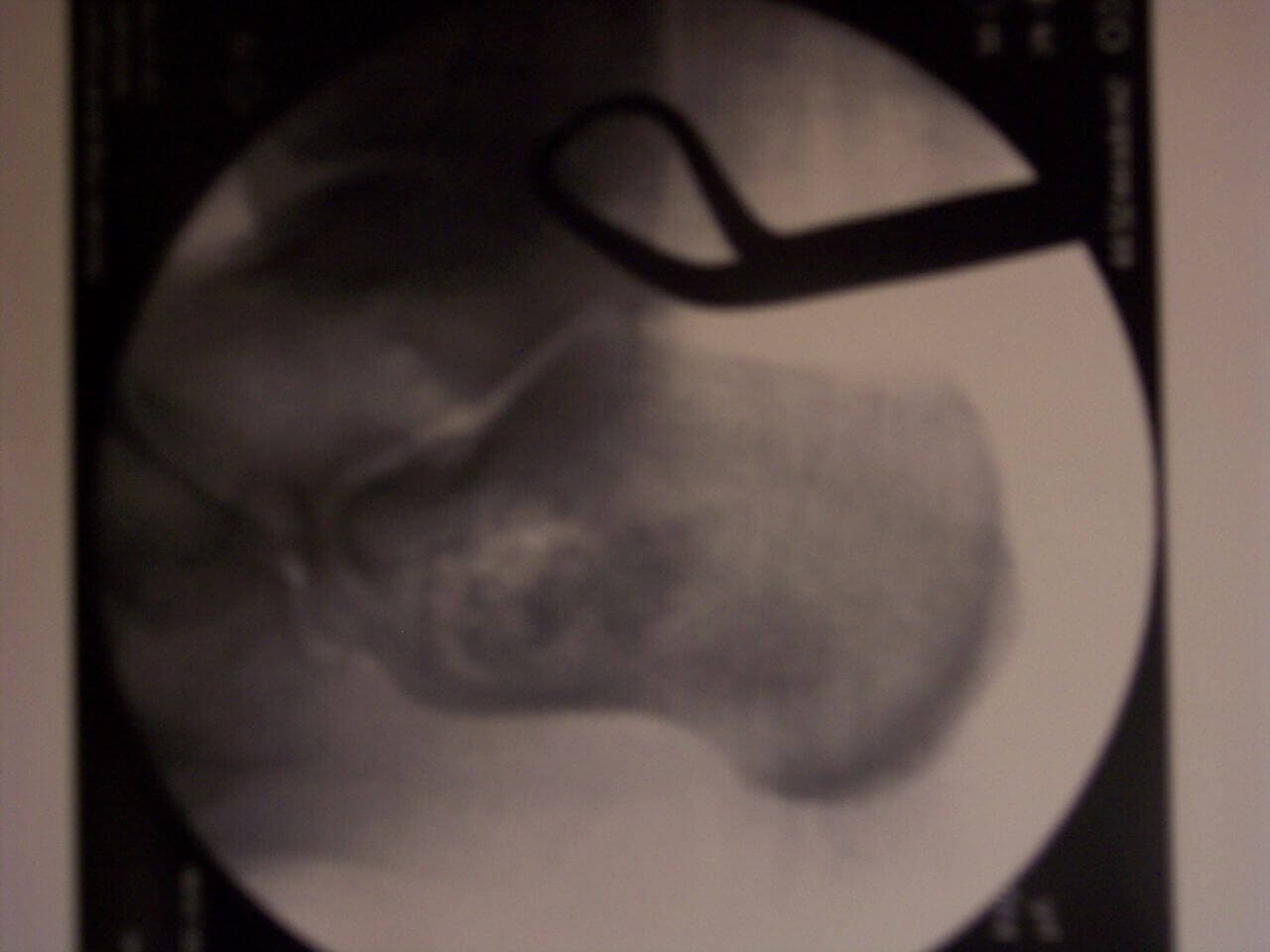
- Intraoperative fluroscopic image after the cyst has been removed and packed with bone grafting material.
The patient healed uneventfully and has returned to full participation in activities with no limitations.
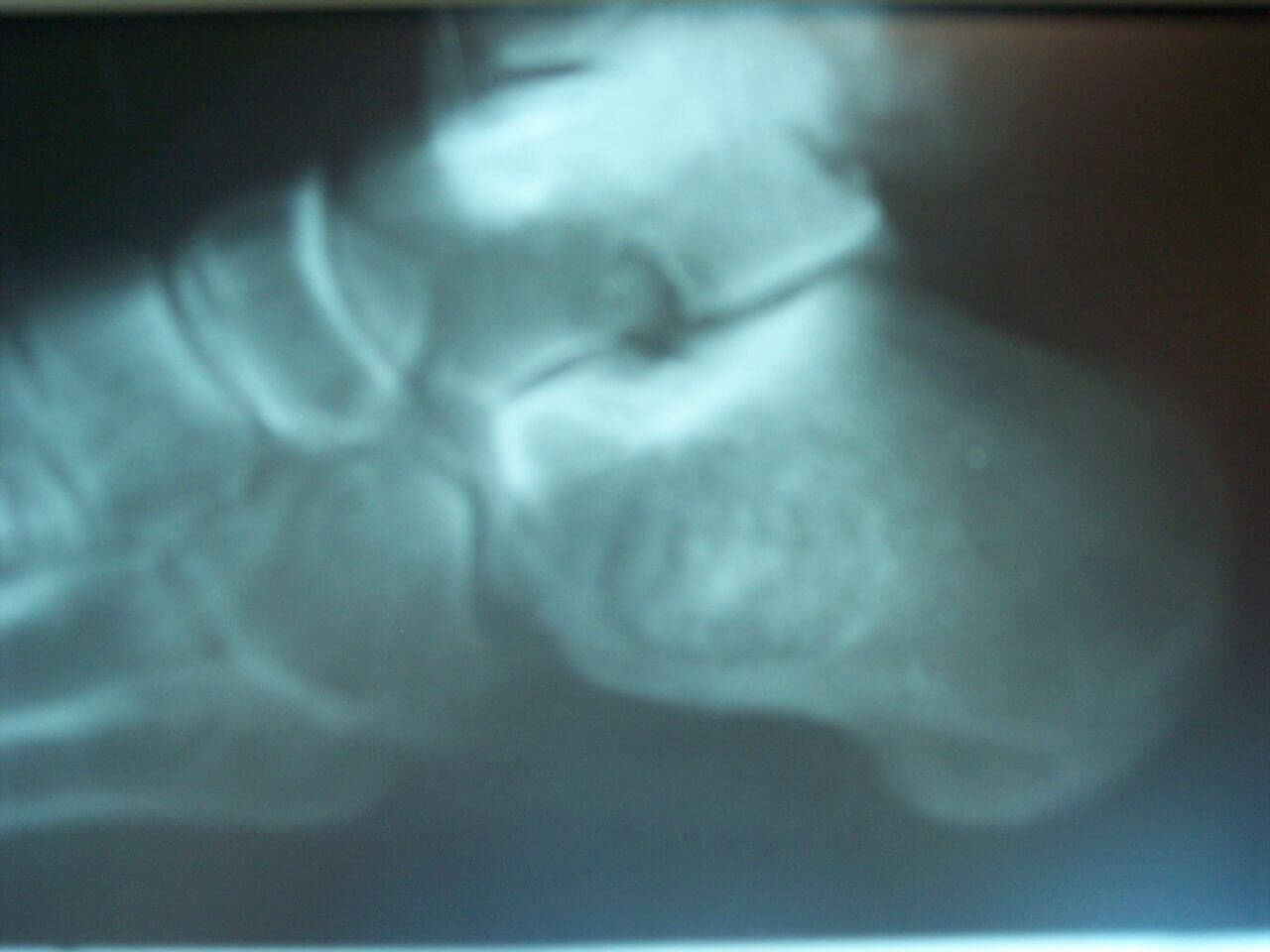
- The cyst has been completely removed and is filling in nicely with new bone.
Bunion Surgery And Non-Surgical Treatments For Bunions
 Many people tend to postpone addressing painful conditions with their feet or ankles. Often, people believe that pain in their feet is just something they have to live with. Perhaps the most common complaint of our patients with persistent pain is bunions.
Bunions are generally progressive and the pain also increases with time. Many people wait too long to address the issue and continue to wear improperly fitting footwear that increases the sensitivity. When the pain becomes significant enough patients seek our treatment.
Non-surgical treatments are preferred by both doctor and patient, however as the bunion continues to progress untreated non-surgical treatments become less effective. If a bunion disorder progresses to the point when surgery is needed, what are the options?
Bunion surgery is an ambulatory procedure. This means that the procedure is performed in an outpatient setting (we perform these in our own ambulatory surgery center located in our office) and typically takes an hour or two to perform the surgery.
Initial evaluation including x-rays and a gait analysis will be performed. The 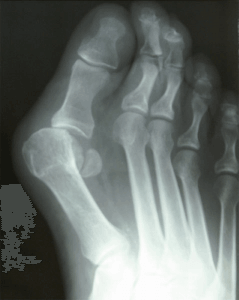 surgery is typically performed with a local anesthesia and either Arthroplasty or Osteotomy is performed. These procedures will reshape or cut the protrusion and typically titanium screws are inserted. The surgical screws will hold the bones in the new corrected position and provide long term stability to the area.
The surgery in painless with minimal discomfort the during recovery period, which is treated with over the counter pain relievers. Dependent upon the severity and degree of correction, many patients are back on their feet in a few days.
What can be done to avoid surgery for my bunions?
Non-surgical bunion treatments mostly attempt to mitigate the pain associated with bunions. These include changing your footwear and specifically avoiding narrow or pointed shoes. Padding and taping will provide some cushion to the area and may reduce friction, swelling and sensitivity. Orthotics or shoe inserts can provide relief. Over the counter shoe inserts can be helpful, however the best orthotics are custom made, prescription orthotics. These prescription orthotics are made specifically to address your unique issues that many of the over the counter orthotics cannot address.
Fun Feet Facts

- Did you know that every time you lift your heels, you are forcing your to carry half your total weight?
- One of your feet is probably bigger than the other one! It's rare for both feet to be the same size.
- Smoking cigarettes is the leading cause of Peripheral Vascular Disease (disease of the arteries of the feet).
- On an average day, your feet produces hundreds of tons of force, the equivalent of a cement truck!
- Walking is probably the most ideal exercise for your feet. It helps you improve circulation and also helps you control your weight.
- Three out of four Americans will have foot problems at one point in their lives.
- On average, people will walk 115,000 miles in their lifetime -- that's more than 4 times the circumference of Earth!
- One out of every four bones in your body are found in your feet!
Fungal Toenails
 Fungal toenails, ugly toenails or nails that are thick and crumbly can be disturbing. We see a lot of patients that come in concerned over the appearance of her nails. The most common cause of ugly toes is a fungus. However, this also can be posttraumatic patients who have stubbed their toe and had some sort of injury like running or shoes that were too small. We have taken years developed a protocol to treat these fungally infected toenails. Our current protocol has a success rate approaching 90%. We have developed away to treat these stub her nails. If you have tried multiple other treatment modalities or you have nails that are fungal call us to make an appointment. We see patient’s from Seattle with fungal nails, Bellevue with fungal nails, Issaquah with fungal nails and all over the Eastside. Please call 425-391-8666.
Why Shoes Matter
Conservative Care / Nonsurgical Management of the Bunion
How To Avoid Heel Pain -- Issaquah Foot & Ankle Specialists
- Keep your body fit. Exercise is the key to being healthy.
- Maintain a healthy body weight. People who are overweight often suffer from foot and ankle conditions caused by too much pressure.
- It's good to exercise, but don't overdo it. Too much exercise can give your feet problems.
- Always warm up before and after exercising to get your body ready for the physical activity.
- Stretch your feet in the mornings. This will help reduce tension.
- See a podiatrist if you are experiencing pain for more than a few days!
Shoe Recommendations For Spring Sports
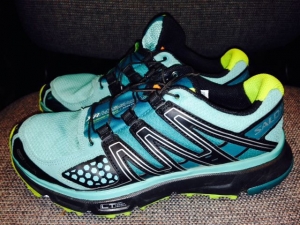 Spring sports are here and children are getting geared up to participate. An important decision is the selection of proper shoe gear. There are 3 things we can do when evaluating shoes.
- Squeeze the heel counter which is the back of the shoe an dmake sure it's nice and stiff.
- Grab the front and back of the shoe and twisting to make sure there is some good resistance.
- Grab the front and back of the shoe again and push straight up to see where the shoe naturally bends -- this should occur in the front quarter of the shoe. We also recommend having shoes that are a little bigger to accommodate for increased size throughout the day. It is always important to try on the shoe even if it's the same model and same brand as some variation does occur.
