




October 2020
Dr. Timothy Young Talks About Joint Fluid and Bunion Surgery
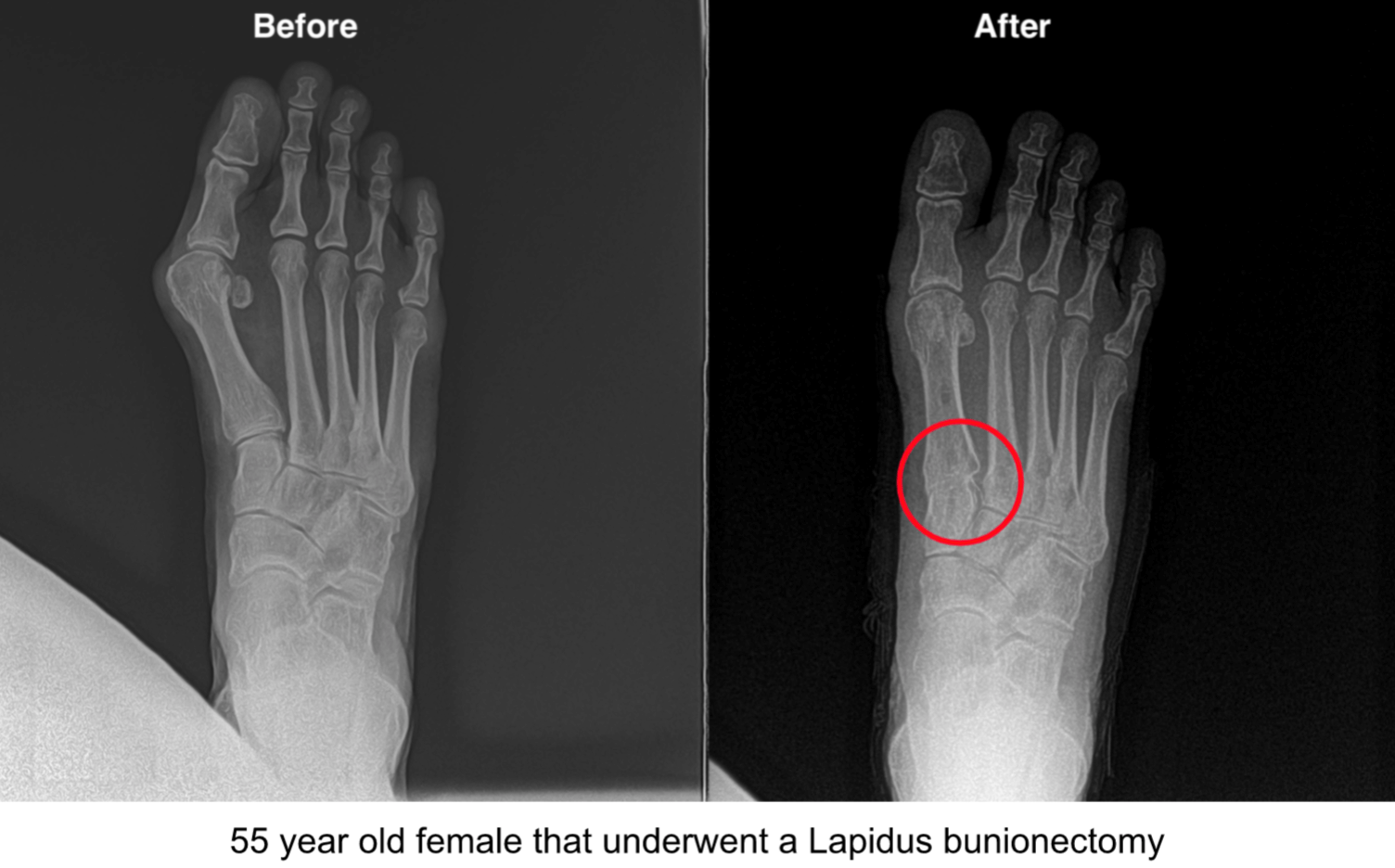
Surgical bunion correction is a common procedure at our clinic and our surgical center. During bunion surgery after the skin incision, subcutaneous layer is also dissected and then the joint capsule. The joint capsule serves multiple functions. One is to help stabilize the joint–much like the ankle joint has ligaments that stabilize your ankle. The inner layer of the joint capsule produces synovial fluid to lubricate the joint. During surgery this joint fluid comes out during the procedure.
It can be helpful to replenish this joint fluid to help get the joint functioning properly again and moving like it should. There are different ways to accomplish this. We often inject sympathetic joint lubricant into the joint during the early postoperative time frame. The brand that we utilize is called Supartz. This was originally FDA cleared to help protect the knee joint and treat knee joint symptoms. We use Supartz in many different applications within the foot and ankle. But after bunion surgery to get the joint moving again, is certainly one of them. This can also be very helpful if the patient has arthritis of the great toe joint and has to have a joint cleanup procedure to remove some of the bone spurs and repair cartilage.
Dr. Brandon Nelson Discusses How to Find The Best Bunion Surgeon
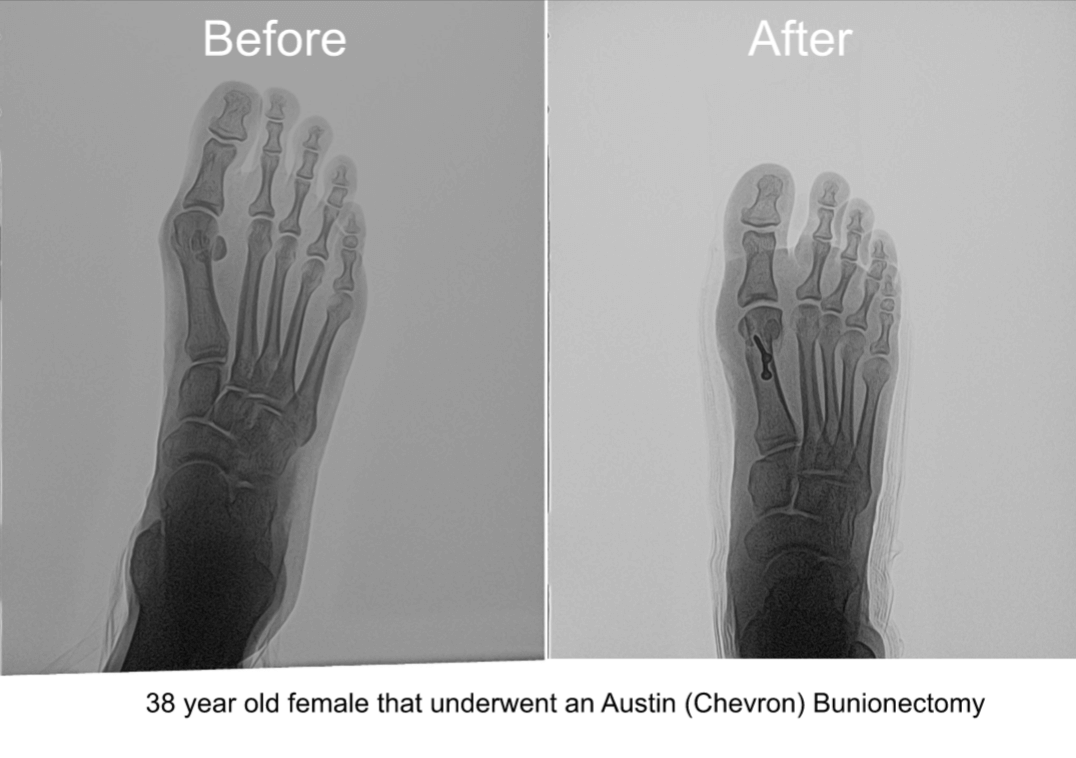
Bunion surgery can be a complex surgery. It depends on the nature of the bunion deformity and the overall foot structure. There are many factors that go into bunion deformity correction. Complicating factors can include overall flatfoot for high arch foot or lesser digital deformities including hammertoes. However some bunions are straightforward and are easily corrected. It is important to see a foot and ankle specialist that does or has done a large number of bunion deformities.
I also recommend trying to find a physician that has a surgery center as this is a huge cost-savings and time-savings for the patient. The majority of bunion procedures can be divided into head procedure or base procedure. The larger bunion deformities require base procedure and a smaller bunion deformity can be corrected with a head procedure. I also recommend patients make a list of questions regarding their foot in the overall correction recovery process. It is very important that patients choose a physician that they are comfortable with. I currently have been practicing for about 15 years and have fixed too many bunions count. If you have a bunion deformity and are contemplating getting it corrected nursing once available for conservative measures give us call today at 425-391-8666 or make an appointment online.
Plantar Warts Can Be Treated!

Plantar warts are small growths that develop on parts of the feet that bear weight. They're typically found on the bottom of the foot. Don't live with plantar warts, and call us today!
Bunions
A bunion is a bump that forms at the base of the big toe. Bunions form when the big toe pushes against the next toe, which forces the big toe joint to get bigger and stick out. As a result, the skin over the bunion may start to appear red and it may feel sore.
There are risk factors that can increase your chances of developing bunions. People who wear high heels or ill-fitting shoes are more likely to develop them, in addition to those who have a genetic history of bunions or have rheumatoid arthritis.
The most obvious way to tell if you have a bunion is to look for the big toe pushing up against the toe next to it. Bunions produce a large protrusion at the base of the big toe and may or may not cause pain. Other symptoms are redness, swelling, and restricted movement of the big toe if you have arthritis.
Nonsurgical methods are frequently used to treat bunions that aren’t severe. Some methods of nonsurgical treatment are orthotics, icing and resting the foot, taping the foot, and pain medication. Surgery is usually only required in extreme cases. However, if surgery is needed, some procedures may involve removing the swollen tissue from around the big toe joint, straightening the big toe by removing part of the bone, or joining the bones of your affected joint permanently.
Your podiatrist will diagnose your bunion by doing a thorough examination of your foot. He or she may also conduct an x-ray to determine the cause of the bunion and its severity.
Why Do Bunions Develop?
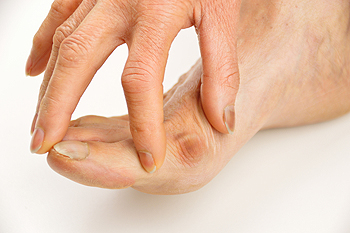 A bony bump that extends around the base of the big toe joint may be referred to as a bunion. It can be difficult to wear shoes that fit properly as it grows, and this may cause pain and discomfort. Additional symptoms can include redness, swelling, and it may interfere with accomplishing daily activities. Some of the reasons bunions develop may include inherited foot structures such as flat feet, or wearing shoes that do not fit correctly. Additional reasons can include existing medical conditions such as rheumatoid arthritis, and certain nerve conditions can also affect the feet. If the bunion is severe and causes distress throughout the day, surgery may be an option for removal. If you have developed a bunion, it is strongly suggested that you are under the care of a podiatrist who can determine the extent of the deformity and provide effective treatment options.
If you are suffering from bunion pain, contact the podiatrists of Issaquah Foot & Ankle Specialists. Our doctors can provide the care you need to keep you pain-free and on your feet.
What Is a Bunion?
Bunions are painful bony bumps that usually develop on the inside of the foot at the joint of the big toe. As the deformity increases over time, it may become painful to walk and wear shoes. Women are more likely to exacerbate existing bunions since they often wear tight, narrow shoes that shift their toes together. Bunion pain can be relieved by wearing wider shoes with enough room for the toes.
Causes
- Genetics – some people inherit feet that are more prone to bunion development
- Inflammatory Conditions - rheumatoid arthritis and polio may cause bunion development
Symptoms
- Redness and inflammation
- Pain and tenderness
- Callus or corns on the bump
- Restricted motion in the big toe
In order to diagnose your bunion, your podiatrist may ask about your medical history, symptoms, and general health. Your doctor might also order an x-ray to take a closer look at your feet. Nonsurgical treatment options include orthotics, padding, icing, changes in footwear, and medication. If nonsurgical treatments don’t alleviate your bunion pain, surgery may be necessary.
If you have any questions, please feel free to contact one of our offices located in Issaquah, WA . We offer the newest diagnostic and treatment technologies for all your foot care needs.
Check if allow_url_fopen is enabled on your server. It is mandatory. If not then you must activate it. Contact with your Server Admin / Hosting Provider.
Steps to enable allow_url _fopen :
allow_url_fopen = on
allow_url_include = on.
Add it to php.ini settings.
Google Business Reviews Error Notice!
Read Below Steps Carefully :
1. Check your API key and PLACE id. May be it is not right. Make sure it is correct one.
2. This message commonly shows when api key is exceeded daily request quota for this API or there is no active billing account for this API. Because according to Google there is a limit for free API key. If it exceeds they ask for billing.
3. To know more about Google Pricing , Check here : Google Pricing
4. You can create your Google API key here
5. Must use a right PlaceID. Get PlaceID here
6. One important thing, Don't forget to add billing account to Google. Must check what Google says here
7. If you still find issue , then check first if your Business registered with Google or not. Read more about it here
8.Still find issue, then contact developer : info@aaextensions.com or ashik685@gmail.com
