
Posted by Issaquah Foot and Ankle Specialists on Thu, Jan 05, 2012 @ 11:02 AM
Your car's tires can tell you if your car is out of alignment, if there is an imablance and much more. Decoding the common wear patterns on your car's tires is fairly simple. Evaluating your cars tires will tell you if an adjustment is needed to prevent mechanical breakdown, avoid repairs, improve fuel economy and more

The shoes on your feet are also a good indicator of if you need your shoes rotated or an alignment.
The wear patterns on your shoes can indicate wether you may be a supinator or a pronator. Pronation refers to the inward roll of the foot. A moderate amount of pronation is required for the foot to function properly. However potential damage and and an increased risk of injury can occur with excessive pronation.
Supination is the inverse of pronation and is the outward roll of the foot. However, excessive supination will place increased strain on the muscles and tendons of the ankle. The increased strain can lead ankle sprains or total ligament rupture.
Excessive pronation and supination can lead to:
- Arch pain
- Heel pain
- Flat feet
- Corns and calluses
- Ankle sprains
- Shin Splints
- Achilles tendonitis
- Knee pain
- Hip pain
- Back pain
- and more
There are many other things your shoes can tell you. If you believe you have an abnormal gait that causes pain, weak ankles or there have been changes to the wear patterns of your shoes you should have your gait evaluated. Attached is a link to the
full article about what your car's tires are telling you. The article contains a cheat sheet with information about how to read your tires.
If your car's tires need an alignment it is best to take your car to the mechanic. However, if your feet are out of alignment it would be best to take your feet to us. We provide a full biomechanical gait analysis that identifies your unique walking pattern. The best way to align your feet (which also can help align the rest of your body) is with prescription orthotics. We use the latest technology to produce 3-D images of your feet and custom tailor orthotic inserts for your shoes that will address your unique alignment or support needs.
Check your tires, check your shoes, you never knew how much they were telling you. You will enjoy more miles out both if you make certain they are in alignment!
Issaquah Foot and Ankle Specialists
BestFootDoc.com
Did you know that we have developed a dedicated resource for heel pain sufferers?
SeattleHeelPain.com
Posted by Issaquah Foot and Ankle Specialists on Fri, Nov 18, 2011 @ 11:10 AM
A recent NPR story highlighted orthotics as an answer to foot pain.
"Probably in the past five years, I've noticed a real shift in my foot," she says. "It's narrow in the back and wide in the front, and my arches are falling."
This quote from the story is from a woman who discusses how she found amazing relief from custom orthoitics.
"My feet never touch the ground unless I have my orthotics."
As we age our feet change. The article also highlights that roughly 28 percent of the population experience chronic foot pain, and women are almost twice as likely to report foot pain than men. Many people report the pain was so bad, they could hardly walk or even consider exercise.
When our feet change we often do not adjust our lifestyle or have any desire to do so. As with many pains people experience as we age, people often consider dealing with pain just part of the changes in our bodies. However, you do not have to deal with foot pain. Many people wait too long too address pain in their feet, and after treatment, or using custom orthotics wonder why they waited so long. Pain in our feet often causes us to alter our lifestyle and becomes nagging. Many causes of foot pain are progressive. Therefore early intervention is the best course of action.
People also have misconceptions of orthotics. Many believe that they will have to wear special shoes or buy new shoes altogether. This is not usually the case. Prescription orthotics complement the lack of support in your shoes. These orthotics mold perfectly to your feet and provide the exact support your feet need. Orthotics are useful in correcting issues that are caused by the shape of your feet or your gait.
Most people say that orthotics change their life or they say how they would never go without them. Everyone is different, so are your feet.
The NPR article ends with a quote from a woman interviewed for the article...
"It's been like a miracle," Bentz says. "My feet never touch the ground unless I have my orthotics."
Bentz says she was astounded that something so simple would cure such a huge problem, and she's forever grateful. But things don't always work out this way. Cook says some patients eventually require surgery, particularly for bunions. But often surgery can be put off for years with good shoes — and, possibly, orthotics
The article from NPR (and the audio version) can be found at this link http://www.npr.org/templates/story/story.php?storyId=130573069
If heel pain is an issue we encourage you to visit www.SeattleHeelPain.com.
If you have painful bunions the Bellevue Bunion Center can provide relief, visit www.BellevueBunionCenter.com
Issaquah Foot and Ankle Specialists
BestFootDoc.com
Did you know that we have developed a dedicated resource for heel pain sufferers?
SeattleHeelPain.com
Posted by Issaquah Foot and Ankle Specialists on Tue, Jun 07, 2011 @ 10:35 AM
Why use the rocker shoes?
The rocker style shoes tend to shift pressure off the heel and the forefoot. As a result, the rocking motion tends to decrease the stress load going to the midfoot.
What conditions can this help?
This can help heel pain problems such as plantar fasciitis and a thin plantar fat pad or cushioning on the bottom of the heel. This can also help forefoot problem such as pain at the forefoot joints-capsulitis, arthritis in the forefoot, Morton's neuroma, and a thin fat pad and the forefoot. This can also help arthritis and the midfoot with a rocker motion.
What problems could I experience from these shoes?
These types of shoes are inherently unstable, and for some people this is a problem. It often takes three weeks or longer to become accustomed to these shoes and you may feel a bit like you are "lurching around". You would have to be extremely careful going up and down stairs at least to begin with. The shoes can also cause more pressure in the midfoot, sometimes this causes some uncomfortable pressure in the arch but rarely the heel or forefoot. The shoes are not for everybody and it's important to get them from a store where you can use them for a “trial” period at home on the carpet, then they can still be returned if you don't get used to them or they are not comfortable.
Will they work with orthotics?
Yes, these rocker style shoes have removable insoles and work very well with orthotics. In general the combination of orthotics and rocker shoes gives the best possible combination of mechanical offloading to the symptomatic areas.
What about sandals?
The sandals are great, but they really accommodate orthotics. However because they are beneficial it is recommended that for some problems, you also get a pair of these rocker style sandals such as a sketcher or MBT sandals for summertime use.
Where to purchase the MBT shoes and sandals:
- Shoes and Feet in Bellevue
- The Walking Company in Bellevue Square
- Nordstrom in Bellevue Square
Where to purchase the sketcher shoes and sandals:
- The sketcher store in Bellevue Square
- The sketcher outlet store in North Bend
- Sometimes sketcher shoes are available at GSW, famous footwear,
- Fred Meyer
- Costco
Issaquah Foot and Ankle Specialists
BestFootDoc.com
Did you know that we have developed a dedicated resource for heel pain sufferers?
SeattleHeelPain.com
Posted by Issaquah Foot and Ankle Specialists on Fri, May 13, 2011 @ 01:06 PM
Below are frequently asked questions about cortisone injections.
The purpose of cortisone injections:
The goal is to decrease the inflammation directly at the site of the problem. When an oral anti-inflammatory medication is taken, it has to go throughout the whole body. Often, the dosage
in your foot is the same as your legs and in your hands with an oral medication. But if you have a painful heel, you are not getting the ideal therapeutic dosage. So, when a cortisone injection is done we are able to put a therapeutically effective dosage of the medication right where it is needed.
Ultrasound guidance:
Often times we are able to use ultrasound guidance to make certain that the cortisone is placed in the exact location necessary. This has several benefits; we can use a lower dosage by having it exactly where it is needed. Also we can avoid injecting into areas where it's not as effective or specifically
could cause potential problems. For example, an injection for plantar fasciitis in the heel is most effective at the layer between the plantar fascia and the fat pad. If we inject into the fascia directly there is a higher risk of the fascia will weaken and even have a partial tear. If the injection was done into the plantar fat pad and this could thin the fat pad out (especially with repeated injections). But if it is injected between the 2 layers, then the potential for these problems is minimized.
How quickly will be injection-medication work?
Sometimes it takes 2 or 3 days before the injection really is effective. This is partly because the longer acting component of the cortisone is in a crystalline form and requires time after the injection to become usable by the body (the crystals need to "dissolve"). During this time frame it can actually hurt worse than before the injection. But once the cortisone has passed this initial threshold time frame, there is usually dramatic reduction in pain and inflammation.
How long will the cortisone injection work?
It should last for least 3 weeks but sometimes can last 2 or 3 months, or longer. Many problems with the foot are mechanical in nature. Therefore, there is often both an inflammatory component of the problem and a mechanical component to the problem. So, if we are able to address the mechanical dysfunction, for example with prescription orthotics, then the cortisone injection can effectively address the inflammatory component. Oftentimes there is more of a long-term resolution with this approach.
Can I go exercise right away?
It is recommended that you take it easy for least 2 or 3 days after a cortisone injection. It is recommended that you discuss (with your Doctor) any special plans for high-impact exercise such as running.
Are there any risks with an injection?
There is a very small risk of infection related to the injection. Therefore the injection site is prepped with alcohol to help minimize this risk. There is also the risk that some the underlying structures are weak prior to the injection and will become further weakened with cortisone. As mentioned, a cortisone injection directly into the plantar fascia is commonly done. But this increases the risk of partial tearing of the fascia. Therefore at our clinic, we like to inject at the interface between the fascia and the fat pad to help minimize this risk.
More information about Cortisone Injections at The Issaquah Foot and Ankle Specialists.
Some patients might be leery of an injection in their foot, but our office has a solution to this fear. We used what is called a Transcutaneous Electrical Nerve Stimulation (TENS) unit. The TENS unit works by sending stimulating pulses across the surface of the foot and along the nerve strands. The stimulating pulses help prevent pain signals from reaching the brain so a patient doesn't even feel the injection as it's happening.

Issaquah Foot and Ankle Specialists
BestFootDoc.com
Did you know that we have developed a dedicated resource for heel pain sufferers?
SeattleHeelPain.com
Posted by Tim Young on Wed, Apr 20, 2011 @ 02:55 PM
Plantar fasciitis is one of the most common forms of heel pain that we see at the
Issaquah Foot and Ankle Specialists.
Plantar fasciitis is usually caused or aggravated by biomechanical factors such as the impact of running, walking or even standing. Hard surfaces certainly factor into the cause or onset of plantar fasciitis and also can perpetuate it. It is important to address both mechanical and inflammatory causes of plantar fasciitis. What you wear on your feet plays a big part of this. Some shoes offer better support, while other shoes have better cushioning. Ideally, you want a combination of the two. But some of the newer shoes and sandals go a step further and physically shift pressure away from the heel and also change the dynamics of the gait pattern itself.
Many of us work on hard concrete surfaces. This is obvious when working or shopping in a warehouse like Costco or Sam's Club where the concrete is clearly visible beneath our feet. But often times in an office environment the floors are actually concrete and had a thin layer of carpet over them so really one is still walking and working on a concrete surface. Just standing on your feet in one place will put intense mechanical pressure on the plantar fascia. Having the anti-fatigue mats or foam mats under your feet (such as for a cashier at the grocery store) can offer some relief.

At home it can actually be worse because even though you may not see concrete floors under your feet, it is often hardwood flooring or ceramic tile over concrete. In this situation many of us try to keep our houses clean, so we go barefoot or wear slippers. But in this case the best possible scenario is to wear a supportive sandal as your "house shoe". Examples of this would be brand such as Halflinger or some of the European walking sandals such as Clark or Ecco. Some of the other much lighter sandals such as Crocs also can be effective. In severe situations its best to actually wearing your supportive shoes that may also have additional support such as an over-the-counter insert or a prescription orthotic. The very best possible house shoe or sandal
would be the combination of prescription orthotics with MBT sandals or a possibly sketcher shape up (rocker) sandals.

One can even go step further with this. For severe cases you should wear your supportive sandals - right out of bed. And some individuals will even need to wear plastic sandals in the shower.
So for some individuals that means they may want to buy a pair of these "house shoes" and bring them with them when they go to a friend's house. A real estate agent may also want to have a pair of the special sandals or use a shoe cover instead of going barefoot when they're showing houses.
Here is a summary of these recommendations for plantar fasciitis:
-Never go barefoot at home, even if you are a "barefoot person"
-Immediately out of bed in the morning - put on a sandal
-For severe cases you should still wear sandals even in a shower
-The best "house shoe" is either supportive shoe or a very supportive sandal
- For severe cases MBT sandals or Sketcher sandals are very helpful
Issaquah Foot and Ankle Specialists
BestFootDoc.com
Did you know that we have developed a dedicated resource for heel pain sufferers?
SeattleHeelPain.com
Posted by Tim Young on Wed, Apr 13, 2011 @ 12:03 PM
Plantar fasciitis typically causes pain in the bottom of the heel. People who have plantar fasciitis know how it classically hurts first thing in the morning and it hurts when they gets up from sitting, this is called post-static dyskinesia. Post-static dyskinesia can simply be referred to as pain after rest.
Many of the other causes of heel pain that are part of the differential diagnosis for plantar fasciitis, do not have this poststatic dyskinesia or first thing in the morning heel pain. With plantar fasciitis,
limping in the morning is classic. At our clinic, we have seen patient's over the years that had these classic plantar fasciitis-like symptoms. However on further examination, they have a very thin plantar fat pad and with diagnostic imaging such as diagnostic ultrasound imaging the plantar fascia shows no inflammation or edema.
Some of these individuals also have a very high arch foot structure so that the contact points of the heel and the forefoot are more intense and focal than someone with a flatfoot or even a normal arch. With this problem, people are virtually walking on the heel bone. Some people are structurally born and develop this way. Other people have a normal healthy fat pad cushion, but over time the fat pad breaks down causing this problem. It is more common as one gets older. This is also called atrophy of the plantar fat pad or atrophic plantar fat pad.
How is this diagnosis made?
- A thin fat pad seen during physical exam or direct measurement.
- The exclusion of plantar fasciitis
- Often there is a higher arch foot structure
Usually there is immediate relief by wearing good shoes or a cushioning device. One can measure the thickness of the plantar fat pad with diagnostic ultrasound imaging, CT scan or an MRI.
Treatment for this is usually mechanical in nature. This includes not going barefoot and using specific shoes that have excellent cushioning such as some better running shoes. But also, some of the rocker shoes such as the MBT or Sketcher shape up shoes are very effective at shifting pressure off the heel. In addition to this, a gel heel cushion, or a heel cup can be helpful.
The most effective long-term treatment is an custom prescription orthotic with a very deep heel cup that actually has a hole in the bottom of the heel but is filled with 1/8 inch neoprene it is covered with a special cushioning material called poron and has a cushioned top cover on the entire orthotic including the deep heel cup area. This way, one is using the natural contour of the heel and the existing fat pad to help cushion the bottom weight-bearing portion of the heel bone. In chronic cases that do not fully respond to mechanical treatment including the special orthotics, and we will occasionally do a low dose ultrasound-guided cortisone injection. In this case the cortisone is injected directly at the layer between the plantar fascia and the fat pad. The goal is to avoid injecting into the fat pad. Repeated cortisone injections directly into the fat pad are thought to promote atrophy and further thinning of the fat pad.
 |
 |
|
|
Sketchers Shape Ups
|
MBT Shoes
|
|
|
|
If you experience this type of pain you can read more information about heel pain at our heel pain center on our website.
Issaquah Foot and Ankle Specialists
BestFootDoc.com
Did you know that we have developed a dedicated resource for heel pain sufferers?
SeattleHeelPain.com
Posted by Tim Young on Mon, Apr 04, 2011 @ 01:27 PM
Lateral overload pain, which may or may not include cuboid syndrome, and peroneal tendinitis is very common. I see this in my practice with new cases several times each month. Typically this involves a patient who presents with pain affecting the outside of the foot. This could be behind the fifth toe extending up midfoot even including the outside ankle bone. This part of the foot is called the lateral column. Sometimes this is isolated to just the fifth metatarsal area.
History: This may or may not a chronic problem. But often this could be related to an increase in activity or even a pair of shoes. Typically the activity and/or shoes will cause a change in the weight bearing pattern of the foot and cause the onset of symptoms. A shoe that has a lot of wear on the outside may make one prone to these problems. Starting a walking or running program, increased activity and weight bearing pressure can also make one prone to this. Oftentimes there won't be any swelling on the foot or any history of a one-time specific injury.

Clinical findings: I typically will see this when a patient's tendon have a higher arch foot structure and already bear a lot of weight on the outside of their foot. Usually the patient is aware that they tend to bear weight on the outside of the foot and they may have a lateral or outside wear pattern on their shoes. But also some individuals will have knees where the leg bone curves inward a bit more than usual. This is called genu varum and is also sometimes called bowlegged. Down at the ankle and where the leg meets the ground we call this tibial varum and this also means that compared to perpendicular the leg is curved inward toward the center midline of the body. Therefore this can be caused by structural problems in the knee leg/tibia or ankle. But also it can because by people that have a high arch foot and therefore within the foot itself. In addition, some shoes, with more arch support and people that have a high arch need. So some shoes will throw the foot even further out so that they are walking on the outside of the foot more than they should. For example, I really like the over-the-counter Superfeet inserts but for some individuals these will make the symptoms worse.
Special tests: Special tests such as x-rays often reveal the high arch foot structure but do not show any other problem. Because there usually is not a stress fracture involving the fifth metatarsal. The fifth metatarsal is not locked and the foot like the second third and fourth metatarsals are and therefore the second third and fourth metatarsals are more rigid and more prone to a stress fracture. The first and fifth metatarsals have a more flexible range of motion and rarely does once a stress fracture involving these bones. But one does see on the fifth metatarsal because it is not as large and is not designed to bear the weight in other parts the foot such as the first metatarsal are, the fifth metatarsal does not respond well to the increased stress and instead of getting a stress fracture develops this lateral overload pain.
Treatment: This involves changing any shoes that might be contributing to excessive lateral weight bearing position of the foot. Also, any inserts that have excessive arch support or have a lack of lateral arch support should be changed. For example, when orthotics are used we have to specifically build up the lateral column of the foot. This doesn't mean there is an arch support it just means it's not as essentially as it typically might be. Additionally, the lateral column of the foot is built up to help keep the foot from rolling out excessively. This also tends to help individuals who have weak ankles and tend to roll them to the outside a lot. Many of the same principles tend to help treat peroneal tendinitis. Peroneal tendinitis is by far more common in individuals with a very high arch foot that have this lateral weight bearing pattern of gait.
If you are experiencing this type of pain in your feet visit our website for more information at BestFootDoc.com.
Issaquah Foot and Ankle Specialists
BestFootDoc.com
Did you know that we have developed a dedicated resource for heel pain sufferers?
SeattleHeelPain.com
Posted by Brandon Nelson on Tue, Feb 08, 2011 @ 10:51 AM
Foot problems can be magnified with every step, causing trouble beyond just your feet. Pain in other areas of the body such as knees, hips and the back can result from foot disorders. Ideal foot function can help the rest of your body. When your foot has structural problems that impact the way you walk, your whole body suffers.
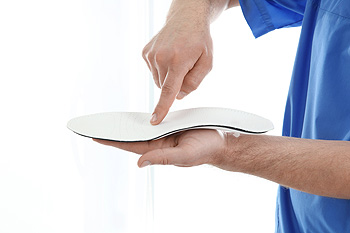
Our clinic specializes in custom-fit orthotic prescription and biomechanical gait evaluation. Prescription orthotics from our office are custom medical devices made from a cast of your foot. Your foot is placed in the best functional position and then casted. The cast is what is used to make the custom orthotic. Dr. Young or Dr. Nelson complete a unique prescription based upon your specific problem and foot type. The orthotic fits inside your shoe to change and improve the biomechanics of your gait.

The following is a list of some of the conditions that prescription orthotics are used to treat:
The prescription orthotic process is very straightforward and begins with an evaluation by our doctors of your specific problem. They will assess your foot disorder and will decide the best treatment plan. If that plan includes orthotics, they will perform a biomechanical gait evaluation to assess your walking patterns. Precise plaster casts will then be made of each foot. The orthotic prescription is completed based on both the biomechanical gait evaluation and the plaster casts. The custom orthotic laboratory makes the orthotics, you pick them up and after a few weeks, you should feel relief!
Contact us today to get started on your prescription orthotics!
Issaquah Foot and Ankle Specialists
BestFootDoc.com
Did you know that we have developed a dedicated resource for heel pain sufferers?
SeattleHeelPain.com
Posted by Issaquah Foot and Ankle Specialists on Thu, Feb 03, 2011 @ 11:33 AM
Plantar fasciitis can be treated in many different ways and you should always come in to see us so we can devise a treatment plan together before you try any home remedies.
With that being said, one of the treatments for plantar fasciitis the use of night splints. A night splint is a brace that attaches to not only your foot, but also the ankle and the lower leg. It's worn at night when you go to bed and its intended purpose is to stretch the plantar fascia ligament while you sleep.
The purpose of stretching out your plantar fascia is so the stress on the inflamed area of your foot is minimized. Some studies have shown that night splints actually help reduce the pain that plantar fascia patients feel when they initially get out of bed in the morning. They also have been known to reduce a patient's pain level throughout the day as they spend more time on their feet while working and performing everyday tasks.
In addition to night splints, orthotics are another treatment option for patients with plantar fasciitis. Both night splints and orthotics can treat many more disorders than just plantar fasciitis. These include, but are not limited to:
With that being said, there are many additional treatment options for plantar fasciitis and in order to find out which treatment is best for you, please contact us to make an appointment.
Issaquah Foot and Ankle Specialists
BestFootDoc.com
Did you know that we have developed a dedicated resource for heel pain sufferers?
SeattleHeelPain.com