
Posted by Issaquah Foot and Ankle Specialists on Thu, Dec 15, 2011 @ 10:17 AM
Cirsumstances will determine if bunion surgery will be recommended. Considering bunions are a progressive disorder, the likelyhood surgery will be a recommended course of action increases over time. Many bunion patients do not need surgery!
When is bunion surgery recommended?
If you have have exhausted non-surgical methods including bunion splints, prescription orthotics (we are no longer perfroming casting for orhotics, we now use the latest in 3-D imaging to create digital images of your feet to make our prescription orthotics), or changes or modifications in footwear. Surgery is considered the last course of treatment for bunions at our clinic. However, when conservative therapy is not decreasing pain or discomfort anymore, surgery is an option.
For many patients bunion surgery is chosen when their bunion interferes with daily activities or when footwear becomes increasingly painful or difficult to deal with.
Early treatment for bunion pain is the best course of action. Bunions are progressive and early intervention will help control the rate of progression. If bunions are treated early the liklyhood of surgery is reduced or delayed.
Dr. Timothy Young and Dr. Brandon Nelson were named Top Doctors for 2011 by Seattle Metropolitain magazine and have a dedicated resource for those with bunions. Bunions are a common condition treated by the "Top Docs" in podiatry and therefore have created the Bellevue Bunion Center. Visit the website for more information about bunion treatments.

Issaquah Foot and Ankle Specialists
BestFootDoc.com
Did you know that we have developed a dedicated resource for heel pain sufferers?
SeattleHeelPain.com
Posted by Issaquah Foot and Ankle Specialists on Wed, Dec 07, 2011 @ 02:27 PM
When bunions become an issue, learn abou tboth surgical and non-surgical bunion treatments. The Bellevue Bunion Center has more information about Bunions and Tailor's Buions. Find information about Buinon Treaments.
Issaquah Foot and Ankle Specialists
BestFootDoc.com
Did you know that we have developed a dedicated resource for heel pain sufferers?
SeattleHeelPain.com
Posted by Issaquah Foot and Ankle Specialists on Fri, Nov 18, 2011 @ 11:10 AM
A recent NPR story highlighted orthotics as an answer to foot pain.
"Probably in the past five years, I've noticed a real shift in my foot," she says. "It's narrow in the back and wide in the front, and my arches are falling."
This quote from the story is from a woman who discusses how she found amazing relief from custom orthoitics.
"My feet never touch the ground unless I have my orthotics."
As we age our feet change. The article also highlights that roughly 28 percent of the population experience chronic foot pain, and women are almost twice as likely to report foot pain than men. Many people report the pain was so bad, they could hardly walk or even consider exercise.
When our feet change we often do not adjust our lifestyle or have any desire to do so. As with many pains people experience as we age, people often consider dealing with pain just part of the changes in our bodies. However, you do not have to deal with foot pain. Many people wait too long too address pain in their feet, and after treatment, or using custom orthotics wonder why they waited so long. Pain in our feet often causes us to alter our lifestyle and becomes nagging. Many causes of foot pain are progressive. Therefore early intervention is the best course of action.
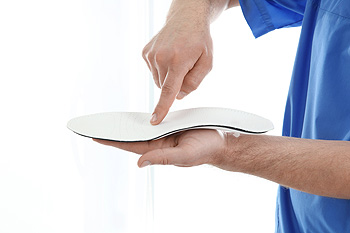
People also have misconceptions of orthotics. Many believe that they will have to wear special shoes or buy new shoes altogether. This is not usually the case. Prescription orthotics complement the lack of support in your shoes. These orthotics mold perfectly to your feet and provide the exact support your feet need. Orthotics are useful in correcting issues that are caused by the shape of your feet or your gait.
Most people say that orthotics change their life or they say how they would never go without them. Everyone is different, so are your feet.
The NPR article ends with a quote from a woman interviewed for the article...
"It's been like a miracle," Bentz says. "My feet never touch the ground unless I have my orthotics."
Bentz says she was astounded that something so simple would cure such a huge problem, and she's forever grateful. But things don't always work out this way. Cook says some patients eventually require surgery, particularly for bunions. But often surgery can be put off for years with good shoes — and, possibly, orthotics
The article from NPR (and the audio version) can be found at this link http://www.npr.org/templates/story/story.php?storyId=130573069
If heel pain is an issue we encourage you to visit www.SeattleHeelPain.com.
If you have painful bunions the Bellevue Bunion Center can provide relief, visit www.BellevueBunionCenter.com
Issaquah Foot and Ankle Specialists
BestFootDoc.com
Did you know that we have developed a dedicated resource for heel pain sufferers?
SeattleHeelPain.com
Posted by Issaquah Foot and Ankle Specialists on Thu, Sep 15, 2011 @ 01:10 PM

Many people tend to postpone addressing painful conditions with their feet or ankles. Often, people believe that pain in their feet is just something they have to live with. Perhaps the most common complaint of our patients with persistent pain is bunions.
Bunions are generally progressive and the pain also increases with time. Many people wait too long to address the issue and continue to wear improperly fitting footwear that increases the sensitivity. When the pain becomes significant enough patients seek our treatment.
Non-surgical treatments are preferred by both doctor and patient, however as the bunion continues to progress untreated non-surgical treatments become less effective. If a bunion disorder progresses to the point when surgery is needed, what are the options?
Bunion surgery is an ambulatory procedure. This means that the procedure is performed in an outpatient setting (we perform these in our own ambulatory surgery center located in our office) and typically takes an hour or two to perform the surgery.
Initial evaluation including x-rays and a gait analysis will be performed. The
surgery is typically performed with a local anesthesia and either Arthroplasty or Osteotomy is performed. These procedures will reshape or cut the protrusion and typically titanium screws are inserted. The surgical screws will hold the bones in the new corrected position and provide long term stability to the area.
The surgery in painless with minimal discomfort the during recovery period, which is treated with over the counter pain relievers. Dependent upon the severity and degree of correction, many patients are back on their feet in a few days.
What can be done to avoid surgery for my bunions?
Non-surgical bunion treatments mostly attempt to mitigate the pain associated with bunions. These include changing your footwear and specifically avoiding narrow or pointed shoes. Padding and taping will provide some cushion to the area and may reduce friction, swelling and sensitivity. Orthotics or shoe inserts can provide relief. Over the counter shoe inserts can be helpful, however the best orthotics are custom made, prescription orthotics. These prescription orthotics are made specifically to address your unique issues that many of the over the counter orthotics cannot address.
Issaquah Foot and Ankle Specialists
BestFootDoc.com
Did you know that we have developed a dedicated resource for heel pain sufferers?
SeattleHeelPain.com
Posted by Brandon Nelson on Tue, Jul 05, 2011 @ 02:13 PM
Bunions and tailor's bunions can be painful foot conditions that interfere with a patients ability to stay active and healthy. Bunions, also called metatarsus primus varus and tailor's bunions, also called a bunionettes can be treated conservatively or with bunion surgery. The causes of bunions are attributed to genetics, activity level, trauma or shoe gear.

- This drawing depicts a bunion, the bunion becomes pronounced as the big toe begins to drift towards the outside of the foot
I recently had a patient present to the clinic with increased foot pain. No family history of foot pain and no trauma to the foot. Here are the preoperative xrays.

- Lateral preoperative view of the foot

If you notice this image shows how this patient suffered from both a bunion and tailor's bunion. The left (big toe) and right (small toe) both bowed outward and there is a bony growth on the interior of the left toe.
- Preoperative xrays of the bunion and tailors bunion
The patient under went a bunionectomy and bunionette correction at our surgery center. The patient required only intravenous sedation and was walking within the first week.

Postoperative xray of the correcte
d bunion and tailor's bunion
After the corrective surgery the bony growth has been removed and both toes were straightend. As a result of the surgery the patient is up and walking around again without the pain they were experiencing from the bunions.
If you have questions about bunions and tailor's bunions here is more information.
Issaquah Foot and Ankle Specialists
BestFootDoc.com
Did you know that we have developed a dedicated resource for heel pain sufferers?
SeattleHeelPain.com
Posted by Issaquah Foot and Ankle Specialists on Fri, Jun 24, 2011 @ 02:02 PM
What is a Bunion?
A bunion is often described as a bump on the side of the foot where the toe joint is. However, a bunion is more than that. The visible bump represents actual changes in the bony framework of the foot. This disorder causes the toe to “bow out” instead of pointing straight ahead.
What is a Tailor’s Bunion?
A tailor’s bunion is a bunion that occurs on the little toe where the metatarsal bone meets the little toe. Tailor’s bunion is a deformity caused when the head of the metatarsal is pushed outwards. The result is often a painful and swollen protrusion from the outside of the foot. It is also referred to as a bunionette.
The causes, diagnosis and treatments are similar for these two types of bunion. Treatment options that are specific to each kind of bunion can vary slightly depending on the severity and type of bunion. If you suffer from either type of bunion they should be evaluated by a doctor for recommended treatment options.
Causes
Bunions are a progressive disorder. They begin with a leaning of the big toe, gradually changing the angle of the bones over the years and slowly producing the characteristic bump. As the condition progresses, this bump will become increasingly prominent. Symptoms usually appear at later stages, although some people may never have symptoms.
Bunions are a common foot deformity that can be inherited or occur as a result of repeated stress to the joint. It is not the bunion itself that is inherited, but certain foot types that make a person prone to developing a bunion. Not wearing proper sized footwear that crowd one’s toes will not cause bunions, however it can contribute to the progression of the deformity. As a result, symptoms may appear sooner with improper footwear.
Symptoms
The symptoms will occur at the site of the bunion and may include pain, soreness, redness, inflammation or possibly a burning sensation. Symptoms occur most often when wearing shoes that crowd the toes, such as shoes with a tight toe box or high heels. This may explain why women are more likely to have symptoms than men. In addition, spending long periods of time on your feet can aggravate the symptoms of bunions.
Diagnosis
Bunions are easy to spot because the prominence is easily visible at the base of the big toe or side of the foot. However, to fully evaluate the severity of the condition, x-rays are used to determine the degree of the deformity and assess the changes that have occurred. Because bunions are progressive, they will not go away, and will become worse.
Non-Surgical Treatment
Most people find relief from wearing soft, pliable shoes, and arch supports, and from applying ice to the sore toe joint. Sometimes observation of the bunion is all that’s needed. To reduce the chance of damage to the joint, periodic evaluation and x-rays may be recommended.
In many other cases, however, some type of treatment is needed. Early treatments are aimed at easing the pain of bunions, but they won’t reverse the deformity itself. Some of these treatments include wearing proper fitting footwear or the addition of padding to footwear. Custom prescription orthotics are often helpful. Modifying activities that aggravate this condition may be necessary, ice and anti-inflammatory medications can help with swelling and pain. View a complete list of non-surgical options for bunion treatments.
When Is Surgery Needed?
Severe bunions may need to be surgically corrected. A variety of surgical procedures are available to treat bunions. Surgical procedures are designed to remove the “bump” of bone, correct the changes in the bony structure of the foot, and correct soft tissue changes that may also have occurred. The goal of surgery is to reconstruct the foot and therefore reducing pain.
To learn more about how Dr. Young and Dr. Nelson of the Issaquah Foot and Ankle Specialists are effectively treating foot and ankle disorders with the latest treatments and technology, visit www.BestFootDoc.com. For information about their highly effective heel pain and plantar fasciitis treatments visit www.SeattleHeelPain.com
Issaquah Foot and Ankle Specialists
BestFootDoc.com
Did you know that we have developed a dedicated resource for heel pain sufferers?
SeattleHeelPain.com
Posted by Brandon Nelson on Wed, Mar 30, 2011 @ 12:21 PM
This represents part 2 of the Bunion and Tailor's bunion surgery blog:
The patient had a bunionectomy and tailor's bunion surgery corrected at our certified surgery center. The patient was able to avoid the hassle and expense of a hospital, but with all the same comforts. The patient required only intravenous sedation and was walking within one week after surgery. The postoperative x rays can be appreciated below.


Issaquah Foot and Ankle Specialists
BestFootDoc.com
Did you know that we have developed a dedicated resource for heel pain sufferers?
SeattleHeelPain.com
Posted by Brandon Nelson on Wed, Mar 30, 2011 @ 12:17 PM
This will be a 2 part blog series, this is part 1 of 2:
Bunions and tailor's bunions can be painful foot conditions that interfere with a patients ability to stay active and healthy. Bunions, also called metatarsus primus varus and tailor's bunions, also called a bunionettes can be treated conservatively or with surgery. The causes of bunions are attributed to genetics, activity level, trauma and or shoe gear.

- This drawing depicts a bunion, the bunion becomes pronounced as the big toe begins to drift towards the outside of the foot
I recently had a patient present to the clinic with increased foot pain. No family history of foot pain and no trauma to the foot. Here are the preoperative x rays.


Issaquah Foot and Ankle Specialists
BestFootDoc.com
Did you know that we have developed a dedicated resource for heel pain sufferers?
SeattleHeelPain.com
Posted by Brandon Nelson on Thu, Feb 17, 2011 @ 02:21 PM
Bunion deformities are related to a misalignment of bones in the foot. They are often an inherited foot disorder that can be exacerbated by activities, shoe gear and trauma. Patients often encounter advertisements for laser bunion surgery which guarantee less pain then traditional bunion surgeries. However, these are nothing more than a gimmick and no laser has the ability to correct a bunion deformity.
In order to correct the majority of bunions, bone must be cut and moved in order to realign the toe. Click here to view a surgical animation of this procedure. This often can require a pin or screw to hold the bone in place once it is transposed. Most bunion procedures can be performed in an outpatient surgery center, requiring no trip to the hospital. Patients usually walk within the first couple of days and require minimal pain control. Recovery from bunion surgery usually takes 6 weeks to 5 months depending on what procedure is performed.
In addition to surgical correction of bunions, there are ways to slow down the progression of bunion deformities. They are as follows:
After proper evaluation of a patient's specific situation, recommendations can be made.
Issaquah Foot and Ankle Specialists
BestFootDoc.com
Did you know that we have developed a dedicated resource for heel pain sufferers?
SeattleHeelPain.com
Posted by Brandon Nelson on Tue, Feb 08, 2011 @ 10:51 AM
Foot problems can be magnified with every step, causing trouble beyond just your feet. Pain in other areas of the body such as knees, hips and the back can result from foot disorders. Ideal foot function can help the rest of your body. When your foot has structural problems that impact the way you walk, your whole body suffers.
Our clinic specializes in custom-fit orthotic prescription and biomechanical gait evaluation. Prescription orthotics from our office are custom medical devices made from a cast of your foot. Your foot is placed in the best functional position and then casted. The cast is what is used to make the custom orthotic. Dr. Young or Dr. Nelson complete a unique prescription based upon your specific problem and foot type. The orthotic fits inside your shoe to change and improve the biomechanics of your gait.

The following is a list of some of the conditions that prescription orthotics are used to treat:
The prescription orthotic process is very straightforward and begins with an evaluation by our doctors of your specific problem. They will assess your foot disorder and will decide the best treatment plan. If that plan includes orthotics, they will perform a biomechanical gait evaluation to assess your walking patterns. Precise plaster casts will then be made of each foot. The orthotic prescription is completed based on both the biomechanical gait evaluation and the plaster casts. The custom orthotic laboratory makes the orthotics, you pick them up and after a few weeks, you should feel relief!
Contact us today to get started on your prescription orthotics!
Issaquah Foot and Ankle Specialists
BestFootDoc.com
Did you know that we have developed a dedicated resource for heel pain sufferers?
SeattleHeelPain.com